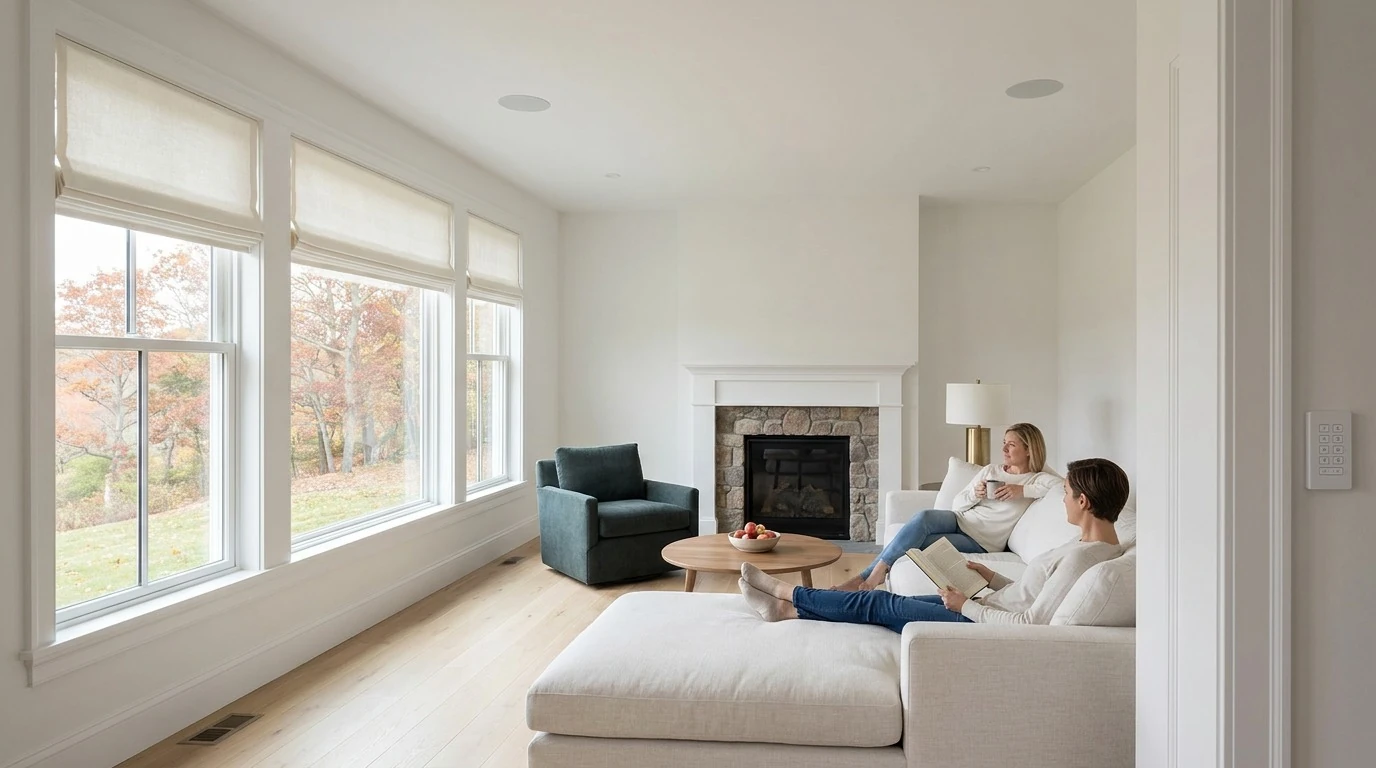
The smart home technology worth building into a custom home from day one is the kind that lives in the walls: a strong network, security and access control, zoned climate and energy monitoring, lighting and shade control, leak detection and EV charging readiness. Devices can change later, but the wiring, power and planning behind them should be part of the original build.
A custom home gives you a rare chance to decide how technology fits into daily life before a single wall is closed. A family building on a wooded lot in Topsfield may want cameras on a long driveway and heating they can adjust from the road, while a couple in Wenham may care most about lighting scenes, music in the kitchen and a quiet, steady network for working from home.
This guide is about choosing the technology itself: which systems are worth installing on move-in day, which ones to prepare for, and which to leave for later. It covers security, climate and energy, lighting, entertainment, the kitchen, water protection and the outdoors, and how Genesis Construction and Development keeps those choices inside the design and the budget of a custom build on the North Shore.
Smart home technology in a custom build works best when it is treated like plumbing or electrical: drawn on the plans, priced with the house and installed by the right trade at the right time. The National Association of Home Builders notes that custom homeowners can now control features such as energy use, security systems, lighting and the music playing in each room from a phone.
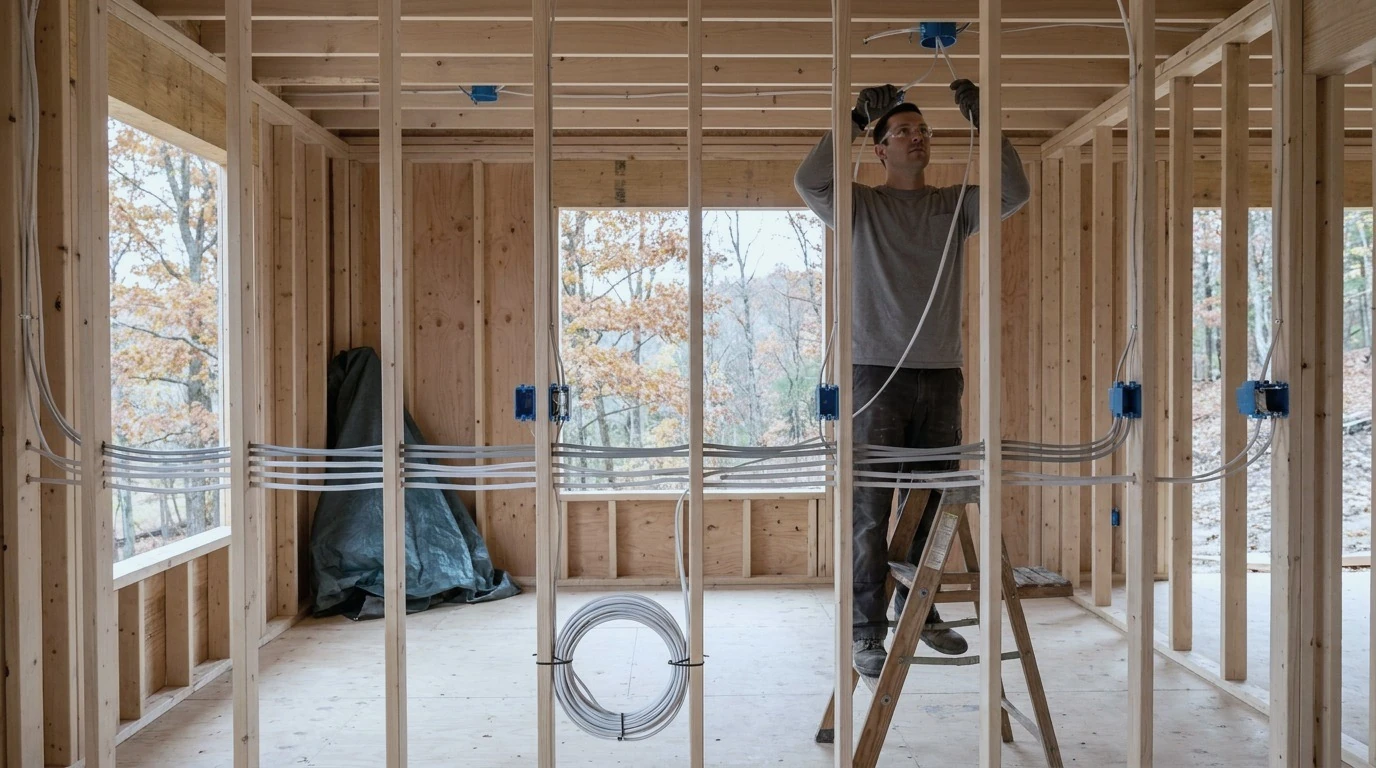
Not every device needs to be installed before you move in. The useful split is between what is hard to add after construction, such as cable, conduit, power at windows and electrical panel capacity, and what is easy to add later, such as smart plugs, bulbs and most sensors. Build the first group in from day one and prepare for the second.
The best smart home new construction plans start with routines, not gadgets. Think about who works from home, who travels in winter, whether a parent may move in, and how much you want to manage yourself. A short list of features you will use every day beats a long list of devices you will forget about.
Many smart devices work on their own apps, which makes a connected home. An integrated home goes further: systems share information and work together, so the lights, shades, heating and security respond to one command or one schedule. Integration depends on choices made during design, which is why it belongs in the build plan.
Every feature in this guide depends on three things: a dependable network, the right power in the right places, and a platform that ties the systems together.
Plan a central location for the network equipment, wired connections to desks and televisions, and ceiling-mounted wireless access points so Wi-Fi reaches every room, the garage and the porch. Stone foundations, plaster walls and long floor plans common in New England homes make this more important, not less.
Heat pumps, induction cooking and an electric vehicle charger all draw power. Sizing the electrical service and panel for those loads during design is far simpler than upgrading later. Leave spare breaker space and a clear path for future circuits.
The platform, sometimes called a hub or controller, is what lets your devices work together. Some households choose a professionally installed control system with one interface for everything; others prefer app-based devices built around a voice assistant. Look for products that support common open standards, so devices from different makers can work together as the market changes.
Home security is one of the easiest places to see the value of planning ahead, because cameras, sensors and locks all need power or a signal at specific points on the house.
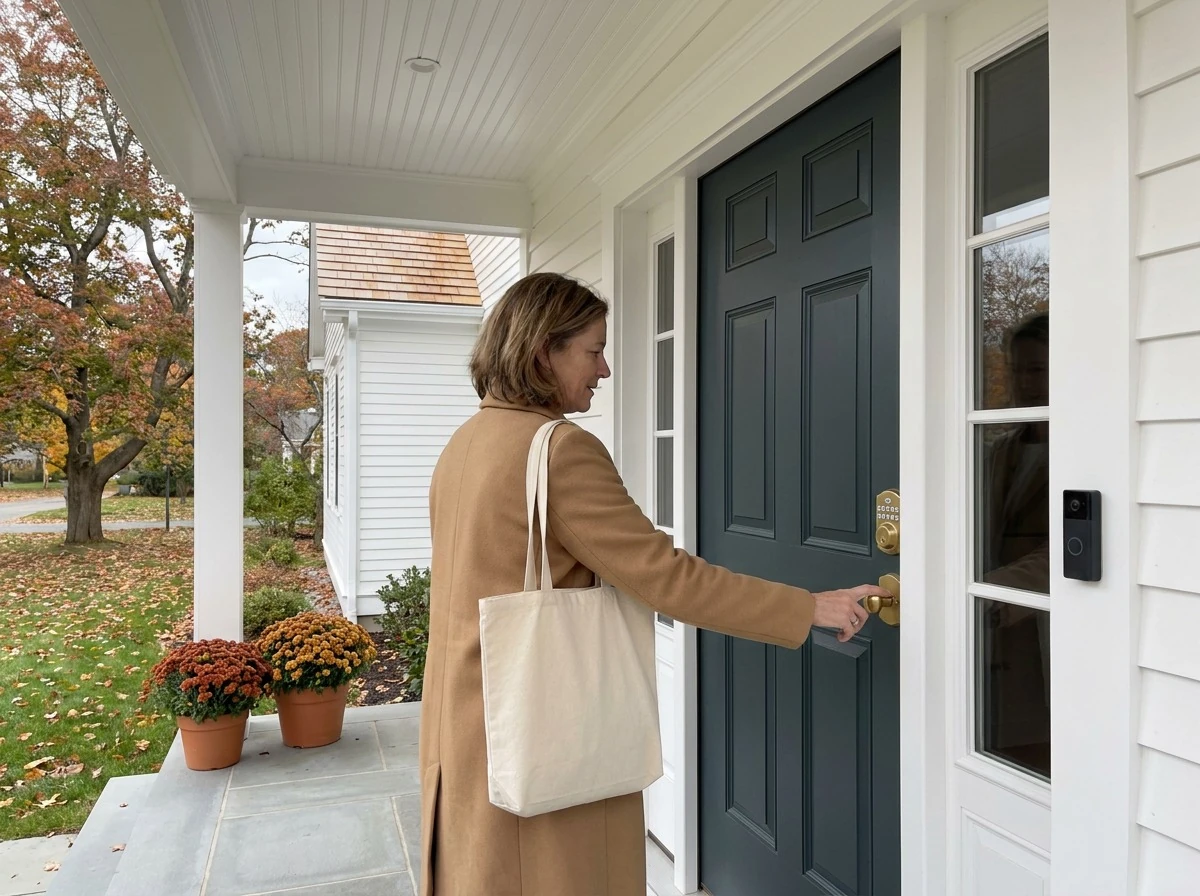
Decide which views matter before framing: the driveway, each entry and any outbuildings. A wired camera receives power and data on one network cable, which avoids battery changes and weak signals. A video doorbell at the main entry needs the same planning.
A smart home security system typically combines door and window sensors, motion sensors and a keypad or app. Wired sensors are installed during rough-in; wireless ones can be added later. Decide whether you want professional monitoring, which usually carries a monthly fee, or self-monitoring through an app.
Smart door locks let you give a code to a contractor, a dog walker or a family member without handing out keys, and they record who came and went. Plan door preparation for the lock you choose, and connect the garage door opener to the same platform so you can check and close it from anywhere.
Climate control is where technology pays back every day, especially through a Massachusetts winter. The goal is comfort in the rooms you use and less energy spent on the rooms you do not.
A smart thermostat works best when the HVAC system is designed with zones. Many new homes use heat pumps, and each zone needs a control location that reads the room accurately, away from exterior walls, sunlight and drafts. Remote control lets you lower the heat during a ski week and warm the house before you return.
An energy monitor installed at the electrical panel shows how much power the house uses and which systems use it. That information helps you adjust schedules, spot a failing appliance and understand the effect of solar panels if you add them.
NAHB lists solar panels among the green building techniques custom builders are using. Even if solar is not in the first budget, a roof layout with clear south-facing area, a conduit path from the attic to the electrical room and wall space for a future battery make it simpler to add later.
An electric vehicle charger needs a dedicated circuit and enough panel capacity. Installing the circuit and outlet during construction costs far less than opening finished walls, and it adds flexibility if a second electric car comes later.
These are the features homeowners notice every evening. They are also the ones that are hardest to add well after the drywall is up.
Smart lighting replaces banks of switches with a few keypads that set scenes such as morning, dinner and away. Smart switches and dimmers often need a neutral wire and deeper boxes, so the lighting system has to be chosen before rough-in. Exterior lights on schedules and motion sensors add security and convenience.
Motorized shades need power or a low-voltage wire at the top of each window and solid blocking in the framing. On tall windows or a sunny great room, shades that move on a schedule help with glare in summer and heat loss in winter.
NAHB names whole-house audio and video among the features luxury custom homes now treat as essential. Ceiling speakers, a cable path for each audio zone and a dedicated media room with sound insulation all need to be planned before insulation goes in.
The National Kitchen and Bath Association introduced a smart home technology award with CEDIA, the association of smart home professionals, that recognizes a designer and an integrator working as partners. That partnership is the point: when the designer and the technology integrator plan together, the keypads, speakers and concealed lighting fit the architecture instead of fighting it.
Some of the most useful technology in a custom home is not glamorous at all. It protects the house and saves time.
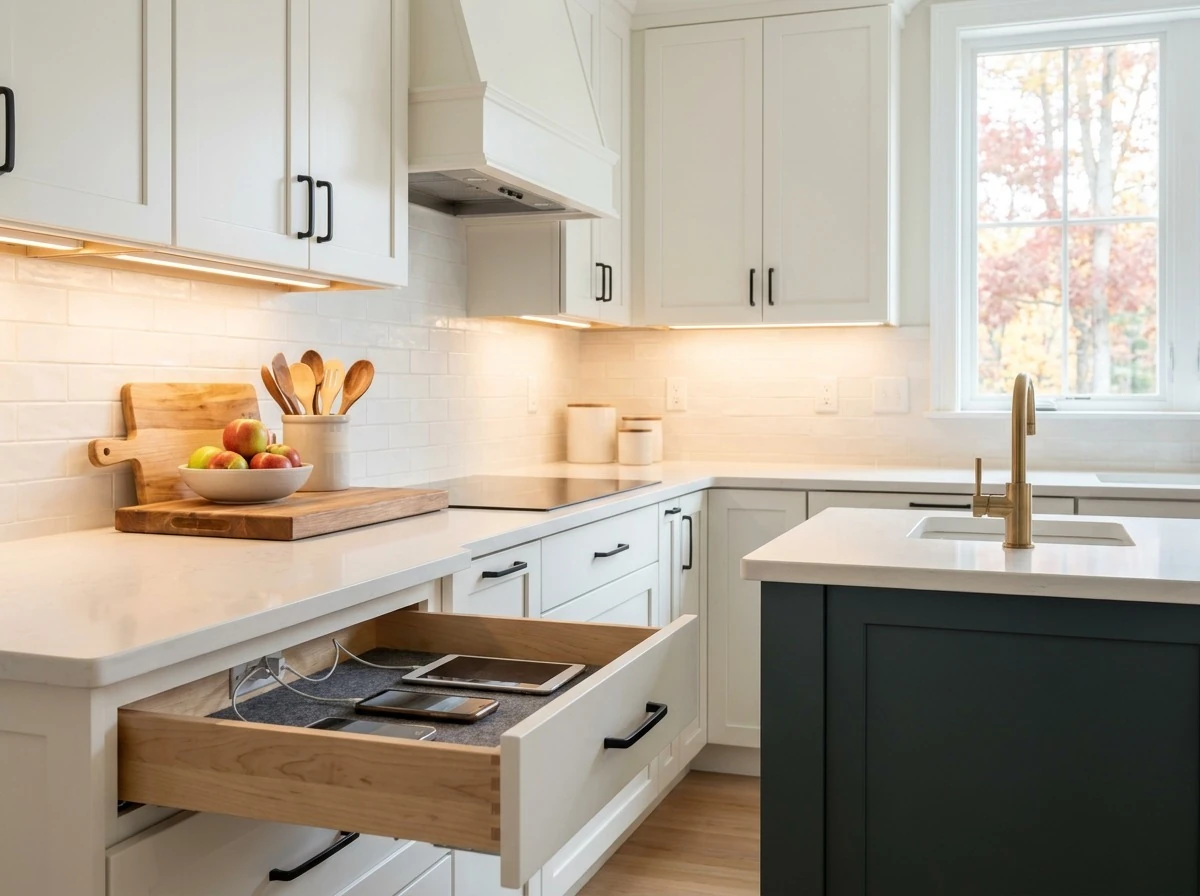
Smart ovens, refrigerators and dishwashers rely on strong Wi-Fi in the kitchen. Plan outlets inside cabinets for small appliances, under-cabinet lighting on the same control system and a charging drawer so phones and tablets stay off the counter.
Water damage is one of the costliest problems a home can have. Leak sensors near the water heater, washing machine and sinks can trigger an automatic shutoff valve on the main water line. The valve is easiest to install during plumbing rough-in, and it matters most in a home left empty during winter travel.
Connected smoke and carbon monoxide alarms can send an alert to your phone when you are away. Your electrician confirms what the electrical code requires for alarms in each location. Many North Shore homeowners also add a standby generator; if you do, put the network equipment, heating controls and refrigerator on it.
Smart irrigation controllers adjust watering to the weather. Outdoor lighting, a camera covering the driveway and speakers on the patio round out the exterior. Run weather-rated wire and conduit to the patio and landscape areas while the site is still open.
The table below sorts common features by how hard they are to add once the house is finished.
| Feature | Install from day one | Prepare for later | Easy to add any time |
|---|---|---|---|
| Network | Wired drops, ceiling access points | Spare cable and conduit | Mesh extenders |
| Security | Wired cameras, video doorbell | Sensor wiring at doors and windows | Wireless sensors |
| Access | Door prep for smart locks, garage control | Keypad at a side door | Smart lock upgrades |
| Climate | Zoned HVAC, smart thermostats | Energy monitor at the panel | Room sensors |
| Energy | Panel capacity, EV circuit | Solar conduit, battery space | Smart plugs |
| Lighting and shades | Keypads, neutral wires, shade power | Blocking at future shade windows | Smart bulbs |
| Water | Shutoff valve on the main line | Sensor locations | Battery leak sensors |
| Audio and video | Speaker wire, media room wiring | Outdoor audio conduit | Portable speakers |
In a design-build project, the technology plan is part of the same drawings, budget and schedule as the rest of the house. That makes it easier to see what each feature costs before anything is ordered.
A smart home technology package is a group of features priced together, for example network, security, lighting control and audio. The cost depends on the size of the house, the number of rooms covered and whether you choose a professional control system or app-based devices. Pricing the package during design shows where to spend now and what to phase in later. Our article on luxury custom home features looks at which upgrades tend to matter to future buyers.
Many plug-in devices are easy to install yourself. Wired cameras, lighting control, shades, audio and anything tied to the electrical panel belong with licensed trades and an experienced integrator. A clear split between the two keeps warranties and responsibilities simple.
Technology touches the electrician, the HVAC installer, the plumber, the cabinet maker and the finish carpenter. On a custom build, the project manager's role includes keeping those trades in sequence, and a rough-in walkthrough before insulation confirms every box, cable and blocking point against the plan. You can see where that walkthrough falls in how the design-build process works.
The technology plan is one part of a larger project, and the complete design-build roadmap shows how it fits with site work, design and construction. If you are starting a new home, a team offering custom residential construction together with a design-build firm in Massachusetts approach can carry the technology from the first sketch to the final walkthrough.
A smart home technology package is a group of connected features designed and priced together for a new home. It often includes the home network, security cameras and sensors, smart locks, lighting control, thermostats and whole-home audio. In a custom build, the package is planned with the drawings so the wiring, power and device locations are ready before the walls close.
The cost depends on the size of the home, how many rooms each system covers and whether you choose a professional control system or app-based devices. Wiring, conduit and panel capacity cost least during construction. Lighting control, motorized shades and multi-room audio add the most. Pricing each feature during design shows its effect on the budget before construction begins.
Smart devices can raise privacy questions, depend on software updates and stop working during an internet or power outage. Some features carry monthly fees, and devices often need replacing sooner than the wiring behind them. Choosing established products, a strong network, backup power and a separate network for devices reduces most of these drawbacks.
For most households, the features that save energy, protect the house and simplify daily routines are worth it, especially zoned climate control, security, leak detection and lighting control. The value is highest when the wiring is installed during construction, because adding it later means opening finished walls. Devices you rarely use add cost without much benefit.
Plug-in devices such as smart speakers, bulbs and wireless sensors are easy to install yourself. Wired cameras, lighting control, motorized shades, audio and anything connected to the electrical panel belong with licensed trades and an experienced integrator. In a custom build, the design-build team can coordinate the professional work and leave simple devices for you.
Run empty conduit with pull strings to the attic, basement and key rooms, leave spare network cable and breaker space, and choose products that support open standards. Plan roof space and a conduit path for future solar, and a dedicated circuit for EV charging. These steps keep later upgrades simple without opening finished walls.
The smart home technology that matters most in a custom home is the part you never see: the network, the power, the panel capacity and the planning that puts every camera, keypad, shade and sensor in the right place. When those decisions are made from day one, the devices you choose today work well, and the ones that come next are simple to add.
If you are planning a custom home in Middleton, on the North Shore or in Greater Boston, call Genesis Construction and Development at 617-515-0005.
© 2025 Genesis Construction and Development Inc. - All rights reserved | Web Design & SEO By: Authority Solutions®