Building a custom home in Massachusetts starts with choosing the right team and process, not the right floor plan. A design-build approach, where one team manages your project from lot evaluation through move-in, gives you cost certainty, schedule predictability, and a home that's designed around what's actually buildable on your site and within your budget.
If you're a busy professional planning to build, the sheer number of decisions can feel paralyzing. Where do you even start? Most people jump straight to browsing floor plans or interviewing architects, but that skips the steps that determine whether your project succeeds or stalls. Working with a custom home builder who integrates design and construction from the beginning changes the entire trajectory of your project.
This guide walks through every phase of the custom home building process in Massachusetts, from early feasibility through your final walkthrough. It's written from a builder's perspective, which means the focus isn't on inspiration boards. It's on the real decisions, regulatory realities, and planning steps that separate a smooth build from a stressful one.

The custom home process moves through eight core phases: initial consultation, site evaluation, design development, pre-construction planning, permitting, construction, quality assurance, and final walkthrough. Each phase builds on the one before it, and skipping or rushing any of them creates problems that compound downstream.
According to Wikipedia's overview of home construction, the process typically begins with a planning stage in which plans are prepared and approved by both the client and regulatory authorities. That's true everywhere, but Massachusetts adds layers of complexity that make upfront planning even more critical.
Here's how the process works when it's managed well:
| Phase | What Happens | Typical Duration (MA) | Key Decision Points |
| Consultation | Goals, budget, and feasibility review | 1-2 weeks | Team selection, budget range, go/no-go |
| Site Evaluation | Soil, zoning, utility, and environmental review | 2-4 weeks | Site suitability, environmental constraints |
| Design Development | Architectural plans with builder input | 8-16 weeks | Floor plan, materials, energy systems |
| Pre-Construction | Budgeting, scheduling, subcontractor selection | 4-8 weeks | Final budget approval, material orders |
| Permitting | Municipal submissions and board approvals | 4-12 weeks | Building permit, zoning approval, ConCom |
| Construction | Foundation through finishes | 8-14 months | Milestone inspections, change management |
| Quality Assurance | Punch list, systems testing, HERS verification | 2-4 weeks | Final inspection, certificate of occupancy |
| Final Walkthrough | Owner orientation and project handoff | 1 week | Warranty documentation, systems training |
The entire process, from first conversation to move-in, typically spans 14 to 24 months for a custom home in Massachusetts. That range depends heavily on project complexity, municipal permitting timelines, and seasonal factors. New England weather creates a natural construction calendar that experienced local builders plan around.
When your builder participates in the design phase, every architectural decision gets tested against real-world construction constraints before drawings are finalized. This integration prevents the most common and expensive custom home problem: designs that look beautiful on paper but cost far more than expected to actually build.
Most custom home projects that go over budget don't fail because of bad workmanship or dishonest contractors. They fail because the design was developed without input from construction. An architect working in isolation makes decisions based on aesthetics and function, which is exactly their job. But those decisions have cost, schedule, and feasibility implications that only a builder can evaluate.
Here's a pattern we see repeatedly in Massachusetts. A homeowner hires an architect, spends months perfecting a design, and then sends it out to custom home builders for pricing. The bids come back well above the budget. Why? The design included structural choices with long lead times, energy systems that exceeded code requirements without proportional value, and site work assumptions that didn't match actual conditions. None of these were mistakes. They were simply decisions made without the right information in the room.
Builder-led design-build eliminates that cycle:
| Design Decision | Without Builder Input | With Builder Input |
| Foundation type | Selected based on architectural preference | Selected based on soil report, cost, and structural need |
| Window specifications | Chosen for aesthetics | Balanced for aesthetics, energy code, and lead time |
| Roofline complexity | Driven by curb appeal | Optimized for structural efficiency and weather performance |
| HVAC system | Sized by the engineer after design is complete | Coordinated with the floor plan and envelope during design |
| Material selections | Based on design intent | Verified for availability, lead time, and installation cost |
The homeowner's benefits of this integration go beyond cost control. You spend less time in the decision cycle because your team resolves conflicts in real time instead of bouncing revisions between separate firms. You also get a more accurate timeline because the builder plans the construction sequence while the design is still being developed.
Massachusetts custom home permitting involves multiple municipal boards, state-level code requirements, and environmental reviews that vary significantly from town to town. A builder with local experience navigates this process proactively, structuring permit applications that get approved on the first submission rather than bouncing between boards for months.
If you've built in another state, forget what you think you know about permitting. Massachusetts has one of the more complex regulatory environments for residential construction in the country. The good news is that an experienced local team handles this for you. The bad news is that choosing a builder without local permit experience can add months to your timeline.
Here's what makes Massachusetts permitting distinctive:
| Regulatory Body | What They Review | Typical Timeline | Common Delay Cause |
| Building Department | Structural, electrical, plumbing, mechanical plans | 2-6 weeks | Incomplete drawings or missing engineering |
| Zoning Board | Setbacks, lot coverage, height, use restrictions | 4-8 weeks (if hearing required) | Variance requests for non-conforming lots |
| Conservation Commission | Wetlands proximity, stormwater management | 4-10 weeks | Insufficient environmental documentation |
| Board of Health | Septic design and Title V compliance | 3-6 weeks | Failed perc tests or redesign requirements |
| Fire Department | Access, hydrant proximity, smoke/CO detection | 1-2 weeks | Driveway width or turnaround issues |
A builder who works regularly in your target municipality understands which boards are faster, which require additional documentation, and how to structure applications that move through the process efficiently. This local knowledge is one of the most undervalued advantages of working with a custom home construction company rooted in your region.
For investors and developers considering multifamily construction in MBTA Communities Act zones, the permitting complexity increases significantly, but the same principle applies: local builder expertise in regulatory navigation is what separates projects that get approved from those that stall.
The right custom home builder brings licensed construction expertise, local permitting relationships, a transparent budgeting process, and a communication system that keeps you informed without requiring you to manage the project yourself. In Massachusetts, these capabilities are non-negotiable because the regulatory and construction environment demands them.
Choosing a builder is the most consequential decision in your entire custom home project. This person or firm becomes your single point of accountability for translating your vision into a built reality. Here's what to prioritize.
Look for a builder whose principals hold Massachusetts Construction Supervisor Licenses and have direct, hands-on building experience. There's a meaningful difference between a firm led by project managers and one led by people who've framed walls, coordinated mechanical systems, and managed subcontractors on site. That hands-on knowledge is what enables genuine constructability feedback during design.

Ask for specific examples of permits pulled in your target town. A builder who regularly works in Essex and Middlesex Counties knows the building inspectors, conservation agents, and zoning administrators by name. Those relationships don't guarantee approval, but they do mean your applications are structured correctly from the start. This matters equally whether you're building a single custom home or exploring a design build project that touches multiple municipal boards.
A strong builder provides a detailed budget during pre-construction, not a single lump-sum number. You should be able to see line items for site work, foundation, framing, mechanical systems, finishes, and allowances. Ask how the firm handles cost changes and what their historical change-order rate has been. Builders who plan meticulously during pre-construction don't need to make up margin through change orders during construction.
Every contractor says they communicate well. What separates the best custom home builders from the rest is a structured communication system: regular progress updates, documented walkthroughs, progress photography, and clear protocols for handling decisions and changes. Ask to see their actual communication process before signing a contract. Founder-led firms, where the owner is personally involved in your project, tend to deliver the most consistent communication because their reputation is directly on the line with every build.
Custom home costs vary based on location, size, site conditions, and finish level. Rather than quoting a number that may not apply to your project, we recommend starting with a feasibility conversation to establish a realistic budget range based on your specific goals.
The full process from initial consultation to move-in typically takes 14 to 24 months. Design and permitting account for roughly a third of that timeline, with construction spanning 8 to 14 months depending on complexity and seasonal factors.
A custom home is designed specifically for you on your lot, with your input on every design decision. A spec home is designed and built by a developer for the general market, with buyers choosing from predetermined options.
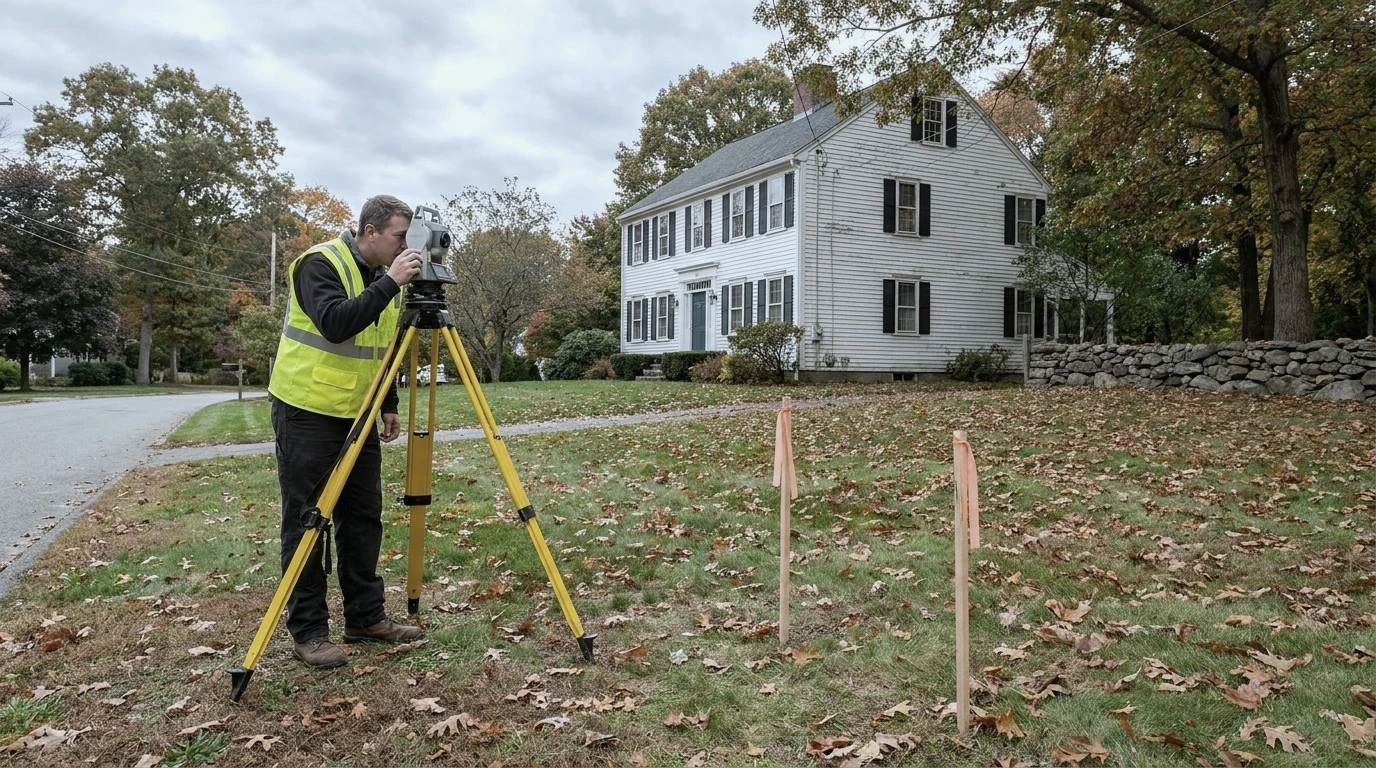
No. A good builder can help you evaluate potential lots for buildability, zoning compliance, and budget alignment before you purchase. This evaluation prevents the costly mistake of buying land that can't support your vision.
Design-build means one firm manages both the design and construction of your home under a single contract. Your builder participates in the design process, providing cost and feasibility input so the plans are buildable from the start.
The Stretch Code is an energy performance standard adopted by most Massachusetts municipalities that sets insulation, air sealing, and HVAC requirements above the base building code. Compliance is verified through HERS testing before a certificate of occupancy is issued.
At minimum, you'll need a building permit. Depending on your lot, you may also need zoning approval, Conservation Commission approval, Board of Health approval for septic, and fire department sign-off. Your builder manages the full permit process.
Prioritize construction licensing, local permitting experience in your target municipality, transparent line-item budgeting, a structured communication process, and founder or principal involvement in your project.
Many design-build firms work with client-selected architects. The key is that the builder participates actively during the design phase to provide constructability and cost feedback, regardless of who leads the architectural design.
HERS (Home Energy Rating System) measures your home's energy efficiency on a scale where lower is better. Massachusetts Stretch Code compliance requires HERS testing, and a strong rating reduces long-term energy costs while increasing resale value.
Building a custom home in Massachusetts is one of the most significant investments you'll ever make, and the difference between a rewarding experience and a stressful one comes down to process, not luck. When your builder is involved from the earliest planning stages, shaping design decisions with real construction knowledge, checking every detail against local codes and budget realities, the entire project runs with a level of clarity and predictability that the traditional approach simply can't match.If you're considering building a custom home in Essex or Middlesex County, the first step is an honest conversation about your goals, your site, and what's realistic for your budget and timeline. Genesis Construction and Development and Development's custom home design build process is built around that conversation, bringing three generations of builder-led expertise to every phase from feasibility through final walkthrough. Reach out to start planning with confidence.
© 2025 Genesis Construction and Development Inc. - All rights reserved | Web Design & SEO By: Authority Solutions®