Building a custom home in Massachusetts typically takes 12 to 20 months from initial planning through move-in, with 6 to 10 months in pre-construction (design, permitting, site work) and 8 to 14 months of active construction. Northeast timelines run longer than national averages due to climate, regulatory complexity, and the level of customization involved.
That's a wide range, and for good reason. A 2,000-square-foot colonial on a flat, cleared lot in North Reading will move faster than a 4,500-square-foot home with complex rooflines on a sloped site in Andover. The honest answer is that your custom home construction timeline in Massachusetts depends on decisions you make during planning, the complexity of your design, and how well your team navigates the permitting process. If you're working with a custom home builder experienced in the Massachusetts market, you can significantly reduce uncertainty by getting the pre-construction phase right.
This article walks through each major phase of the process, explains what drives timeline differences in Massachusetts specifically, and shows how an integrated design-build approach can keep your project on track.
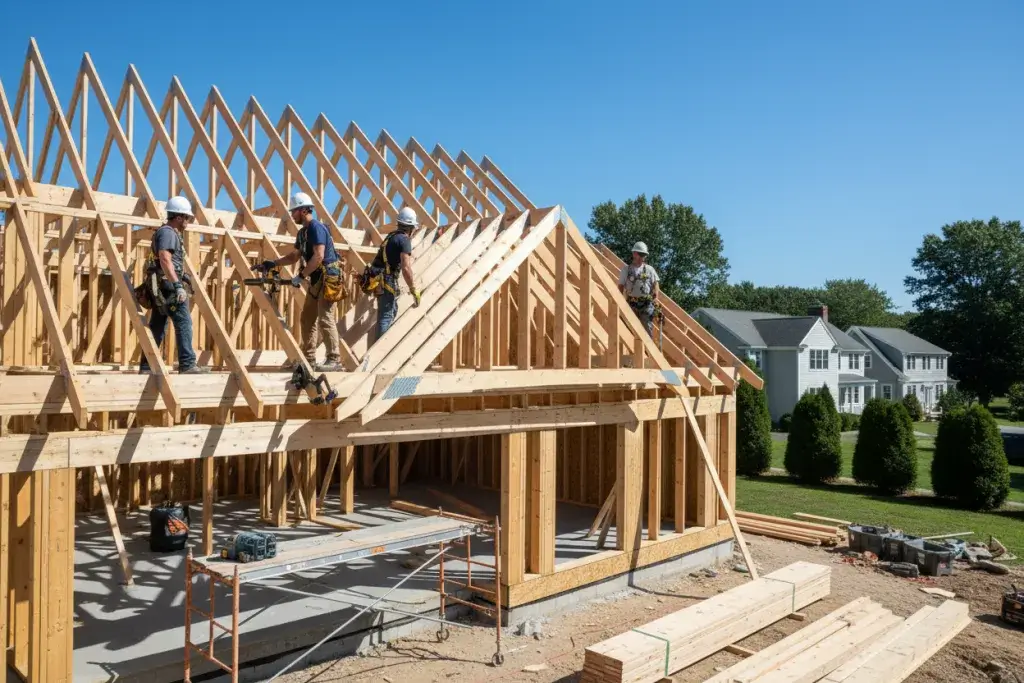
A custom home project moves through five distinct phases: planning and design (2 to 4 months), permitting (1 to 3 months), site preparation and foundation (1 to 2 months), framing through mechanical rough-ins (3 to 5 months), and interior finishes through final inspections (3 to 5 months).
Every custom home follows a sequence, even though the timelines within each phase vary. Understanding the sequence helps you set realistic expectations and identify where delays are most likely to occur.
The planning and design phase is where your vision takes shape. You'll work with your builder and design team to develop floor plans, select materials, finalize structural details, and create the comprehensive blueprint that aligns design, construction, and budget. In a builder-led design-and-build model, the construction team participates in these sessions from the start, evaluating buildability and catching potential issues before they become costly changes during construction.
Permitting follows design completion. Massachusetts municipalities each operate their own review process, and timelines vary significantly from town to town. We'll cover this in more detail below, but budgeting 4 to 12 weeks for permit review is realistic for most Essex and Middlesex County communities. According to data from the U.S. Census Bureau's Survey of Construction, the Northeast consistently records the longest construction timelines in the country, reflecting both regulatory complexity and seasonal constraints that affect build schedules here more than in other regions.
Once permits are in hand, site work begins: clearing, grading, excavation, and foundation installation typically take 4 to 8 weeks, depending on soil conditions and the foundation type. Framing, roofing, and mechanical rough-ins represent the most visible construction phase. And the final stretch, covering drywall, paint, flooring, cabinetry, fixtures, and landscaping, often takes longer than homeowners expect because of the sheer number of finish decisions and inspections involved.
| Phase | Typical Timeline | Key Activities |
| Planning and design | 2 to 4 months | Floor plans, material selection, budget alignment, and engineering |
| Permitting | 1 to 3 months | Building permit application, zoning review, code compliance |
| Site work and foundation | 1 to 2 months | Clearing, excavation, foundation pour, and waterproofing |
| Framing through rough-ins | 3 to 5 months | Structural framing, roofing, HVAC, electrical, plumbing |
| Finishes and inspections | 3 to 5 months | Drywall, paint, flooring, cabinetry, fixtures, and final inspections |
The biggest factors that affect your timeline are design complexity, site conditions, permitting speed in your specific municipality, weather patterns, material lead times, and whether your builder was involved during the design phase.
Some of these you control. Others you can only plan around. Let's break them down.
The more complex your home's design, the longer each phase takes. Custom millwork, specialty windows, intricate rooflines, and high-performance building envelopes all add time to the process. But here's what really stalls projects: delayed owner decisions. If material selections, fixture choices, or design revisions stretch into the construction phase, the schedule slips. A good custom home contractor will establish decision deadlines early and hold them. When builders participate in design from the start, selections are made with lead times already factored in, reducing the risk of mid-build delays.
New England weather introduces real scheduling constraints. Foundation work is difficult during the deep frost months. Exterior finishes and roofing slow down in winter conditions. Experienced Massachusetts custom home builders plan their schedules to align major exterior work with favorable weather windows, typically framing in spring or early summer to get the building dried in before winter. Ignoring this reality is one of the most common reasons projects run over schedule.
Permit review timelines differ across Essex and Middlesex Counties. Some building departments turn around residential permits in 3 to 4 weeks. Others take 8 to 12 weeks, particularly for properties in historic districts or environmentally sensitive areas. A builder who has established relationships with local departments and submits clean, code-compliant plans on the first pass can avoid the costly resubmission cycle that adds months to projects handled by less-experienced teams.
| Timeline Factor | Impact | Mitigation Strategy |
| Design complexity | Adds weeks to months | Lock decisions before construction begins |
| Site conditions (slopes, ledge) | Adds 2 to 6 weeks to site work | Thorough site evaluation during pre-construction |
| Winter construction | Slows exterior work | Plan framing for spring/summer start |
| Permit review delays | Adds 4 to 8 weeks | Submit code-compliant plans, and know the local department |
| Material lead times | Adds 2 to 8 weeks per specialty item | Order long-lead items during the permitting phase |
| Owner decision delays | Variable, often weeks | Establish decision deadlines in the project schedule |

Design-build typically compresses project timelines because design and pre-construction activities overlap with early construction planning, eliminating the sequential gap that exists when design must be fully complete before a builder is even selected.
In a traditional approach, you'd hire an architect, spend months on design, finalize drawings, and then solicit bids from contractors. That bidding phase alone can take 4 to 8 weeks, and the winning contractor often identifies design issues that require revisions before construction can start. This sequential handoff adds months to the overall project.
In a design build construction model, the contractor is already at the table during design. They're identifying long-lead materials, flagging constructability concerns, and developing a preliminary construction schedule while the architect continues to refine the drawings. By the time permits are issued, the builder already understands every detail of the project and has trades lined up to start.
This overlapping approach matters enormously in Massachusetts, where the construction season is compressed by weather. Shaving 2 to 3 months off pre-construction means you might start framing in April instead of June, giving you a full summer and fall to get the shell dried in before winter conditions arrive. For custom home building projects, that seasonal advantage can mean the difference between a December completion and a March one.
The other timeline benefit? Fewer change orders during construction. When the builder has been involved from day one, there are fewer "we didn't realize this wouldn't work" discoveries during framing or rough-in. Each one of those discoveries adds days or weeks while the team regroups, redesigns, and reorders materials. Design-build doesn't eliminate surprises entirely, but it dramatically reduces the ones caused by the design-construction disconnect.
For multifamily builders and investors working on tighter return-on-investment timelines, this schedule compression directly affects project economics because each month of construction incurs financing costs and delays the start of rental income or sales.
The most effective things you can do are make design decisions on time, choose a builder before design begins, select a team with local Massachusetts experience, and resist the urge to make major changes after construction starts.
Homeowners often underestimate how much control they have over the schedule. Your builder manages the construction timeline, but you manage the decision timeline. Every week of indecision on tile, countertops, lighting, or window styles is a week your builder can't order materials or schedule trades. The best custom home design build teams build decision deadlines into the project schedule from the start, so both sides know exactly when each choice needs to be final.
Choosing a builder who was involved in the design phase is the single biggest schedule advantage available to you. That builder already understands your project's structural details, MEP routing, and material requirements. There's no learning curve, no bid review, and no discovery period where a new contractor needs to reconcile what was drawn with what's actually buildable.
And here's the thing most people don't consider: local experience is a timeline asset in Massachusetts. A builder with established subcontractor relationships in Essex and Middlesex Counties can schedule trades more reliably than a firm that's new to the area. They know which towns have fast permit turnarounds and which ones require extra lead time. That institutional knowledge doesn't show up on a project schedule, but it absolutely affects whether you move in on time.
Most custom homes in Massachusetts take 12 to 20 months from initial planning through completion, with pre-construction accounting for roughly 3 to 7 months and active construction taking 8 to 14 months.
The Northeast has the longest average build times in the country due to winter weather constraints, more complex regulatory environments, older infrastructure on existing lots, and generally higher levels of design customization.
Permit review timelines range from 3 to 12 weeks depending on the municipality, the complexity of the project, and whether plans are submitted clean and code-compliant on the first pass.
Foundation work is typically the fastest active construction phase, often completed in 3 to 6 weeks once site preparation is finished and weather conditions allow.
Delayed owner decisions on materials and finishes, permit resubmissions due to incomplete plans, and winter weather interruptions are the three most common causes of schedule delays in Massachusetts.
Yes. Design-build overlaps design and pre-construction activities, eliminates the bidding phase, and reduces change orders during construction. Projects using this approach typically start construction sooner and experience fewer mid-build schedule disruptions.
Ideally, you'd complete design and permitting in late winter so foundation and framing can begin in spring, giving you a full construction season before the following winter.
Complex rooflines, custom millwork, specialty materials, and high-performance building systems add time to both design and construction. These elements require longer lead times for materials and more skilled labor hours during installation.
Severe winter conditions can halt exterior work like foundation pours, framing, roofing, and siding. Interior work can typically continue if the building is dried in, which is why getting the shell closed before winter is a strategic priority.
Ask your builder about their communication systems. A well-organized firm provides regular updates, progress photography, and scheduled milestone walkthroughs so you can track progress without managing the project yourself.
Building a custom home in Massachusetts is a significant time commitment, and the honest answer is that timelines depend on dozens of variables. But the variables that matter most, such as design complexity, decision timing, permitting strategy, and builder involvement from day one, are all within your control if you plan deliberately. The design-build approach provides the best structure for managing those variables because a single team coordinates the entire process, from design through move-in.
If you're beginning to project. We'll walk you through our eight-step process and show you how early planning translates into a schedule you can count on.
© 2025 Genesis Construction and Development Inc. - All rights reserved | Web Design & SEO By: Authority Solutions®