A design-build contractor manages your entire project under one contract, coordinating everything from initial design collaboration through final construction. Unlike traditional approaches that split design and building between separate firms, a design-build contractor serves as your single point of accountability for scope, schedule, budget, and quality.
If you're planning a residential project in Massachusetts, you've probably encountered the term design-build contractor more than once. But what does that person or firm actually do day to day, and how is it different from hiring an architect and a general contractor separately? The distinction matters more than most homeowners realize, because it directly shapes how much control you have over costs, timelines, and the finished product. At Genesis Construction and Development, we operate as a design-build firm in Essex and Middlesex Counties, and we've seen firsthand how this integrated approach changes outcomes for clients.
This article breaks down the specific design-build contractor responsibilities a qualified firm takes on, explains how those responsibilities compare to traditional project delivery, and clarifies what you should expect when working with one on a custom home, renovation, or multifamily project in Massachusetts.

A design-build contractor wears multiple hats: project coordinator, design collaborator, construction manager, budget steward, and client communicator. These roles overlap intentionally, ensuring no decision gets made in isolation from the realities of building.
In a design-and-build arrangement, the contractor isn't waiting on the sidelines until the drawings are finished. They're involved from the very first conversation about your project's goals. Here's what that looks like in practice:
The key difference? Traditional methods create a handoff. Design gets completed, then a builder bids on finished drawings they had no role in shaping. A design-build firm eliminates that handoff entirely.
| Role | Design-Build Contractor | Traditional General Contractor |
| Design input | Active from project start | Enters after design is complete |
| Budget responsibility | Ongoing from concept | Bid-based after drawings |
| Permitting management | Integrated into the process | Often separate from the design team |
| Single point of contact | Yes | No, split between architect and GC |
| Change order exposure | Reduced through early planning | Higher due to design gaps |
In traditional design-bid-build, an owner hires an architect to complete drawings, then solicits bids from contractors who had no involvement in the design. In design-build, one entity coordinates both, which research consistently shows reduces cost growth and speeds delivery.
The concept of project delivery methods defines how owners, designers, and contractors relate to each other contractually and operationally. Traditional design-bid-build separates those roles into sequential phases and independent contracts. The owner manages the relationship between the architect and the builder, and any miscommunication between those parties lands on the owner's desk.
Design build construction collapses that separation. The contractor and design team work under a single agreement and collaborate from day one. Sound familiar? It should. The design-build approach now represents roughly 47% of all U.S. construction spending, compared to just 15% for traditional design-bid-build. Industry data shows design build projects typically deliver faster and with lower unit costs than fragmented approaches.
But here's the thing most people miss: not all design-build is the same. Some firms are architect-led, meaning the design team drives decisions and the builder follows. Others, like Genesis, are builder-led, meaning construction expertise informs design decisions from the start. Builder-led residential design build ensures that structural feasibility, MEP coordination, and cost implications are considered during schematic design rather than discovered during construction. That early integration is what prevents the expensive "we didn't realize this wouldn't work" moments that plague traditional projects.
For Massachusetts homeowners, this also means someone with deep local knowledge of zoning setbacks, energy codes, and building department expectations is shaping the design before it ever gets submitted for permits.
| Factor | Design-Build | Design-Bid-Build |
| Number of contracts | One | Two or more |
| Design and construction overlap | Yes | No, sequential |
| Builder input during design | Continuous | None until bid phase |
| Owner coordination burden | Low | High |
| Typical schedule | Faster | Longer due to sequential phases |
| Cost certainty | Higher (early budget lock) | Lower (bid surprises common) |

In Massachusetts, a qualified design-build firm should manage design coordination, permitting with local building departments, energy code compliance, MEP systems planning, construction scheduling, subcontractor management, quality inspections, and ongoing client communication throughout every project phase.
Massachusetts adds layers of complexity that make the design-build contractor responsibilities even more critical to understand. Between current energy codes, local zoning variations across Essex and Middlesex Counties, and municipal building department processes that differ town by town, having one team that understands and coordinates all of it isn't a luxury. It's a practical necessity.
Here's what a well-run design-build firm handles on a typical Massachusetts residential project:
The contractor evaluates site conditions, reviews zoning requirements, and collaborates with the design team to develop plans that are both architecturally sound and practical to build. A detailed project blueprint aligns design, construction methodology, and cost before anyone picks up a hammer. In a builder-led model, the construction team is reviewing structural implications, ductwork routing, and material selections during design sessions, not after.
Massachusetts building departments require code-compliant submissions, and each municipality has its own review process and timeline. A design-and-build contractor familiar with local departments can submit clean plans, anticipate review questions, and track approvals to keep the schedule on track. For projects involving multifamily construction or complex zoning, this regulatory expertise becomes especially valuable.
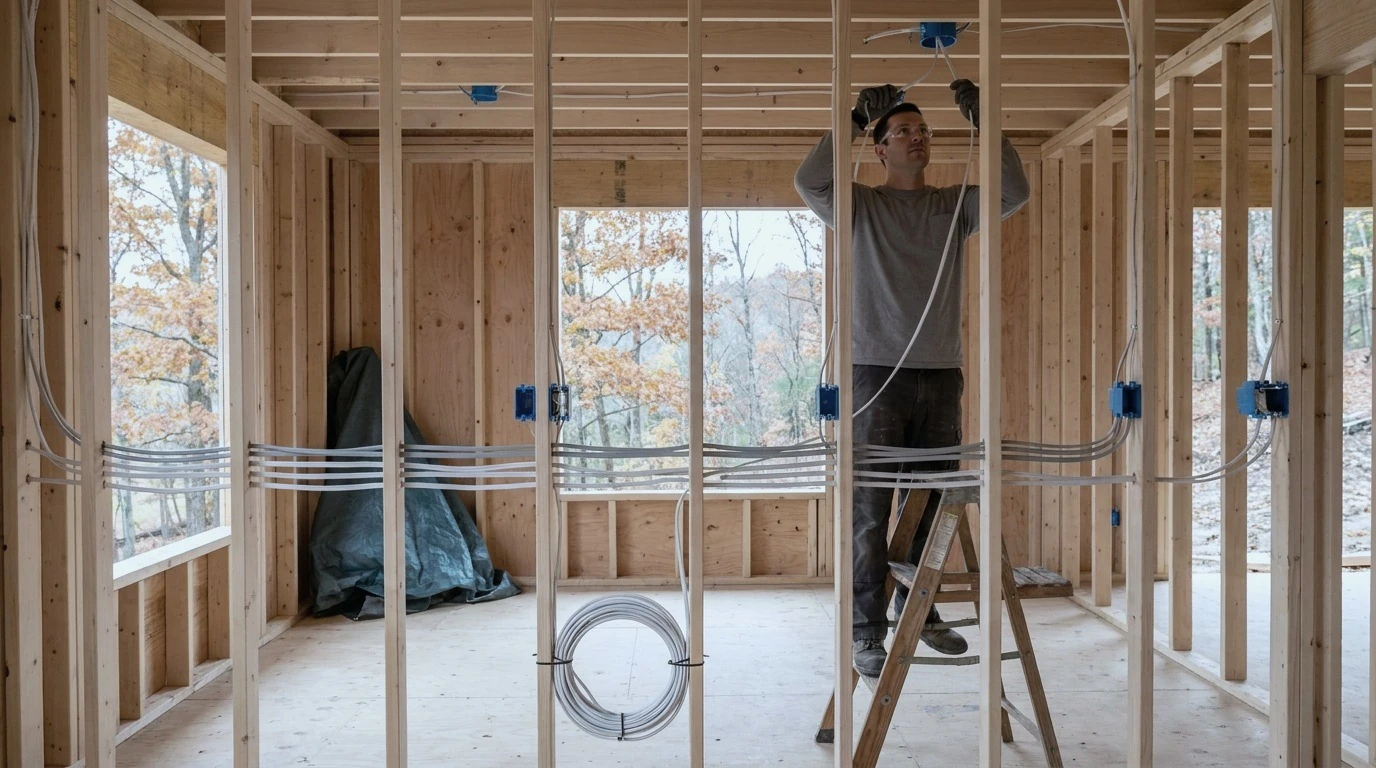
During construction, the firm coordinates all trades, manages the schedule, conducts quality inspections, and provides regular client updates through progress photography, milestone walkthroughs, and structured communication. The same people who helped design the project are now building it, which means institutional knowledge of every decision is baked into the execution.
| Massachusetts-Specific Responsibility | What It Involves |
| Energy code compliance | Designing to meet current MA codes, targeting efficient HERS ratings |
| Local zoning navigation | Setbacks, lot coverage, density rules by municipality |
| Building department coordination | Submitting compliant plans, tracking review timelines |
| MEP systems coordination | Routing HVAC, electrical, and plumbing to avoid field conflicts |
| Subcontractor management | Scheduling and overseeing licensed MA trades |
| Client communication | Regular updates, photography, and scheduled walkthroughs |
The contractor's role matters because it determines who is accountable when design intent meets construction reality. In a design-build structure, accountability rests with a single team rather than being split across separate contracts with competing interests.
Here's where the practical impact becomes clear. When design and construction are handled by different firms, problems become disputes. The architect says the drawings were correct. The builder says the design wasn't buildable. The homeowner is stuck in the middle, paying for redesigns and absorbing schedule delays. This disconnect is why research shows the vast majority of traditionally delivered projects experience cost overruns.
With a design-build company, that dynamic doesn't exist. The firm that designed the approach is the same firm building it. If a custom home builder identifies a structural challenge during framing, it's the same organization that made the design decision, and they own the resolution. No finger-pointing. No change orders triggered by miscommunication between separate contracts.
For homeowners in Massachusetts who are managing busy professional lives and don't have time to coordinate between an architect's office and a separate contracting team, this single-source accountability isn't just convenient. It's the difference between a project that runs smoothly and one that becomes a second job. And for multi-family home builders working with investors, it means predictable timelines and reduced exposure to the regulatory surprises that derail fragmented projects.
When we say peace of mind is built with precision, not promises, this is exactly what we mean. The design-build services model creates a structure that enables precision because one team controls the entire process, from the first sketch to the final walkthrough.
A design-build contractor coordinates both design and construction under one contract, serving as the single point of accountability for your project's scope, schedule, budget, and quality from start to finish.
A general contractor typically enters a project after design is complete and bids on finished drawings. A design-build contractor participates in design from the beginning, integrating construction expertise into every decision.
In most design-build arrangements, the contractor either employs design professionals in-house or manages the relationship with an architect as part of the integrated team. The homeowner signs one contract rather than managing separate agreements.
Builder-led means the construction team drives decision-making during design, ensuring that every architectural choice is evaluated for buildability, cost, and code compliance before plans are finalized.
Yes. A qualified design-build firm manages the entire permitting process, including preparing code-compliant submissions, coordinating with local building departments, and tracking approvals through each municipality's review process.
Research indicates design-build typically delivers lower unit costs and fewer change orders than traditional design-bid-build, because early builder involvement reduces the gaps between design intent and construction reality.
The contractor coordinates all trades, including framing, electrical, plumbing, HVAC, insulation, drywall, finish carpentry, and specialty subcontractors. Scheduling and quality oversight fall under the contractor's responsibility.
Design and construction phases can overlap in a design-build model, which industry research shows delivers projects significantly faster than sequential approaches where design must be fully complete before bidding begins.
Look for a structured, documented process that includes upfront planning, detailed budgeting, transparent communication systems, and clear milestones. A firm that can show you exactly how they move from concept to completion is demonstrating the discipline the model requires.
Absolutely. Design-build is particularly effective for multifamily projects because it integrates zoning navigation, code compliance, MEP coordination, and investor-focused design into a single coordinated workflow.
A design-build contractor's responsibilities extend far beyond swinging hammers. The role encompasses design collaboration, budget stewardship, permitting management, construction execution, and client communication, all under a single contract and a single team. In Massachusetts, where regulatory complexity and local building requirements add real project risk, having a firm that integrates all these responsibilities from day one isn't optional. It's how you protect your investment and your timeline.If you're considering a custom home, major renovation, or multifamily project in Essex or Middlesex County, reach out to our team to learn how a builder-led design-build approach works in practice. We'll walk you through our eight-step process and show you exactly how we coordinate design, construction, and everything in between.
© 2025 Genesis Construction and Development Inc. - All rights reserved | Web Design & SEO By: Authority Solutions®