Choosing the right design-build firm comes down to verifying their process, local expertise, and accountability structure. The eight questions below help you evaluate whether a firm genuinely integrates design and construction or simply markets under the design-build label without the operational discipline to deliver on it.
The design-build model has become the dominant project delivery method in U.S. construction for good reason: it places design and construction under one contract, reducing finger-pointing, schedule gaps, and budget surprises. But not every firm calling itself a design-build company in Massachusetts operates the same way. Some are architect-led firms that subcontract construction. Others are general contractors who added "design-build" to their website without changing how they actually run projects.
The questions in this article help you distinguish between genuine design-build firms with integrated processes and firms that use the terminology without the substance. If you're planning a custom home, major renovation, or multifamily investment in Essex or Middlesex County, asking these questions early can save you months of frustration and thousands in avoidable costs.
The first four questions establish whether the firm has a documented process, proper Massachusetts licensing, genuine design-phase involvement, and a transparent budgeting approach that goes beyond ballpark estimates.
A qualified design-build firm should be able to walk you through its process clearly, with defined phases, decision points, and communication milestones. If the answer is vague or improvised, that's a signal the firm doesn't have the operational discipline design-build requires. Look for firms that have systematized their approach, covering initial consultation, site evaluation, design collaboration, detailed estimation, permitting, construction, quality inspections, and post-completion support.
This sounds basic, but it's non-negotiable. Massachusetts requires contractors to carry appropriate licensing and insurance, including professional liability, workers' compensation, and general liability coverage. Ask for current documentation. The Design-Build Institute of America emphasizes that qualified design-build practitioners combine design expertise with construction credentials. In Massachusetts, that means verifying the firm holds the contractor licensing required to manage construction, not just design.
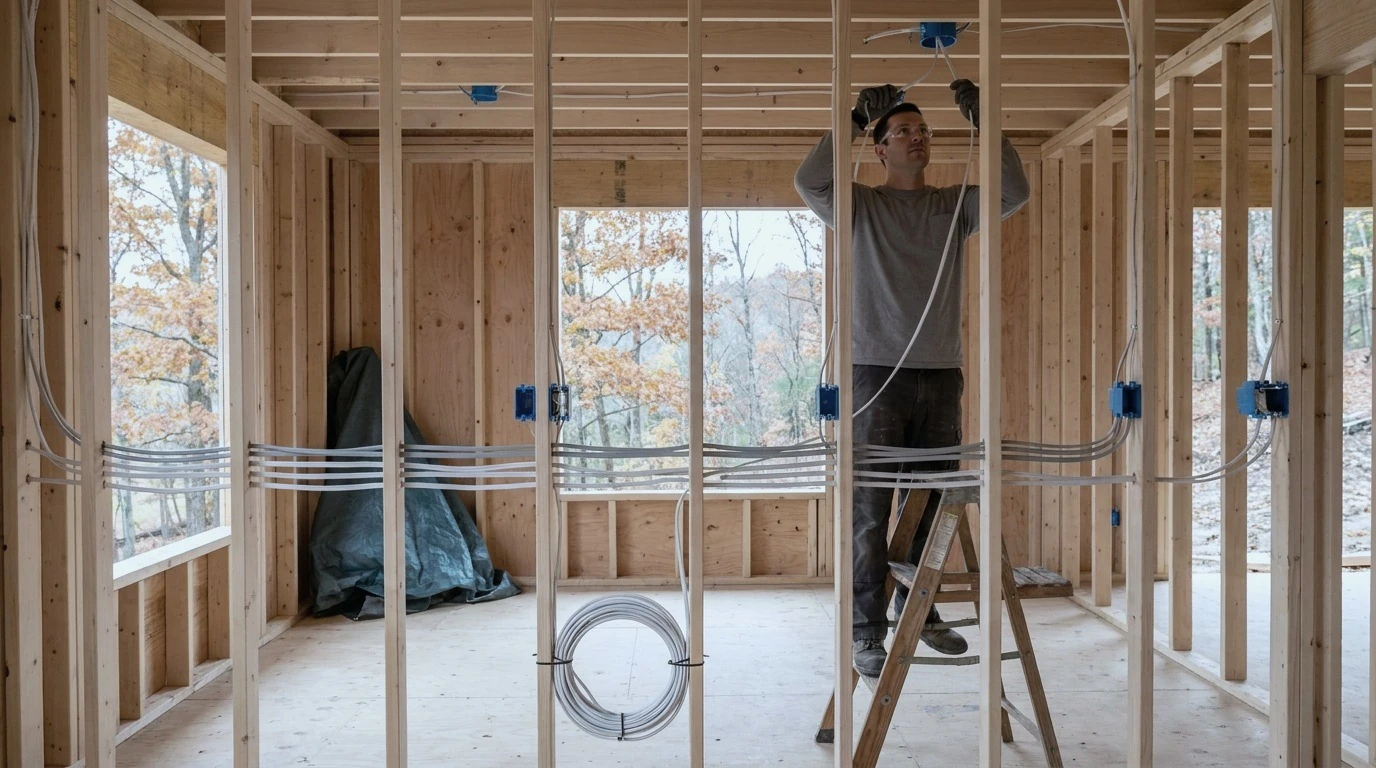
This question separates authentic design-and-build contractors from firms that simply coordinate between an architect and a separate construction crew. In a builder-led model, the construction team attends design sessions, evaluates structural implications, reviews MEP system routing, assesses material availability, and flags cost issues in real time. If the firm tells you their builder "reviews the plans after design is done," that's traditional design-bid-build with a different label.
A firm practicing genuine design-build construction should provide estimates built from actual construction experience, reflecting current local labor rates, real material pricing, and Massachusetts code requirements. Ask to see a sample estimate format. Detailed line-item breakdowns are a sign of disciplined budgeting. Vague lump-sum numbers with minimal backup suggest the firm hasn't done the homework needed to give you cost certainty.
| Question | What a Strong Answer Looks Like | Red Flag |
| Step-by-step process | Documented phases with clear milestones | Vague, improvisational description |
| Licensing and insurance | Current MA contractor license, full insurance docs | Hesitation or inability to provide documentation |
| Construction team in design | Builders attend design sessions, flag issues live | Builder reviews plans after design is finished |
| Estimate detail | Line-item breakdowns tied to real costs | Lump-sum number with no backup detail |

Questions five and six evaluate whether the firm has genuine Massachusetts regulatory expertise and established relationships with local building departments, or whether they're learning your local requirements on your project.
Massachusetts has its own energy codes, zoning frameworks, and building department processes that differ from national standards. A firm with real local expertise should be able to discuss current energy code compliance, HERS rating targets, local zoning requirements for your specific town, and how they navigate permitting in your municipality. For multifamily construction projects, they should also understand MBTA Communities Act compliance and 40B zoning implications. If the firm can't speak specifically to your town's requirements, they don't have the local depth the project needs.
A design-build contractor who has completed projects in your area will know the building inspector's expectations, the typical review timeline, and the common sticking points that delay permits in your town. Ask for specific project references in your municipality or adjacent communities. In Essex and Middlesex Counties, permit processes vary significantly town by town, and established departmental relationships translate directly into smoother, faster approvals. This isn't a soft question. It's one of the most practical predictors of whether your project will stay on schedule.
| Local Expertise Question | Why It Matters |
| MA-specific codes and regulations | Energy codes, zoning, and permitting rules differ from national standards |
| Municipal experience and relationships | Local familiarity directly affects permit timelines and approval success |

The final two questions address how the firm communicates during construction and who is personally accountable for your project's outcomes. These reveal whether you'll receive proactive transparency or be left chasing updates.
Construction is stressful when you don't know what's happening. A well-run design-build company should have a structured communication system: regular update schedules, progress photography, milestone walkthroughs, and a clear point of contact for questions. Ask specifically how often you'll receive updates, what format they'll take, and who your primary contact will be. Firms that rely on "call us anytime" without a proactive communication cadence are leaving your peace of mind to chance.
In larger firms, the person who sells the project often disappears once construction starts, replaced by a project manager you've never met. That's a structural problem because there's no continuity of knowledge or personal accountability. Ask who will oversee your project, whether that person was involved in the design phase, and whether the firm's leadership maintains direct involvement. Custom home builders who offer founder-led or principal-led oversight create a level of accountability that employee-managed projects rarely match.
The best design-build services firms don't just answer these questions willingly. They've already built these answers into their process because they've heard enough clients' concerns to know they matter. If a firm is uncomfortable with any of these eight questions, that discomfort tells you something important about how they'll handle the hard conversations that inevitably arise during construction.
| Communication & Accountability | What to Look For |
| Update frequency and format | Scheduled updates, photography, walkthroughs, not just "call anytime." |
| Primary point of contact | Named the individual who stays with the project throughout |
| Leadership involvement | Principals or founders directly overseeing projects |
| Design-to-construction continuity | Same team from design sessions through final walkthrough |
After interviewing firms, compare their answers side by side against these eight criteria. The firm that provides the most specific, documented, and verifiable responses is the one most likely to deliver on the design-build promise.
Don't just take the answers at face value. Ask for references from projects similar to yours in scope, location, and complexity. Call those references and ask whether the firm delivered on the timeline, budget, and communication. Visit a completed project if possible, to see the quality of workmanship firsthand. And pay attention to how the firm handles your questions during the interview itself. A design-build firm that answers with specifics, shows documentation, and welcomes scrutiny is demonstrating exactly the transparency you'll need during a complex construction project.
For Massachusetts projects, local expertise is a genuine differentiator, not a marketing claim. The firm that knows your town's building department, understands your zoning constraints, and has built successfully in your community will deliver a fundamentally different experience than one that's expanding into your area for the first time. This is especially true for residential design-build projects in Essex and Middlesex Counties, where municipal requirements vary enough that regional experience saves real time and money.
Interview at least two to three firms so you can compare processes, estimates, and communication styles. Side-by-side comparison makes strengths and weaknesses much easier to identify.
Builder-led firms have construction professionals driving decisions during design, prioritizing buildability and cost discipline. Architect-led firms emphasize creative design first, with construction considerations addressed secondarily.
Ask how the firm structures pricing and what's included. Some firms offer fixed-price contracts after design is complete, while others use cost-plus with a guaranteed maximum. The structure matters less than the transparency of the estimate behind it.
Very important in Massachusetts. Municipal permitting processes, zoning rules, and building department expectations vary significantly across Essex and Middlesex Counties. Local experience directly affects permit timelines and approval outcomes.
Some design-build firms work with external architects as part of their integrated team. Others prefer to use architects they've collaborated with before. Ask the firm how they handle this and whether external architects affect the single-point-of-accountability structure.
Look for projects similar to yours in scope, style, and location. Ask about timeline and budget performance on those projects, not just finished photos. A beautiful result that took twice as long as planned isn't a success story.
Request the license number directly from the firm and verify it through the appropriate Massachusetts licensing authority. Also confirm that insurance coverage, including workers' compensation and general liability, is current.
Most homeowners spend 4 to 8 weeks interviewing firms, reviewing portfolios, checking references, and comparing proposals before making a selection.
Process and expertise should come first. A lower bid from a less disciplined firm often leads to change orders and delays that exceed the initial savings. Evaluate the total cost of the approach, not just the upfront number.
A good design-build firm builds revision cycles into the process. Ask about their design approval milestones and how many revision rounds are included before additional fees apply.
Choosing a design-build firm is one of the highest-impact decisions you'll make during a construction project. The eight questions in this article give you a structured framework for evaluating process discipline, local expertise, communication practices, and personal accountability before you sign a contract. Every firm will tell you they're the best choice. The ones who can prove it through documented processes, specific local knowledge, transparent budgets, and verifiable references are the ones worth your investment.Ready to see how a builder-led design-build process works in practice? Contact Genesis Construction and Development to schedule a conversation about your project in Essex or Middlesex County. We'll walk you through our eight-step process, show you completed work, and answer every one of these questions with the specifics your project deserves.
© 2025 Genesis Construction and Development Inc. - All rights reserved | Web Design & SEO By: Authority Solutions®