Single-source accountability in design-build construction services means one firm holds contractual responsibility for both design and construction, eliminating the coordination gaps that occur when homeowners manage separate architects and contractors. This integrated responsibility structure reduces change orders, accelerates decision-making, and gives Massachusetts homeowners a single point of contact for every project question from concept through completion.
The biggest complaint homeowners share after a construction project isn't about the tile color or the cabinet finish. It's about who was responsible when something went wrong, and nobody would own it. The architect says the contractor deviated from the plans. The contractor says the plans were unbuildable. The homeowner is caught in the middle, paying for the gap between two professionals who never worked together in the first place.
This is the accountability problem that integrated design-build construction services solve structurally, not through good intentions or strong personalities, but through the design-build model that makes finger-pointing impossible. When one firm handles both design and construction, the team that drew the plans is the same team that builds from them. If something doesn't work, they fix it, because it's their responsibility either way.
For Massachusetts property owners planning custom home construction, home renovations and remodeling, home additions, or a multifamily construction project, understanding this accountability difference is often the most important factor in choosing the right project delivery method.

In a traditional design-bid-build approach, or traditional general-contractor split, the homeowner hires an architect to create plans, then separately hires a general contractor to build from those plans. These two professionals have separate contracts, separate timelines, and separate financial incentives. The architect's job ends when the plans are approved. The contractor's job begins when the plans arrive. That handoff is where problems concentrate.
Common accountability failures in this model:
Each failure has the same root cause: two separate firms with no shared accountability for the project outcome. The architect is accountable for the drawings. The contractor is accountable for the construction. Nobody is accountable for the project.
A design build contractor operates under a single contract with the homeowner. That contract covers both design and construction. The architect and builder are either part of the same company or work under a unified agreement where one entity bears full responsibility. This single-point-of-responsibility structure is the defining feature of the design-build delivery method and the primary reason it outperforms fragmented delivery on schedule, cost, and quality metrics.
This structural change has practical consequences that homeowners experience daily during their projects.
Decisions happen faster. When the homeowner asks whether a wall can be removed, the architect and builder answer together. No one has to wait for a separate consultation. The team evaluates structural feasibility and design impact at the same time, often in the same meeting.
Cost transparency improves. The builder participates in the design process from day one, providing real-time cost feedback as design decisions are made. The homeowner doesn't reach the end of the design phase only to discover the plans are far over budget.
Change management is cleaner. When changes occur during construction- and they always occur, integrated teams reduce change orders by adapting design and construction simultaneously. The solution and its cost are developed together and presented to the homeowner as one recommendation.
Quality standards are unified. The same team that designed the detail is responsible for building it. If the result doesn't match the design intent, the firm that created both the design and the build fixes it at their cost.
Single-source accountability shows up in three specific areas that Massachusetts homeowners consistently cite as their biggest concerns.
| Accountability Area | Traditional Model | Design-Build Model |
|---|---|---|
| Change orders | Higher volume tied to design and coordination gaps | Fewer changes because design and construction are vetted together |
| Design-to-construction timeline gap | Weeks between design completion and construction start | Parallel process shortens or eliminates the gap |
| Communication delays | Homeowner relays information between architect and contractor | Single point of contact for all questions |
| Dispute resolution | Homeowner mediates between separate firms | Internal resolution within one team |
These aren't theoretical differences. They are the daily reality of how projects run. A homeowner building a custom home or managing a whole-home renovation makes dozens of decisions every week. Each decision that requires coordination between separate firms adds time. Each miscommunication adds friction. Over a 6- to 12-month project, these add up to significant budget and schedule impacts.
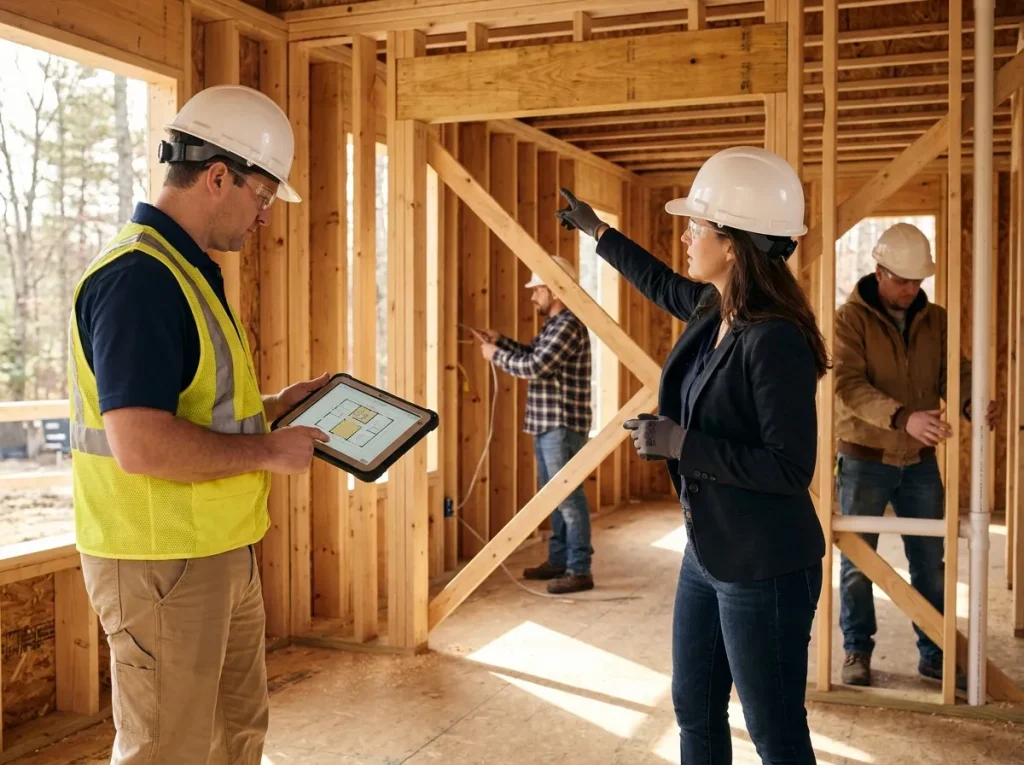
What does single-source accountability look like on an actual Massachusetts project? Here's how it plays out across the project lifecycle.
During design: The homeowner meets with both the architect and builder simultaneously. The architect presents design options. The builder provides immediate feedback on cost, feasibility, and timeline implications. The homeowner makes informed decisions in real time rather than waiting for separate responses. This is the core value of a one-team delivery model and one reason luxury custom home builders increasingly operate under this structure.
During permitting: The design build firm manages the entire permit application because they created the documents being submitted. When the building department has questions or requires modifications, the team that drew the plans and the team that will build the project responds as one entity. No translation layer exists between architect and contractor.
During construction: The builder is executing plans created by their own design team. If field conditions require a modification- a structural member in an unexpected location, a plumbing conflict, a site condition the assessment didn't reveal- the architect is immediately available to update the design. The team prices the modification and communicates it to the homeowner as a single recommendation, not as a back-and-forth between separate firms.
During closeout: The same team that designed and built the project resolves punch list items. There's no question about whether an item is a design error or a construction defect. The firm that designed the house and the firm that built it are the same licensed general contractor, and they own the outcome completely.
Massachusetts construction projects face regulatory complexity that amplifies the accountability advantage. The state's building code, the Stretch Energy Code adopted by most North Shore communities, historic district requirements, and municipal zoning overlays all create compliance obligations that span both design and construction. The Massachusetts Board of Building Regulations and Standards publishes and updates these code cycles regularly, and staying current is a shared design and construction responsibility.
In a traditional model, the architect designs to code, but the contractor builds to code. When these are separate firms, code compliance becomes a shared responsibility with no single owner. In design-build, one team owns code compliance from schematic design through final inspection.
Permitting benefits similarly. When a building inspector has a question about the structural design during a framing inspection, the design-build team can respond immediately with both design rationale and construction context. A traditional contractor would need to contact the architect, wait for a response, relay it to the inspector, and potentially schedule a follow-up visit.
For property owners pursuing home additions or a multi-family construction project, the accountability advantage compounds. Home addition construction involves both design complexity, integrating new space with existing structure, and construction complexity, tying new foundations, rooflines, and systems into old ones. A multifamily builder faces the same layered demands across multiple units and shared systems. Having one team accountable for both sides of that equation prevents the integration failures that plague fragmented delivery on complex Massachusetts projects.
Not all design-build firms structure accountability the same way. When evaluating firms, homeowners should ask specific questions about how accountability actually works in practice.
Does the firm employ architects directly, or do they subcontract design work? Firms with in-house design teams have tighter integration. Does the same project manager oversee both design and construction phases? Leadership continuity through the project lifecycle strengthens accountability.
How does the firm handle discoveries during construction that require design changes? The answer should describe a collaborative, same-day response process, not a formal change-order submission to a separate design entity. What happens when something goes wrong: who does the homeowner call? The answer should be one person, one phone number, one team.
A professional contractor with genuine design-build accountability will describe their process in terms of team collaboration, not managing separate vendors on the homeowner's behalf. The distinction matters.
Single-source accountability means one firm holds contractual responsibility for both the design and construction of a project. Instead of the homeowner managing separate contracts with an architect and a contractor, they hold one agreement with a design-build firm that covers the entire project. This eliminates the coordination gap between design and construction and gives the homeowner a single point of contact for every aspect of their project.
Design-build reduces change orders by involving the construction team in the design process from the beginning. The builder provides real-time cost and feasibility feedback as design decisions are made, preventing designs that are over budget or structurally impractical. By the time the plans are complete, the team that will build them has already vetted them. This front-loaded collaboration catches problems before they become expensive field changes.
For most Massachusetts residential projects, yes. The integrated model shortens overall project timelines, reduces the number of change orders during construction, and consolidates communication into one team. Homeowners who value predictability, a single point of contact, and coordinated decision-making tend to prefer the design-build model over hiring an architect and contractor separately.
The main tradeoff is reduced competitive bidding at the design stage, since the homeowner selects a single firm rather than pricing out multiple contractors against completed plans. Homeowners who want to bring their own outside architect also lose some of the accountability advantage. Strong design-build firms offset the bidding concern with open-book pricing and detailed preconstruction estimates.
Look for firms that employ design professionals directly, maintain single-project-manager continuity from design through construction, and describe their process in terms of integrated team collaboration. Ask how they handle field discoveries, who you will communicate with during each project phase, and whether they carry a single contract covering both design and construction services.
Single-source accountability isn't a marketing phrase. It's a structural feature of how design-build delivers projects with fewer surprises, faster decisions, and clearer ownership of outcomes. For Massachusetts property owners planning any significant construction project, choosing a delivery model where one team owns the result from first sketch to final walkthrough is the most effective way to protect your investment. Genesis Construction and Development operates as a fully integrated design-build firm, with design and construction under one roof and one contract. To discuss your project, call Genesis Construction and Development at 617-515-0005.
© 2025 Genesis Construction and Development Inc. - All rights reserved | Web Design & SEO By: Authority Solutions®