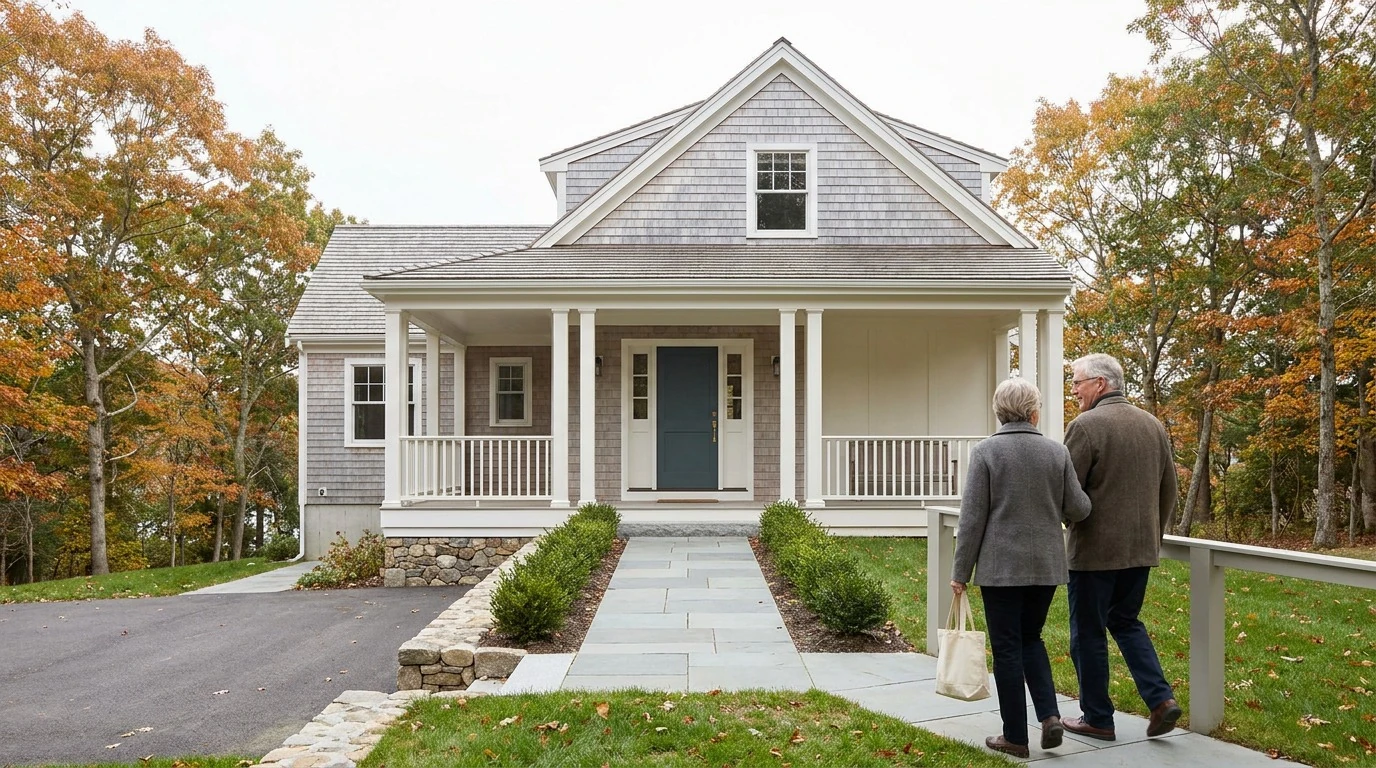
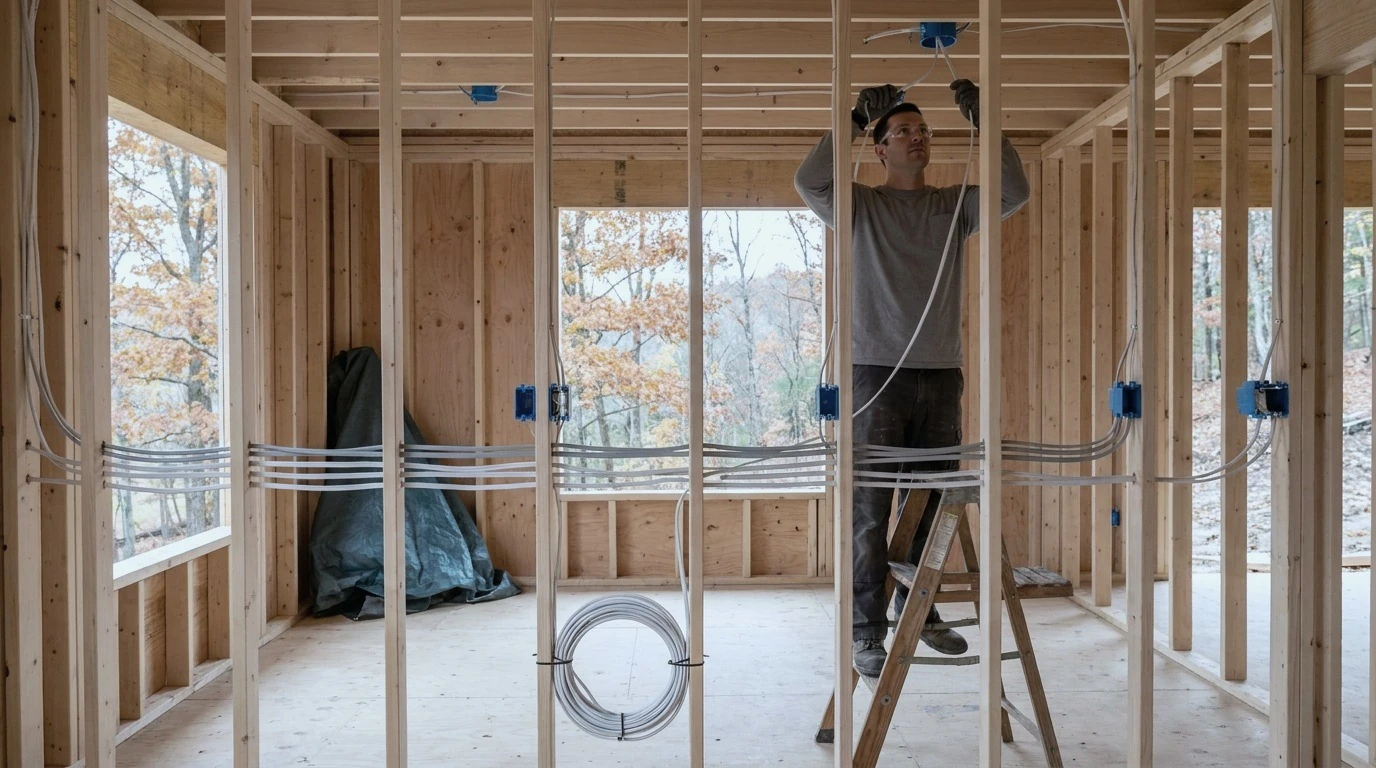
A custom home project manager is the single builder-side lead who runs your job from groundbreaking through final walkthrough. This role coordinates subcontractors, controls the schedule, tracks the budget, manages inspections, and serves as your one point of contact for every construction decision. On a well-run custom home project manager assignment, the PM prevents the finger-pointing, missed handoffs, and communication gaps that derail traditional builds.
When you sign a contract for a custom home in Massachusetts, one question rarely gets a clear answer: who actually runs the job once excavators show up? Homeowners often assume the architect, the owner of the construction firm, or the on-site foreman is in charge, and then spend the next nine months confused about who to call when a decision needs to be made. At Genesis Construction and Development, we hear that story often enough that we make the project manager assignment the first thing we introduce during preconstruction.
This article explains what a custom home project manager does day to day, how the role fits within the broader design-build team, and what North Shore homeowners should expect in terms of communication, reporting, and decision-making authority. Whether you are early in planning or already breaking ground in Danvers, Peabody, Salem, or Andover, understanding this role helps you evaluate builders, set realistic expectations, and avoid the chaos most custom home horror stories share.
A project management custom home lead owns the operational side of your build. While the architect drives design intent and the owner or principal builder sets company standards, the PM is the person converting drawings into a completed home on a real schedule and a real budget. Their day rarely looks glamorous. It is a mix of phone calls with subcontractors, walking the site to verify work quality, updating schedules, revising material orders, and answering homeowner questions.
Most custom home construction project manager responsibilities fall into six areas:
In traditional construction, a general contractor bids the job after design is complete, then assigns a superintendent to run the site. The homeowner often ends up with two separate points of contact: the architect for design questions and the superintendent for construction execution. Decisions cross a wall between the two, and delays or disagreements become common.
Design-build eliminates that wall. When you work with a design build construction firm that runs projects with an integrated team, the project manager works alongside the design team from preconstruction onward. That means the PM sees the drawings while they are being developed, flags constructability issues before they are locked in, and enters the construction phase already fluent in the design intent. If you are new to this delivery model, our guide to working with a design-build firm for your custom home breaks down how the integrated team operates from first meeting to move-in.
For homeowners who might one day pursue home renovations and remodeling or a full home addition project, the PM role works identically. The scope changes, but the person running your job remains your single accountable point of contact throughout.
These three titles get used interchangeably in casual conversation, and that confusion is one reason homeowners lose track of who does what. Here is how the roles typically break down on a Massachusetts custom home build:
| Role | Primary Focus | Where They Work | Homeowner Contact? |
|---|---|---|---|
| Project Manager (PM) | End-to-end job ownership: schedule, budget, communication, quality | Office and site | Yes, primary contact |
| Superintendent | Daily on-site execution and trade supervision | Site full time | Sometimes, usually through PM |
| General Contractor (Owner or Principal) | Company-level accountability, contract signatory, escalation point | Office | Occasionally, on major issues |
| Site Foreman | Task-level trade leadership within one crew | Site during crew work | Rarely direct |
On smaller custom home projects, the PM and superintendent responsibilities sometimes merge into one person. On larger or more complex builds, they split so the superintendent can stay on site full time while the PM handles scheduling, budgeting, and homeowner coordination from the office. Either configuration works as long as you know who to call.
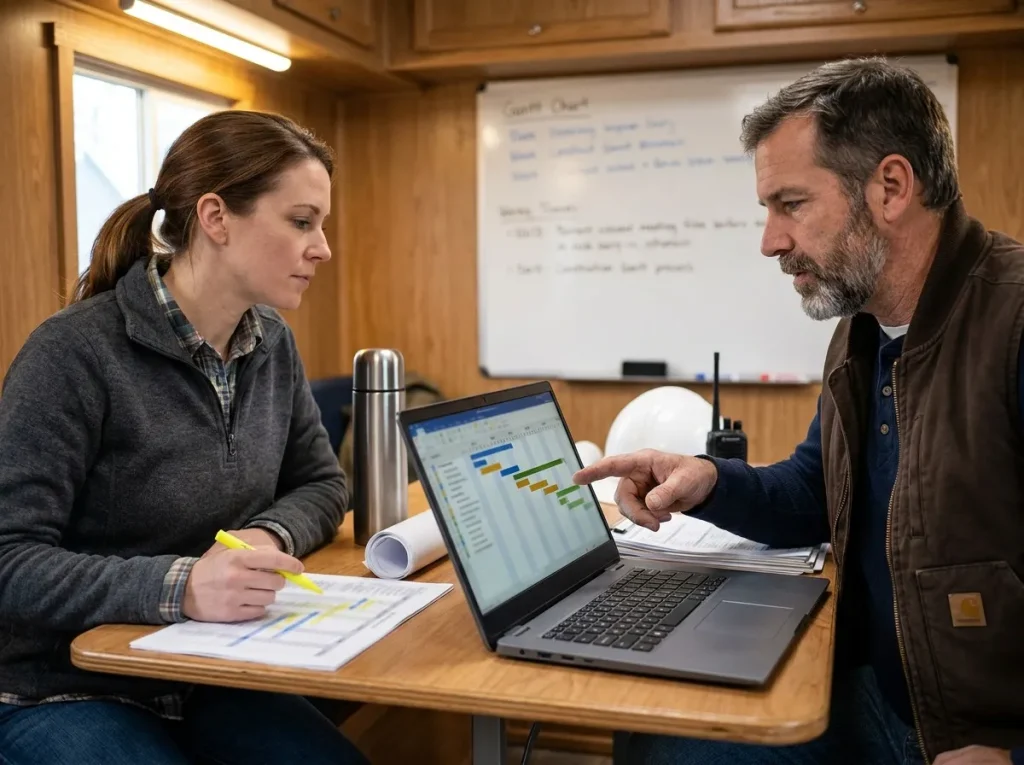
For homeowners who have never watched a residential construction project up close, the PM's job is easier to picture in weekly rhythm than in abstract responsibilities. On a mid-construction custom home in a town like Middleton or Beverly, a project manager's week usually includes:
That rhythm is what keeps a build predictable. When the PM is doing the job well, you should feel informed without feeling overwhelmed, and you should always know what happens next.
A qualified home building project manager protects your budget in three ways that homeowners rarely see happening. First, they prevent problems before they become change orders by catching design or field issues during preconstruction and coordinating solutions while everything is still on paper. Second, they hold trades accountable to the scope and price they committed to at bid time, so a subcontractor who tries to add a line item midway through the job gets pushed back to their original agreement. Third, they track cumulative variances against the contracted budget, so a hundred dollars over here and two hundred over there do not silently compound into a five-figure overrun by the end of the project.
None of that shows up as a headline. It shows up as a project that finishes close to the number you signed at the beginning. That predictability is one of the most valuable things a good PM delivers, and it is a core reason we recommend the design-build construction model for custom homes: the PM is inside the same firm as the estimators, designers, and field crews, so budget accountability lives in one place rather than being spread across three separate companies.
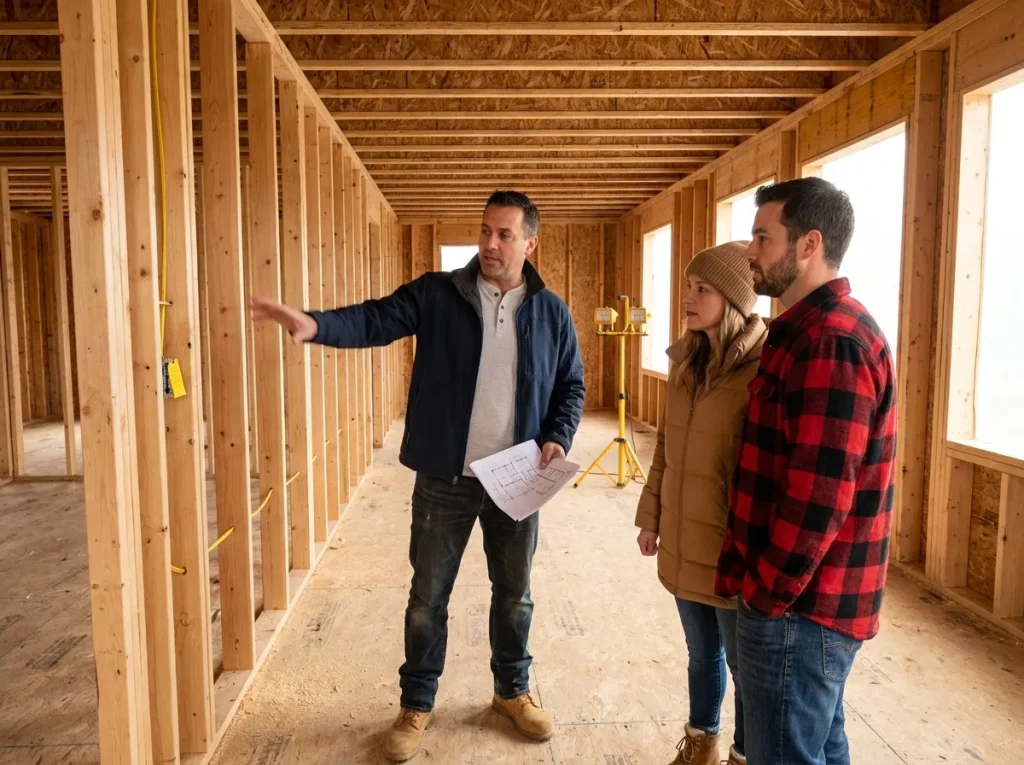
Custom home builds run six to twelve months on average in Massachusetts. That is a long time to be in the dark, and communication is where builders most often fail homeowners. Before you sign a contract, ask the construction manager role how communication will work on your project. A well-run PM assignment typically includes:
If a builder cannot describe their communication cadence in specific terms, that is a warning sign. The best PMs treat communication as a deliverable, not a courtesy.
If you are evaluating custom home builders or a residential remodeling firm on a major project, use these questions during the interview to surface how the PM role actually works at that company:
The answers tell you whether the company treats project management as a defined discipline or as an informal responsibility passed around the office. On any custom home in the North Shore, that distinction affects your experience far more than the flashiest kitchen finish.
The project manager owns the entire job across schedule, budget, communication, and quality, working from both the office and the site. The superintendent focuses on daily on-site execution, running the trades, and enforcing quality on the physical work. On smaller custom homes, one person may cover both roles. On larger projects, they split so the superintendent can stay on site full time.
At minimum, expect a weekly written update summarizing completed work, upcoming milestones, and pending decisions. Many PMs also provide biweekly on-site walkthroughs and a live photo or project portal. During critical decision points, such as framing sign-off or finish selections, communication frequency should increase. If your PM only calls when something is wrong, that is a warning sign.
Route everything through your PM. Direct contact with subcontractors creates conflicting instructions, scope confusion, and change-order disputes that can derail your budget and schedule. The PM's job is to translate your priorities into coordinated action across the trades, and that only works when they are the single channel.
A working benchmark is two to four active custom homes per PM, depending on project complexity and phase overlap. If a PM is running six or more full custom builds simultaneously, the odds of missed handoffs and slow response times climb sharply. Ask during the interview and factor the answer into your builder decision.
The PM typically prepares change orders, including scope description, price, and schedule impact, and presents them to you for approval before any work begins. On most builds, the company owner or principal builder signs off on change orders above a certain dollar threshold. That two-layer review protects the homeowner from unauthorized scope creep.
Look for at least five years of hands-on residential construction experience, familiarity with Massachusetts building code and local permitting practices, and comfort managing a full sequence of trades. Certifications like DBIA associate designations or construction management credentials from accredited programs add credibility, but proven local experience matters more than any single certificate.
The project manager is not just a title on an organizational chart. On a custom home build in Massachusetts, this role is the difference between a project that runs smoothly on schedule and budget and one that turns into the horror story your neighbor still complains about at dinner parties. Ask the right questions during the interview, understand who your PM will be before you sign, and hold the builder to a defined communication cadence.
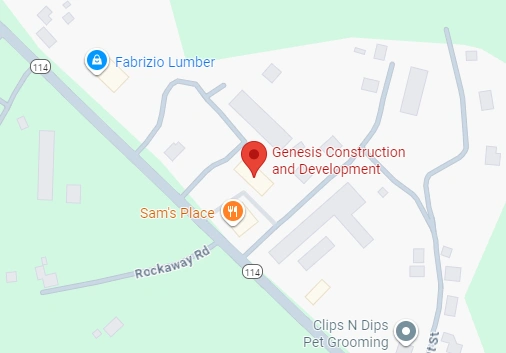
Genesis Construction and Development runs every custom home in Middleton, Danvers, Peabody, Salem, Andover, and across the North Shore with a dedicated project manager assigned from preconstruction forward. If you are planning a custom build and want to see how our process works in detail, contact us at 617-515-0005 or visit our custom homes page to schedule a consultation.
© 2025 Genesis Construction and Development Inc. - All rights reserved | Web Design & SEO By: Authority Solutions®