Menu
close

Subcontractors are the specialized trade companies, such as electricians, plumbers, framers and roofers, that a builder hires to perform specific parts of your custom home. You sign one contract with the builder or design-build firm, and that firm hires, schedules, supervises and pays the subcontractors, inspects their work and remains responsible to you for the finished house.
If you are building a new home on the North Shore, you will see many different crews on your lot over the course of the build. One week it is the excavation contractor, the next a framing crew, then plumbers, electricians and HVAC installers working around each other inside the walls. For a homeowner, it can be hard to tell who works for whom and who to call when a question comes up.
This guide explains how subcontractors work during custom home construction, which trades a typical house needs, how they are scheduled and paid, and what it means for you as the owner. Genesis Construction and Development designs and builds custom homes from Middleton, MA, and the answers below cover what owners usually want to know once a project moves from design into construction. For the full sequence of a build, see the custom home design-build roadmap.
A subcontractor is a company or tradesperson hired by the main contractor, not by the homeowner, to perform a defined part of the work. The main contractor is usually called the general contractor or, in a design-build project, the design-builder.
The general contractor holds the contract with you, manages the whole construction project and is responsible for the result. Subcontractors hold contracts with the general contractor for their own trade: the electrician for wiring, the plumber for water and drain lines, the roofer for the roof. You pay the general contractor, and the general contractor pays the subcontractors.
Subcontracting is the normal way homes are built in the United States, not a shortcut. A National Association of Home Builders survey, Average New Home Uses 24 Different Subcontractors, found that builders used an average of 24 and a median of 22 subcontractors per single-family home. On average, builders subcontracted 84 percent of their construction costs.
The same NAHB study found that HVAC was always subcontracted by 97 percent of builders, electrical wiring and plumbing by 96 percent each, and drywall, foundations and roofing by 93 percent each. Framing was always subcontracted by 82 percent of builders and finished carpentry by 69 percent. In short, almost every specialized trade in your home will be performed by a trade partner.
Some builders keep a small in-house crew for carpentry, site supervision or punch list work, while specialized trades come from outside companies. NAHB notes that the median single-family builder member carries only two construction workers on payroll. What matters for you is not who signs each paycheck, but how well the builder plans, coordinates and checks the work.
Each stage of a custom home build brings in different trades. Knowing the order helps you understand what you see on site and why some weeks look busier than others.
| Construction stage | Common subcontractors | What they do |
|---|---|---|
| Site work and foundation | Excavation, septic or utility, concrete and foundation | Clear and grade the lot, dig, pour footings and walls, waterproof, backfill |
| Framing and shell | Framers, roofers, window and door installers, siding | Build the structure, close in the roof and walls |
| Mechanical rough-ins | Plumbers, electricians, HVAC, low-voltage technology | Run pipes, wiring, ductwork and cabling inside open walls |
| Insulation and drywall | Insulation installers, drywall hangers and finishers | Insulate the envelope, hang and finish walls and ceilings |
| Interior finishes | Finish carpenters, cabinet installers, tile setters, flooring, painters, countertop fabricators | Trim, cabinets, tile, floors, paint and surfaces |
| Exterior and final | Masons, landscapers, paving, final plumbing and electrical | Walks, landscaping, driveway, fixtures and devices |
The first subcontractors on a lot are usually the excavation and site work crews, followed by the concrete and foundation contractor. Drainage, utilities and septic or sewer connections may involve separate specialists. Our article on site work before the foundation is poured explains this stage in more detail.
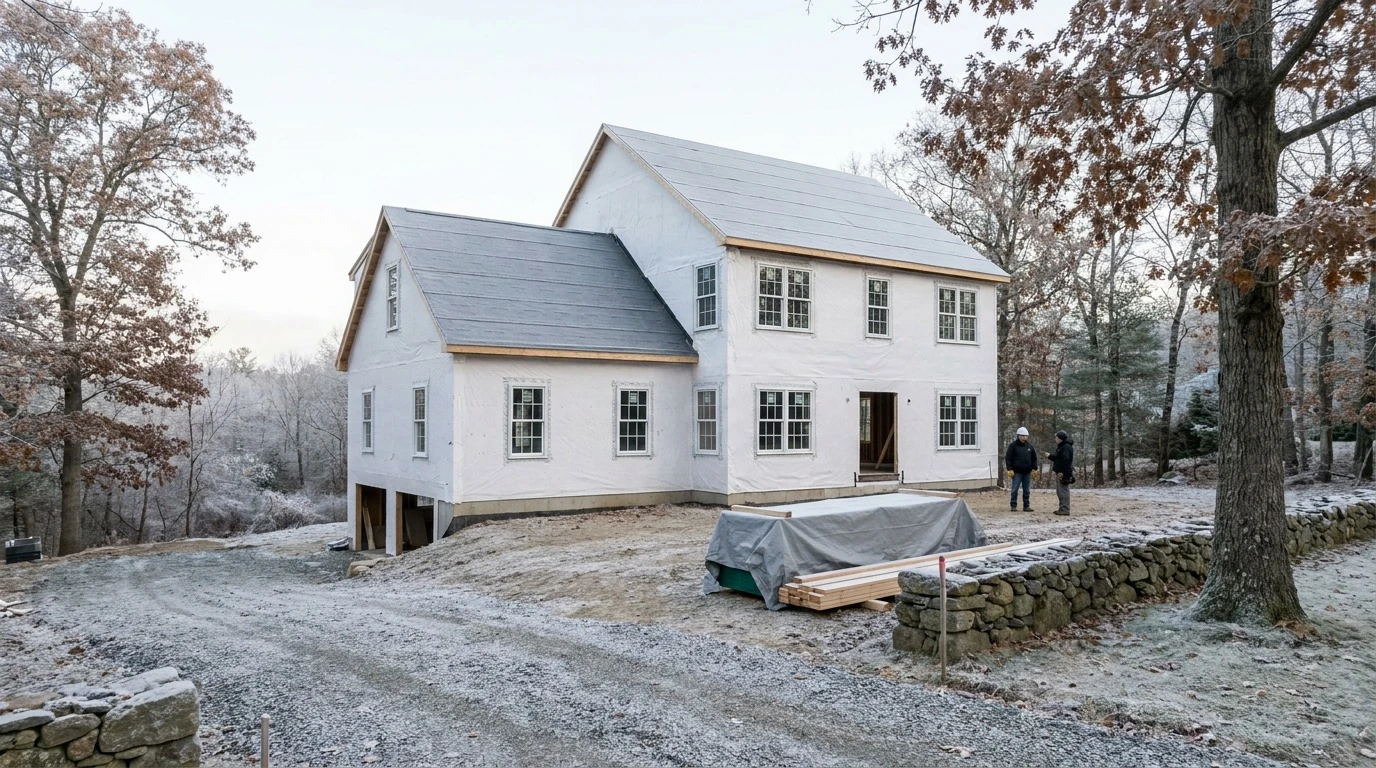
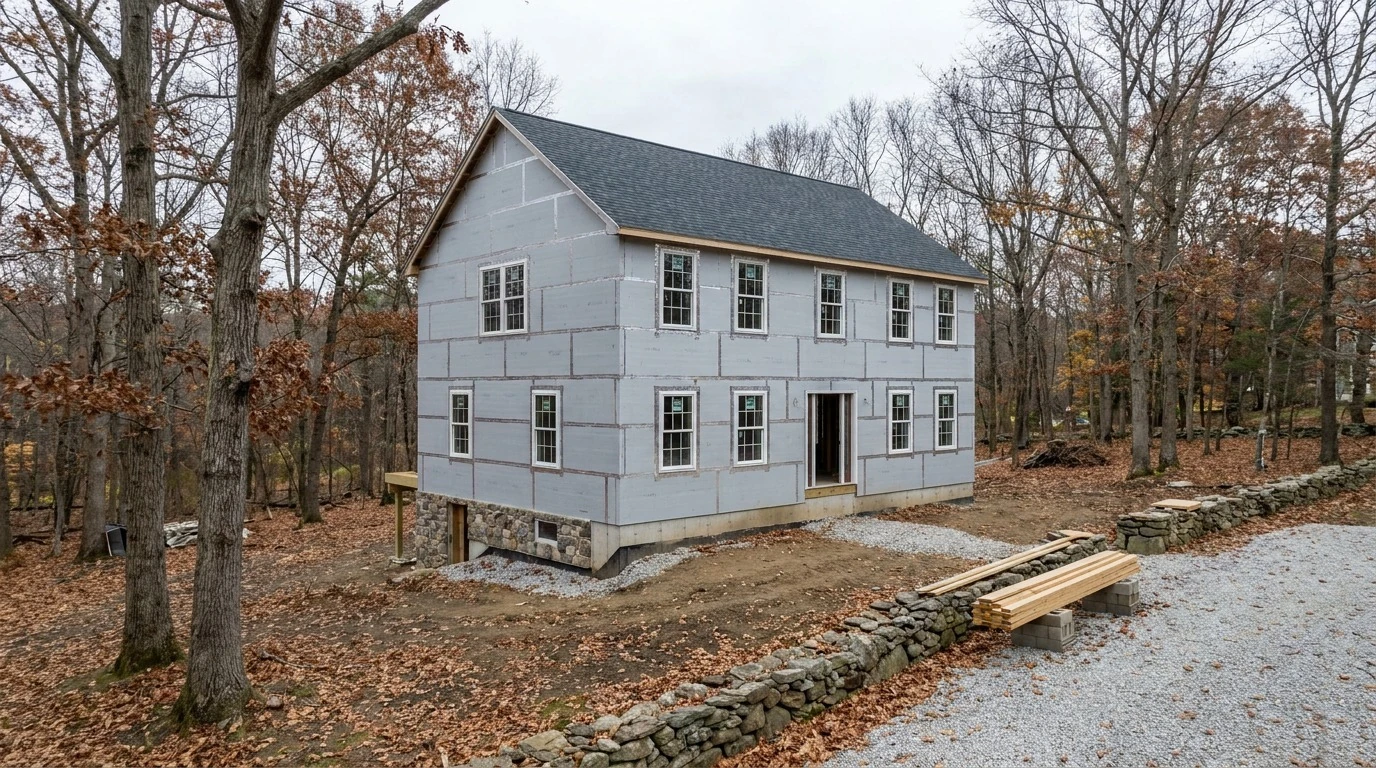
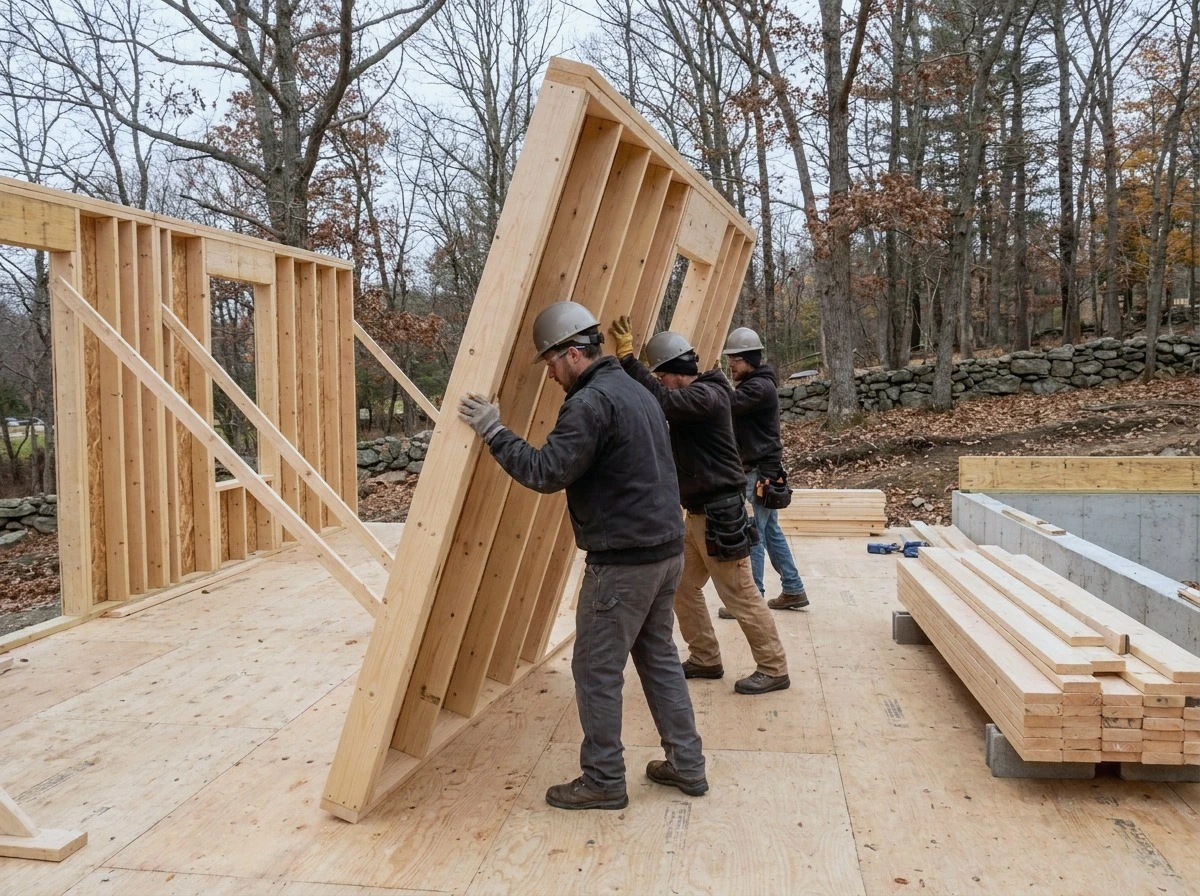
The framing crew builds the floors, walls and roof structure. Roofers, window and door installers and siding crews then close in the house. Once the shell is weathertight, work can move inside regardless of the weather.
Rough-ins are the parts of the plumbing, electrical and HVAC systems installed before the walls are closed. The plumber, electrician and HVAC installer often work in the house at the same time, so their sequence and space have to be planned. Low-voltage trades for networking, security and audio may join them.
After rough-in inspections pass, insulation installers and drywall crews close the walls. Then come the finish trades: trim carpenters, cabinet installers, tile setters, flooring installers, painters and countertop fabricators. This is where craftsmanship is most visible, and where scheduling many small crews matters most.
Coordinating subcontractors is one of the hardest parts of building a house. NAHB's study concludes that scheduling many subcontractors to finish on time while maintaining control over quality is a substantial challenge and an important part of being a successful home builder.
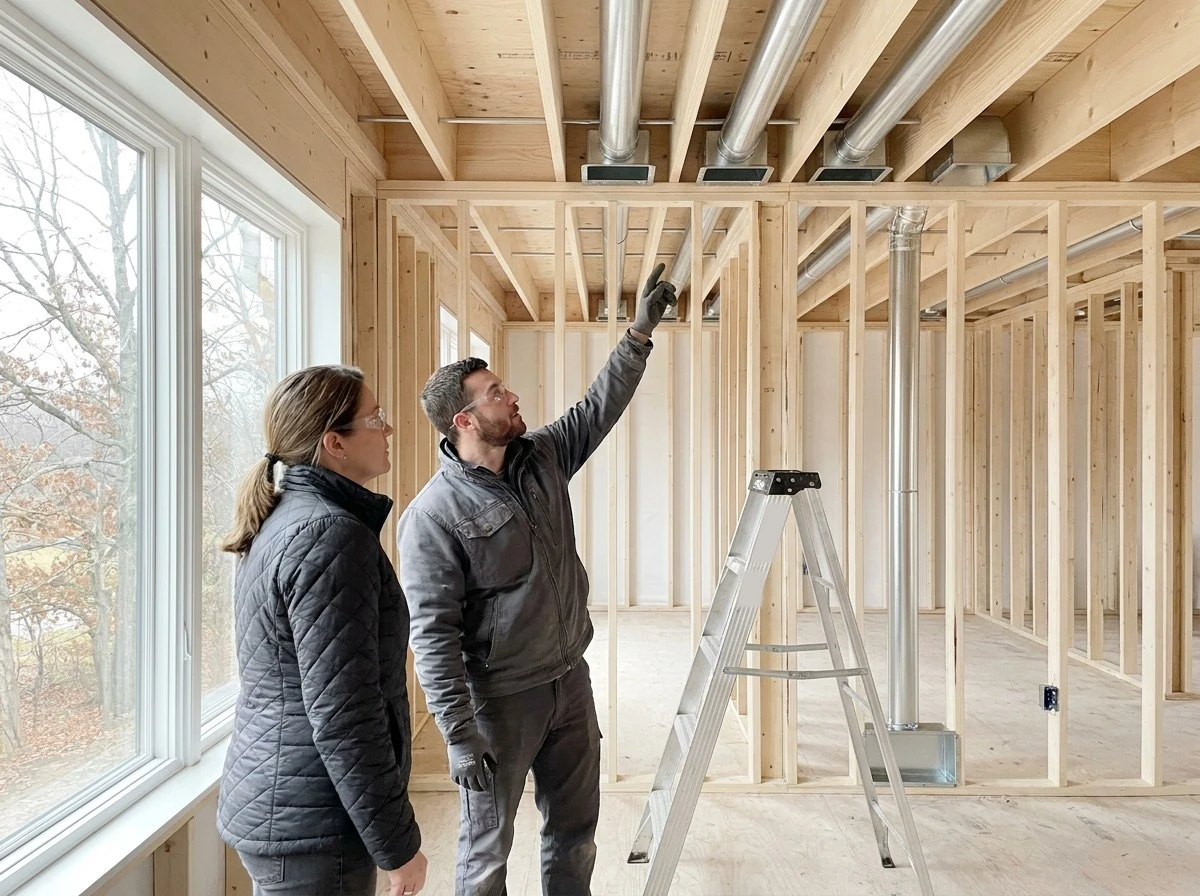
Most trades depend on the trade before them. Drywall cannot go up until rough-ins and inspections pass, and cabinets cannot go in until the drywall is finished and painted. The builder builds a schedule that sets this order, assigns time to each trade and books crews weeks in advance.
A project manager or site supervisor is the person who oversees the subcontractors day to day: confirming start dates, checking work, resolving conflicts between trades and keeping you informed. Our article on the project manager's role during custom home construction explains this job in detail.
Local building inspectors check the work at set points, such as footings, framing and rough-ins, before the next trade can cover it up. A failed inspection sends the responsible subcontractor back to correct the work, which can delay the trades that follow. Inspection stages and requirements vary by town, so confirm them with your local building department.
A delay by one subcontractor can ripple through the schedule, because the next crew may have to be rebooked. Good builders keep float in the schedule, maintain relationships with dependable trade partners and communicate early when a date moves. Weather, material deliveries and inspection timing all affect the sequence too.
The builder, not the homeowner, selects and contracts the subcontractors. How that is done affects price, quality and your protection as the owner.
For each trade, the builder defines a scope of work from the plans and specifications and requests prices from one or more subcontractors. A clear scope matters: if the plans leave a detail open, the bids may not include it, which can lead to change orders later.
Builders usually put each subcontractor under a written agreement that covers the scope, price, schedule, insurance and cleanup. Many use a master agreement for general terms and separate work orders for each job. As a homeowner, you do not sign these, but you can ask your builder how subcontractors are contracted and supervised.
The builder pays each subcontractor, usually in stages as work is completed. Because unpaid subcontractors and suppliers may have rights against the property, ask your builder how payments are documented and whether lien releases are collected as trades are paid. For legal questions about liens, consult a Massachusetts attorney.
Many trades require their own licenses, and every subcontractor should carry appropriate insurance. Ask your builder to confirm that each trade working on your home is properly licensed and insured. NAHB notes that roughly 80 percent of home builders and specialty trade contractor firms are self-employed independent contractors, which is why verifying credentials for each company matters.
The general contractor is responsible to you for the work of every subcontractor it hires. That is the main advantage of having one contract instead of hiring trades yourself.
In a design-build project, the same firm handles design and construction and manages every trade, so there is one point of accountability from the first sketch to the final walkthrough. Our guide to working with a design-build firm for your custom home describes how that relationship works. A full-service design-build contractor keeps designers, project managers and trade partners on the same plan.
Quality control happens throughout the build, not just at the end. The project manager checks each trade's work before the next one covers it, and inspectors check the stages the code requires. Owner walkthroughs at key points, such as before drywall, let you confirm outlet locations, blocking and other details while changes are still simple.
Near completion, the builder and owner walk the house and record items that need correction, called the punch list. The builder sends the responsible trades back to finish them. Ask before you sign how warranty requests are handled after move-in, since the builder typically coordinates any return visits by subcontractors.
Subcontracting has tradeoffs, and a good builder manages them. Understanding them helps you ask better questions when you compare builders.
With multiple subcontractors involved, a delay or mistake by one can affect others. This is managed through careful scheduling, clear scopes and a builder who maintains long relationships with dependable subcontractors.
Different crews bring different standards. The builder's role is to set expectations, check work at each stage and send trades back when something is not right. Ask how the builder selects subcontractors and how long it has worked with its main trades.
When you talk to a trade directly, decisions may bypass the builder, the plans and the budget. The safest approach is to route questions and changes through your project manager so everyone works from the same information.
You do not manage the subcontractors, but a few habits make the process smoother for everyone.
If you see something on site you want changed, tell your project manager rather than the crew. A request made directly to a subcontractor can affect other trades, the schedule, inspections and the price. Changes should be documented as change orders before work proceeds.
Your new home is an active job site. Arrange visits with your project manager, wear sturdy shoes and follow the safety rules on site. Scheduled walkthroughs are the best time to ask questions.
Ask any custom home builder which trades it uses in-house and which it subcontracts, how subcontractors are selected and insured, who supervises them each day and how you will receive schedule updates. A builder who answers clearly is easier to work with during construction. If you are comparing one-of-a-kind home construction options, these answers say a lot about how the build will run.
A typical custom home involves site work and excavation, foundation and concrete, framing, roofing, windows and siding, plumbing, electrical, HVAC, insulation, drywall, finish carpentry, cabinets, tile, flooring, painting, countertops and landscaping. Larger or more complex homes may add masons, low-voltage technology installers and other specialists. Your builder selects and schedules each trade.
It varies with the size and complexity of the home. A National Association of Home Builders survey of its builder members found an average of 24 and a median of 22 different subcontractors per single-family home, with most builders using between 11 and 30. A custom home with specialized finishes may involve more trades.
The main risks are coordination problems, uneven workmanship between crews and communication gaps when decisions bypass the builder. A delay by one trade can affect others. These risks are managed by a builder with clear scopes, a realistic schedule, steady relationships with trade partners and a project manager who checks the work at each stage.
Usually not. You pay the general contractor or design-build firm according to your contract, and that firm pays the subcontractors. Ask your builder how payments are documented and whether lien releases are collected from trades and suppliers. For legal questions about liens on your property, consult a Massachusetts attorney.
Some builders allow owner-hired trades, but hiring subcontractors yourself can complicate scheduling, insurance, warranties and responsibility for the finished work. If you have a trade in mind, discuss it with your builder before you sign the contract. Most owners find it simpler to keep every trade under one contract with one point of accountability.
The general contractor is responsible to you for the subcontractor's work. Report the issue to your project manager, who sends the responsible trade back to correct it. After move-in, warranty requests usually go through the builder as well, who coordinates any return visits by the subcontractor involved.
Subcontractors build most of a custom home, but you should never have to manage them yourself. A good builder selects qualified trades, sets the sequence, checks each stage, pays the trades and stands behind the finished house. When you understand how that system works, you can ask the right questions, follow the schedule with confidence and keep decisions flowing through one accountable team.
If you are planning a custom home in Middleton, anywhere on the North Shore or in Greater Boston, call Genesis Construction and Development at 617-515-0005.
© 2025 Genesis Construction and Development Inc. - All rights reserved | Web Design & SEO By: Authority Solutions®