Your first payment, an initial deposit of roughly 5 to 10 percent, is due when you sign the builder contract. Milestone payments then follow at foundation, framing, and rough-in stages, with the final balance due at closing once the Certificate of Occupancy is issued. Your financing choice shapes how much cash you need at each stage.
Building a custom home in Middleton, MA, involves a different payment timeline than buying an existing house, and many buyers are confused about when their money is actually due. Unlike a traditional purchase where you pay at closing, new home construction requires an initial deposit when you sign the builder contract, followed by additional payments tied to specific construction milestones.
Understanding when these payments happen, how much you need upfront, and what protections you have if timelines shift can save you from financial surprises. This guide walks you through exactly when deposits and down payments are due, what triggers each payment, and how to protect your investment throughout the building process.
When you sign a contract for new construction in Middleton, MA, the first payment is due immediately. Builders typically require 1 to 5 percent earnest money upon contract signing for spec homes, but Massachusetts custom homes often call for a 5 to 10 percent initial deposit.
The exact amount depends on several factors. Market conditions play a significant role, and in slower markets you may have more leverage to negotiate toward the standard 3 to 5 percent range. The type of project matters too, since some builders ask for more upfront on smaller projects. This earnest money shows your commitment and protects the builder's investment in planning and materials. Unlike buying an existing home, custom home construction requires the builder to dedicate significant resources to your project before breaking ground.
It helps to remember that this deposit is not money you lose. In most cases it is credited toward your overall down payment and closing costs once the home is finished, so it functions as the first installment of what you would owe anyway. Knowing that distinction makes the upfront figure easier to plan around, and it is one reason to confirm in writing exactly how the deposit will be applied at closing.
Once construction begins, you will not pay everything at once. Construction payment scheduling follows a milestone-based structure, with subsequent draws at framing, rough-in, and completion stages. A typical payment schedule might look like this:
| Milestone | Share of Total Cost |
| Foundation completion | 20 to 25% |
| Framing completion | 20 to 25% |
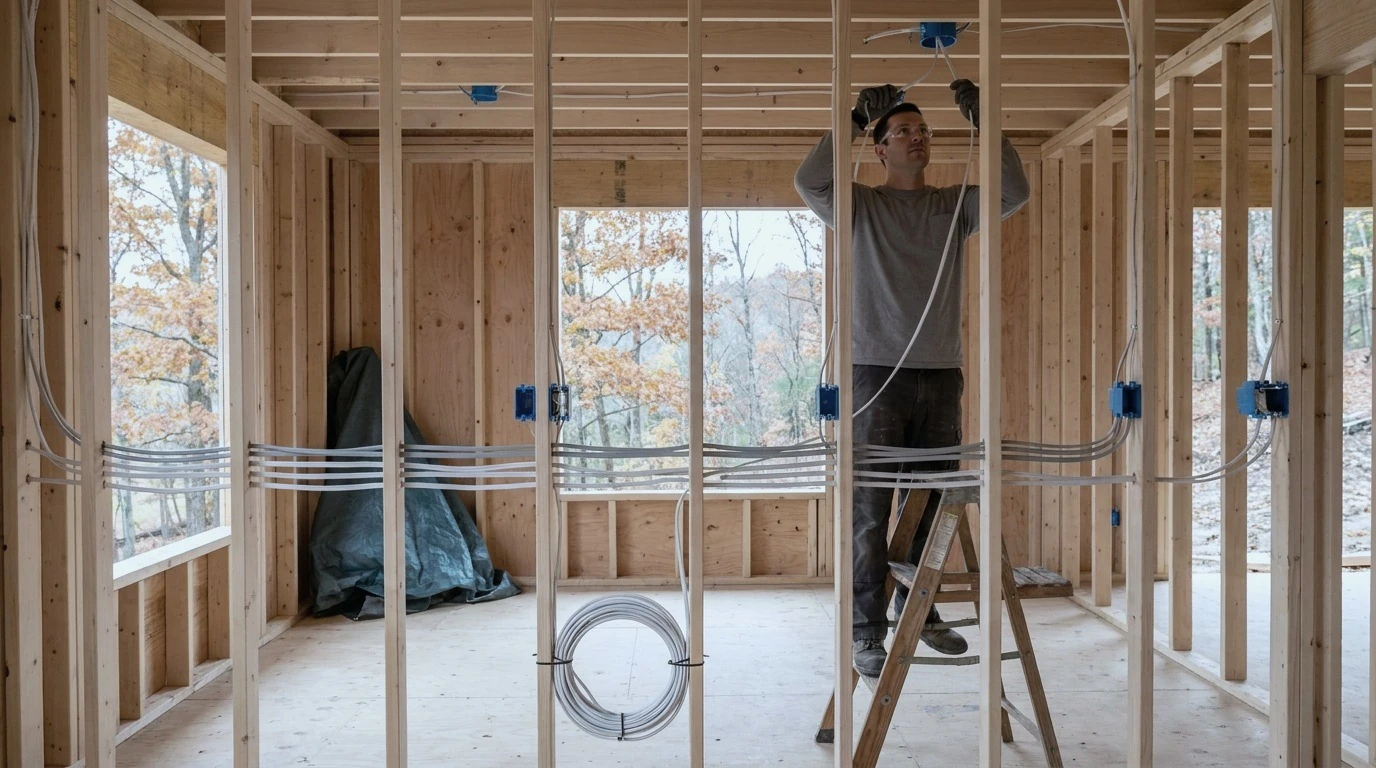
| Mechanical rough-in (plumbing, electrical, HVAC) | 20 to 25% |
| Interior finishes | 15 to 20% |
| Final completion | Remaining balance |
Massachusetts practice favors itemized payment schedules specifying the work completed per draw, with a final 5 to 10 percent withholding common until the punch list is complete. This protects you by ensuring the builder finishes all agreed-upon work before receiving full payment.
Milestone verification is critical. Before releasing payment at each draw stage, protect yourself by insisting on a few non-negotiables:
Lien waivers are particularly important. They prove that subcontractors and suppliers have been paid, protecting you from potential liens on your property if the builder fails to pay their vendors. Never release a payment until you have confirmed the work is genuinely complete.
The remaining balance of the total payment is generally due at the closing stage. This is when you take ownership of the completed home and your construction loan, if you have one, converts to a permanent mortgage.
Earnest money and milestone deposits are applied toward closing costs or your down payment once construction completes, reducing the final cash required. This means the deposits you have made throughout construction are not extra costs. They count toward your total down payment, so the figure due at closing is smaller than the home price alone might suggest.
Closing and final payment cannot occur until the Certificate of Occupancy is issued, which requires completed inspections and resolution of all violations. Middleton follows Massachusetts state regulations requiring a Certificate of Occupancy before occupancy.
This certificate confirms that your new home meets all building codes and safety standards. Because issuance requires resolving every outstanding violation, the process can delay closing by weeks or months. Build this potential delay into your timeline and housing plans so a held certificate does not leave you without a place to live.
A construction loan funds the build in stages rather than as a single lump sum, and the type you choose dramatically affects when and how much you pay during construction. Understanding the three common paths helps you match financing to your cash position.
| Financing Type | Closings | Cash During Build | Notes |
| Construction-to-permanent | One | Lower (initial deposit only) | Lender pays builder at verified milestones |
| Construction-only | Two | Higher | Separate land and permanent loan closings |
| Builder financing | Per contract | Highest | Higher deposit plus phase payments |
These loans offer the simplest payment structure, with a single closing and final payment due upon Certificate of Occupancy issuance. With this option, the buyer makes only an initial deposit during construction, with the larger down payment due at closing. Some Massachusetts lenders offer high financing percentages covering land and construction costs, which means less cash needed upfront. The lender handles milestone payments directly to the builder after verifying work completion, which protects you and ensures the builder is paid appropriately.
These require two closings, one for land and construction and one for the permanent mortgage, resulting in two down payments. You pay a down payment when you purchase the land and begin construction, then another when you convert to a permanent mortgage. Banks release funds at verified milestones after inspections, and construction loans often cover only 75 to 90 percent of total project costs, requiring buyers to fund the remainder. This option typically costs more in fees and requires more cash reserves, but it may be necessary if you already own land or are building in phases.
Some builders offer their own financing arrangements. These often call for higher initial deposits of 5 to 10 percent plus phase payments. Direct builder payments follow the contract schedule but risk overpayment if work is not verified. Always inspect work before releasing funds, regardless of who provides the financing.
In Massachusetts, having an attorney review your purchase agreement before signing is strongly advised. This is especially important for new construction, where contracts contain complex clauses that can significantly affect your costs. A design-build construction company with transparent terms can make this review smoother, but independent legal advice still protects your interests.
New construction contracts frequently contain escalation clauses for material cost increases, which can raise final costs without explicit caps. These clauses allow builders to pass material cost increases directly to you. Negotiate caps on these increases before signing. Without limits, you could face thousands of dollars in unexpected costs if material prices spike during construction.
Massachusetts generally permits deposit forfeiture for buyer defaults after contingencies expire. Once you have waived contingencies like financing or inspection, backing out can mean losing your deposit. Make sure you are financially ready before removing contingencies, and consult with your attorney and lender to confirm everything is in order.
Consider a typical scenario. You contract with a local Middleton design-build contractor for a $750,000 custom home. Here is how payments might be structured:
| Stage | Share | Amount |
| Contract signing (earnest money) | 5% | $37,500 |
| Permit approval | 20% | $150,000 |
| Framing completion | 25% | $187,500 |
| Mechanical rough-in | 25% | $187,500 |
| Final closing after CO | 25% + adjustments | Remaining balance |
Construction typically takes 10 to 11 months from permit to Certificate of Occupancy. During this time, you will need access to funds for each milestone payment.
With a construction-to-permanent loan, you make only an initial deposit during construction, with the larger down payment due at closing. With builder financing, you might pay around 10 percent upfront plus 25 percent draws at milestones, increasing your early cash exposure. The construction-to-permanent path generally requires less cash during the build, while builder financing front-loads more of your money before the home is finished.
Even with careful planning, construction rarely goes exactly as projected. Smart budgeting accounts for this reality. Many Massachusetts builders recommend a 10 to 15 percent contingency for custom homes due to inevitable change orders. For a $750,000 project, that means keeping roughly $75,000 to $112,500 in reserve for unexpected costs or upgrades.
Material costs can swing significantly from year to year. Even with escalation clauses, these increases can strain your budget. Order materials early when possible and lock in prices through your contract where you can, since a firm price today is often cheaper than the same material a few months into the build.
Do not forget about expenses beyond the home price itself. Title insurance remains essential despite the property being new, since title defects can affect land ownership. You will also pay for surveys, inspections, and various municipal fees. Massachusetts prorates taxes from the Certificate of Occupancy date, meaning buyers pay taxes only after occupancy begins, so you will not owe property taxes during the construction period.
Successful new construction requires careful financial planning. Start by determining how much you can comfortably afford in upfront deposits and milestone payments, then build your schedule around that capacity rather than the other way around.
Meet with both a construction lender and a real estate attorney before signing any contracts, since they will help you understand your payment obligations and protect your interests. Consider your financing options carefully, because construction-to-permanent loans typically offer the most buyer-friendly structure but may carry stricter qualification requirements. Finally, maintain open communication with your builder about the payment schedule, and schedule a consultation early so everyone understands exactly when payments are due and what triggers each milestone.
Massachusetts custom homes often call for a 5 to 10 percent initial deposit at contract signing, though spec homes may require only 1 to 5 percent earnest money. Market conditions and project size influence the exact figure.
Payments are tied to verified milestones, typically foundation, framing, mechanical rough-in, interior finishes, and final completion. Each draw is usually 15 to 25 percent of the total, released after inspection confirms the work is done.
A lien waiver confirms that subcontractors and suppliers have been paid for their work. Collecting waivers at each draw protects you from liens on your property if the builder fails to pay their vendors.
The remaining balance is generally due at closing, once the home is complete and the Certificate of Occupancy is issued. At that point, a construction loan converts to a permanent mortgage and you take ownership.
A Certificate of Occupancy confirms the home meets building codes and safety standards. Closing cannot happen until it is issued, and resolving outstanding violations can delay it by weeks or months.
It is a single-closing loan that funds construction in stages, then converts to a permanent mortgage at completion. The lender pays the builder at verified milestones, and you usually need less cash during the build.
Builder financing comes directly from the builder, often with higher upfront deposits and phase payments that front-load your cash. A construction loan routes payments through a lender that verifies each milestone first.
An escalation clause lets a builder pass material cost increases on to you during construction. Negotiate a cap before signing so a spike in material prices does not add thousands in unplanned costs.
After you waive contingencies like financing or inspection, backing out can mean forfeiting your deposit under Massachusetts practice. Confirm financing and inspections are in order before removing any contingency.
Many Massachusetts builders recommend a 10 to 15 percent contingency for custom homes. On a $750,000 project, that is roughly $75,000 to $112,500 held in reserve for change orders and surprises.
New home construction spreads your payments across the build rather than concentrating them at closing, so knowing when each one is due is the key to staying in control. From the initial deposit at signing through milestone draws and the final balance after the Certificate of Occupancy, a clear schedule protects both your budget and your peace of mind.
Pair that schedule with the right financing, careful contract review, and a healthy contingency, and you can move through your Middleton build with confidence and no avoidable financial surprises.
Plan your Middleton new construction budget with us.
Build with Genesis Construction in Middleton today.
© 2025 Genesis Construction and Development Inc. - All rights reserved | Web Design & SEO By: Authority Solutions®