Construction prices will not drop in Middleton, MA, in 2026. Multiple converging factors including material cost increases driven by tariffs, persistent labor shortages, energy price escalation, and strong local demand all point toward continued cost growth of 3 to 5% overall, with early 2026 data showing a 12.6% annualized increase.
If you are planning to build a custom home in Middleton, the outlook suggests costs will continue rising modestly throughout the year. Understanding what is driving these costs and what national and local trends mean for your budget helps you plan realistically.
Working with an experienced custom home builder who understands cost management and maintains strong supplier relationships becomes even more valuable when market conditions are challenging.
Construction costs in 2026 are not heading downward. According to the latest Producer Price Index data, construction input prices rose at an annualized rate of 12.6% during the first two months of 2026, representing a marked acceleration driven primarily by energy costs and tariff-affected materials.
Industry forecasters have converged around a projection that construction costs will increase between 3 and 5% for the year overall. For the New England construction market specifically, projections point to a 3.9% escalation.
These trends mean that anyone planning to build a custom home in Middleton should budget for higher costs rather than anticipate relief. The question is not whether prices will drop, but rather how much they will rise and what factors are driving those increases.
Softwood lumber, which saw dramatic increases during the pandemic, has experienced modest relief. Prices are down 6.7% year-over-year as of late 2025, providing some breathing room for framing costs. This decline represents a normalization after extreme volatility rather than a fundamental shift toward lower construction costs overall.
Metal products have become the primary driver of cost escalation in 2026. Aluminum mill shapes and steel products experienced extraordinary price increases of 39.1% and 20.9% respectively from February 2025 to February 2026.
| Material Category | Year-Over-Year Change | Impact on Custom Homes |
| Softwood lumber | Down 6.7% | Modest relief on framing costs |
| Aluminum mill shapes | Up 39.1% | Windows, doors, trim, flashing |
| Steel products | Up 20.9% | Structural framing, HVAC ductwork |
| Natural gas | Up 21% | Manufacturing costs, job site heating |
| Diesel fuel | Up 20.3% (Jan-Feb 2026) | Material delivery, equipment fuel |
The tariff environment constitutes the largest wild card in construction pricing forecasts for 2026. January 2026 saw construction input prices surge at a 7.1% annualized rate for nonresidential inputs, driven almost entirely by tariff-affected materials including copper wire, cable, iron, steel, and industrial controls equipment.
Many contractors now include stronger escalation language in bid pricing to account for potential tariff impacts, effectively transferring price risk to clients. Homeowners may see contingency costs built into estimates that would not have been necessary in more stable policy environments.
Energy prices have re-emerged as a major cost driver in early 2026. Natural gas prices rose 10.8% in November 2025 and are up 21% year-over-year, while diesel fuel prices jumped 20.3% from January to February 2026.
These energy cost increases affect construction through transportation costs for materials delivery, fuel for construction equipment and generators, manufacturing costs for materials like concrete, asphalt, and plastics, and heating for job sites during extreme weather. Energy costs represent an input that touches virtually every aspect of construction.
Labor costs account for roughly half of total construction project costs, making this category the single largest expense component. The construction industry continues to face a persistent labor shortage that cannot be solved through compensation alone.
Median annual pay for construction workers reached $66,400 in June 2025, roughly 10% above all other industries and representing a 15% increase since 2020. The 2024 median construction bonus reached a record $1,232, which is 2.5 times larger than bonuses in other sectors.
The labor shortage in construction has cost the residential sector an estimated $8.1 billion in lost revenue and prevented roughly 19,000 homes from being built. The net new worker demand for construction is estimated at 349,000 in 2026, far exceeding the supply of available skilled workers entering the industry.
| Labor Metric | 2025 Data | Impact on Custom Homes |
| Median annual pay | $66,400 | 10% above other industries |
| Wage growth since 2020 | 15% increase | Higher project labor costs |
| Median bonus | $1,232 (record) | 2.5x larger than other sectors |
| Net new worker demand (2026) | 349,000 | Scheduling delays, longer timelines |
| Homes not built due to shortage | 19,000 | Reduced supply, higher prices |
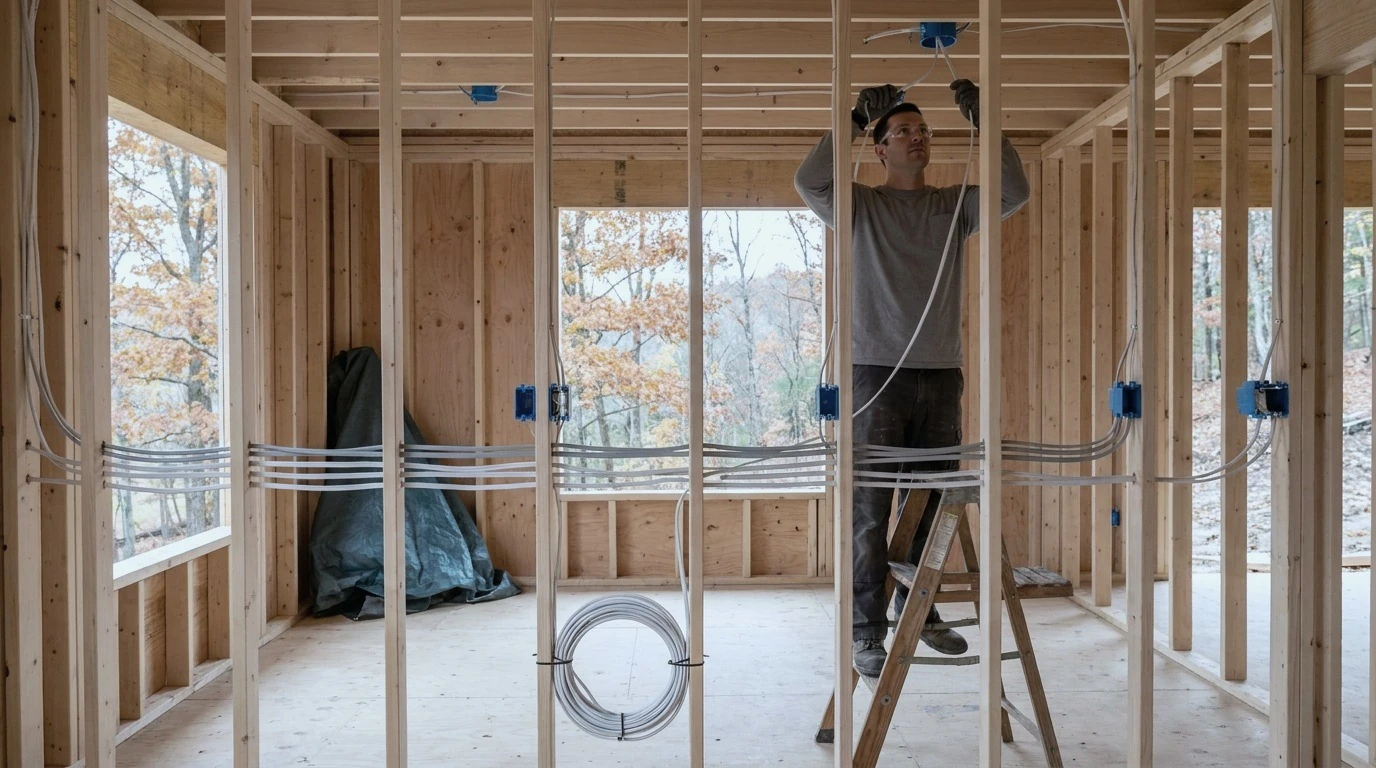
For homeowners planning custom builds in Middleton, the labor shortage means projects may take longer to complete as builders compete for qualified tradespeople. Scheduling subcontractors for specialized work like electrical, plumbing, and HVAC can add weeks to your timeline if your builder does not maintain strong trade relationships.
The median sale price of a home in Middleton was $781,000 in February 2026, up 38.8% from the prior year. The median sale price per square foot is $329, and homes sell in approximately 29 days in a very competitive market.
These metrics indicate an extraordinarily tight market with substantial pricing power. When finished homes sell quickly at premium prices, builders have little incentive to reduce construction costs or profit margins.
Massachusetts continues to experience a housing shortage that transcends local market conditions, keeping construction demand strong despite rising costs. This persistent demand means custom home builders and design-build firms maintain relatively full pipelines through 2026.
The regulatory environment in Massachusetts adds incremental costs not reflected in raw materials or national labor statistics. Massachusetts building permits follow strict timelines under 780 CMR, with building officials required to issue or deny permits within 30 days of filing, fire reviews completed within 10 working days, and work required to commence within 180 days of permit issuance.
For Middleton specifically, permit processing frequently involves multiple local boards including the Planning Board, Conservation Commission, Board of Health, and local Zoning Board of Appeals. Each review layer adds time and cost.
The April 2026 NAHB estimate that 24% of the average new home price is attributable to regulations provides context for understanding how local compliance requirements cascade into final pricing.
The cost of constructing a typical single-family home averaged $428,215 in the 2024 NAHB survey, approximately $162 per square foot, representing the highest in the history of this survey. The NAHB survey showed that on average, 64.4% of the sales price is due to construction costs and 13.7% to finished lot costs, with builder profit averaging 11.0%.
| Cost Component | Percentage of Total | Notes |
| Construction costs | 64.4% | Materials + labor |
| Finished lot | 13.7% | Land + site prep |
| Builder profit | 11.0% | Industry average |
| Regulations | 24.0% | Permits, codes, compliance |
| Financing | 4.0% | Construction loan interest |
These national averages provide a baseline, but Middleton's premium market positioning and Massachusetts regulatory environment mean local costs typically exceed these figures.
Subtle factors beyond materials and labor significantly influence construction costs. Site accessibility and local zoning laws affect costs differently depending on terrain, lot configuration, and proximity to wetlands or conservation areas. Environmental and sustainability requirements increasingly add costs to construction projects. Energy-efficient designs, sustainable materials, and waste-reduction practices now represent mandatory rather than optional considerations in many Massachusetts jurisdictions. While these measures lead to long-term savings, they require initial investments that raise upfront project costs.
Preconstruction soft costs including architectural design, engineering, permitting, environmental reports, insurance, and contingency reserves have become increasingly important as the cost environment grows more uncertain. These soft costs typically add 15 to 25% to your hard construction budget and should be factored into all early planning conversations with your builder.
Larger contractors have begun locking in supply agreements months in advance and negotiating bulk pricing to stabilize costs in response to tariff uncertainty. Homeowners benefit from this approach by committing to projects early and allowing builders to secure materials at current prices. Delaying a project in hopes that prices will fall typically backfires in the current environment.
Value engineering focuses on achieving your functional and aesthetic goals while optimizing costs. This includes selecting materials with similar performance but lower cost, simplifying architectural details that add cost without proportional value, optimizing the building footprint to reduce foundation and roofing costs, and choosing energy-efficient systems that cost more upfront but deliver long-term savings.
Given the volatility in materials pricing and tariff policy, building adequate contingency into your budget is essential. In the current environment, 15 to 20% provides realistic protection against cost overruns. Understand how your design-build contractor handles cost escalations and whether contracts include escalation clauses.
If your timeline allows flexibility, work with your builder to schedule material purchases and construction phases to minimize exposure to price volatility. This might mean accelerating certain purchases when prices are favorable or adjusting the construction sequence to take advantage of market conditions.
For example, if steel prices are expected to rise further due to pending tariff changes, purchasing structural steel early and storing it on-site can lock in current pricing. Similarly, ordering windows and specialty doors months in advance prevents both price increases and delivery delays that could stall your project at critical construction phases.
Construction prices will not go down in 2026 in Middleton, MA. The 3 to 5% overall increase projected nationally, and the 3.9% increase projected for New England, represent best-case scenarios assuming no major policy disruptions or supply chain shocks. The 12.6% annualized rate seen in early 2026 demonstrates how quickly costs can accelerate when multiple factors align.
For homeowners planning custom home projects, the strategic question is not whether to wait for lower prices, but rather how to move forward effectively in a rising-cost environment. The Middleton market's strength with home prices up nearly 39% year-over-year and properties selling in under a month reflects underlying demand that will not disappear. This demand, combined with the state's ongoing housing shortage, means construction activity will remain robust and pricing power will stay with builders and contractors throughout 2026.
No. Industry forecasters project 3 to 5% cost increases nationally, with New England specifically projected at 3.9% escalation. Early 2026 data shows costs accelerating at a 12.6% annualized rate.
Tariff-affected materials (aluminum up 39%, steel up 21%), energy cost increases (natural gas up 21%), persistent labor shortages, and strong housing demand are the primary drivers pushing costs higher.
National averages show $162 per square foot, but Middleton's premium market and Massachusetts regulations push costs to $300 to $400+ per square foot for custom builds depending on complexity and finishes.
No. Each month of delay typically means higher costs when the project finally begins. Committing early allows builders to lock in material prices at current levels before further increases.
Budget 15 to 20% contingency to protect against material price volatility, tariff changes, and unforeseen site conditions. The standard 10% contingency is insufficient in the current environment.
Tariffs drove a 7.1% annualized price surge in January 2026 for construction inputs including copper, steel, and industrial controls. Many contractors now include escalation clauses transferring price risk to clients.
Median construction wages reached $66,400 in 2025, 10% above other industries, due to persistent skilled labor shortages. The industry needs 349,000 net new workers in 2026 but cannot attract them fast enough.
Median home prices in Middleton are up 39% to $781,000 with homes selling in 29 days. This strong demand gives builders pricing power and little incentive to reduce costs.
Regulatory compliance accounts for approximately 24% of the average new home price according to the NAHB. In Massachusetts, multiple permitting boards add time and cost beyond what homeowners typically anticipate.
Value engineering optimizes costs by selecting comparable materials at lower prices, simplifying architectural details, optimizing footprint size, and choosing energy-efficient systems. Work with a builder who understands these trade-offs.
Construction prices will not go down in 2026, but homeowners who plan strategically, commit early, and work with experienced builders can manage costs effectively. The key is moving forward with accurate information rather than waiting for a price drop that is unlikely to materialize.
Genesis Construction and Development helps Middleton homeowners navigate rising material prices, lock in competitive rates, and manage every detail from design through construction. Call us at 617-812-3020 or contact us to discuss your project and get a realistic budget that accounts for today's market realities.
Start your custom home build before costs climb further. Call Genesis Construction and Development for a realistic estimate.
© 2025 Genesis Construction and Development Inc. - All rights reserved | Web Design & SEO By: Authority Solutions®