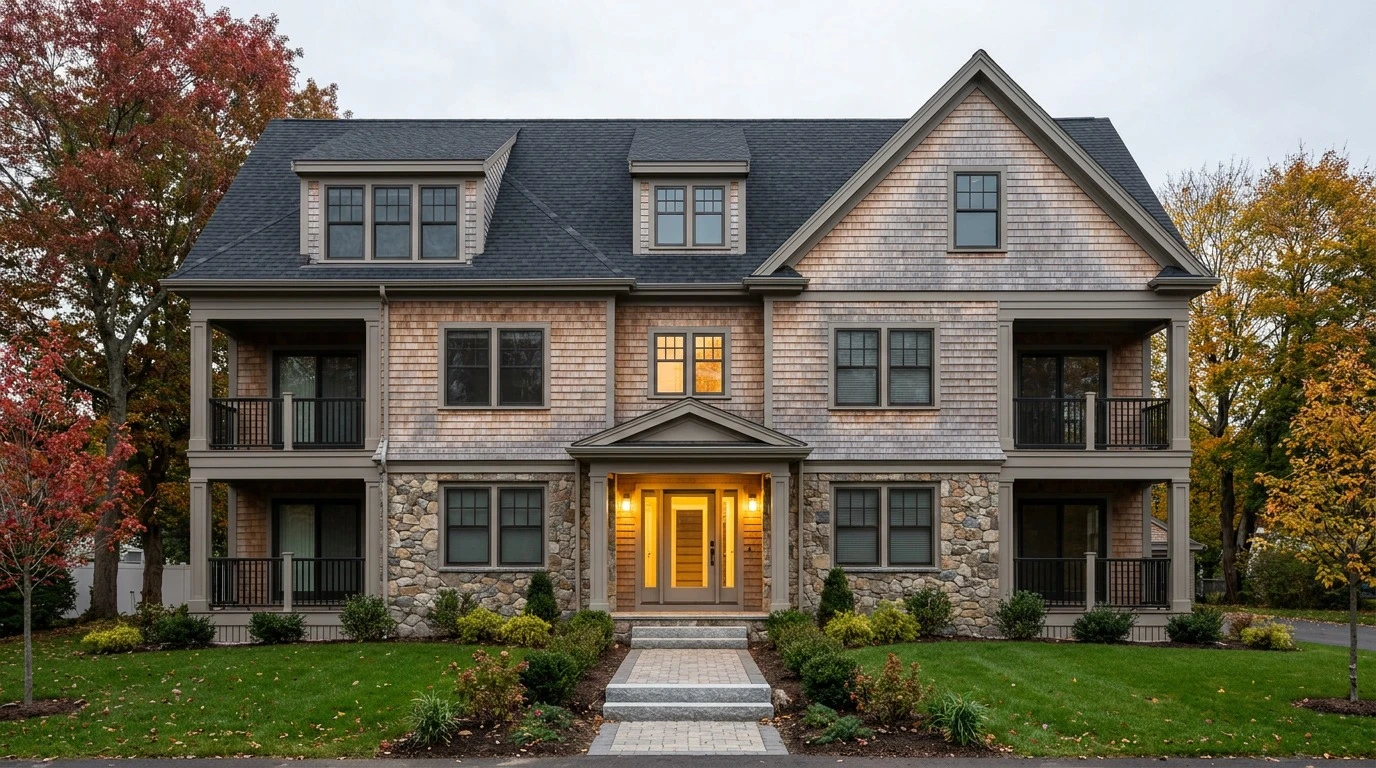
Multifamily property management planning should begin roughly 12 to 18 months before substantial completion, not after. Developers who select a management company, stand up property management software, build the lease-up calendar, and document maintenance systems during construction avoid the handover scramble that stalls rent collection and delays stabilized occupancy.
For most developers, the construction phase absorbs every available hour. Framing crews, inspections, submittals, and change orders fill the calendar, and the question of who will actually run the building once it opens gets pushed to a meeting that never happens. Then the certificate of occupancy arrives, a prospective tenant wants to see a unit, and nobody has decided how rent will be collected or who answers the maintenance phone at 9 p.m.
Property management during construction means answering those questions while the building is still going up. It never makes the project photos, but it decides whether the first 90 days of operation produce revenue or chaos. Across multifamily projects in Danvers, Peabody, and Salem, the developers who finish strongest treat operational readiness as a construction-phase deliverable.
A finished building generates nothing. A leased building generates rental income. Construction loan interest accrues whether or not a lease has been signed, so every week between substantial completion and first move-in is a carry cost with no offsetting revenue.
That gap is an operations problem, not a construction problem. A property manager has to be hired, software configured, lease documents drafted, rental rates set, and marketing live. None of that requires a finished building, and all of it requires lead time you cannot buy back once the certificate of occupancy is issued.
Operational readiness is checkable, not a feeling. A property is ready when a prospective resident can find it online, tour a unit, sign a lease, pay a deposit, and submit a maintenance request without anyone improvising. The property owner should be able to pull an occupancy rate, a delinquency report, and a maintenance backlog on day 30 without reconstructing records from email threads. Effective management assumes data capture begins at lease one, not at stabilization.
The decision with the longest lead time is who manages the asset. A third-party management company typically needs 90 to 120 days to onboard a new property, and the strongest regional firms book their pipeline further out. Deciding at framing rather than at punch list buys access to better operators.
Keep in mind that multi-family property management is a different operating discipline from residential property management of scattered single-family rental homes. Any management firm you interview should be able to show a portfolio that looks structurally like your building, not just a unit count.
| Management Model | Best Fit | Developer Lead Time | Main Tradeoff |
|---|---|---|---|
| Third-party management company | 20+ units, first-time or out-of-area owners | 6-12 months before completion | Management fee, less direct control of resident experience |
| In-house management team | Owners with an existing portfolio and back-office staff | 12-18 months before completion | Hiring, licensing, and software overhead falls on the owner |
| Hybrid, with contracted leasing and maintenance | 8-20 unit buildings and phased developments | 6-9 months before completion | Requires clear scope splits to avoid coverage gaps |
For a first multifamily asset in Essex or Middlesex County, a third-party management company is usually the lower-risk path. An owner already running nearby rental properties can fold the building into an existing management team, provided that team has real lease-up experience and not only steady-state operations. Those are different disciplines. Property management companies also vary widely in how they staff an opening, so ask each candidate who the assigned multifamily property manager will be, how many multifamily properties that person already carries, and what their lease-up best practices look like for a building of your unit count.
Get the property manager into a design review before finishes are locked. Managers see operating consequences that look neutral on a drawing: where the trash room sits relative to the loading zone, whether the mail area holds package volume, how much common corridor carpet needs replacing in year five. The building type you selected shapes those questions, and so do the material and assembly choices made during construction, which set most of your recurring property maintenance load.
Schedule operations work against construction milestones rather than calendar dates, because construction dates move. Anchoring each task to a physical milestone keeps both tracks synchronized when weather or inspections shift the finish line, and mapping it against the way a multi-family build actually sequences is the cleanest way to build the schedule.
| Construction Milestone | Operations Workstream |
|---|---|
| Foundation complete | Management model decided, market rent study commissioned |
| Framing and rough-in | Management company selected, operating budget drafted |
| Exterior envelope closed | Software chosen, lease documents drafted with counsel |
| Interior finishes begin | Marketing site live, pre-leasing waitlist opened, staffing plan set |
| Model unit complete | Tours begin, rental rates finalized, applications processed |
| Punch list and inspections | Vendor contracts signed, preventive maintenance schedule loaded |
| Certificate of occupancy | Warranty package transferred, move-ins begin, rent collection live |
Two items routinely slip. Lease documentation slips because owners assume they can pull a form lease the week before opening. The operating budget slips because it feels administrative, but it quietly sets staffing levels and the maintenance reserve for the building's entire first year.
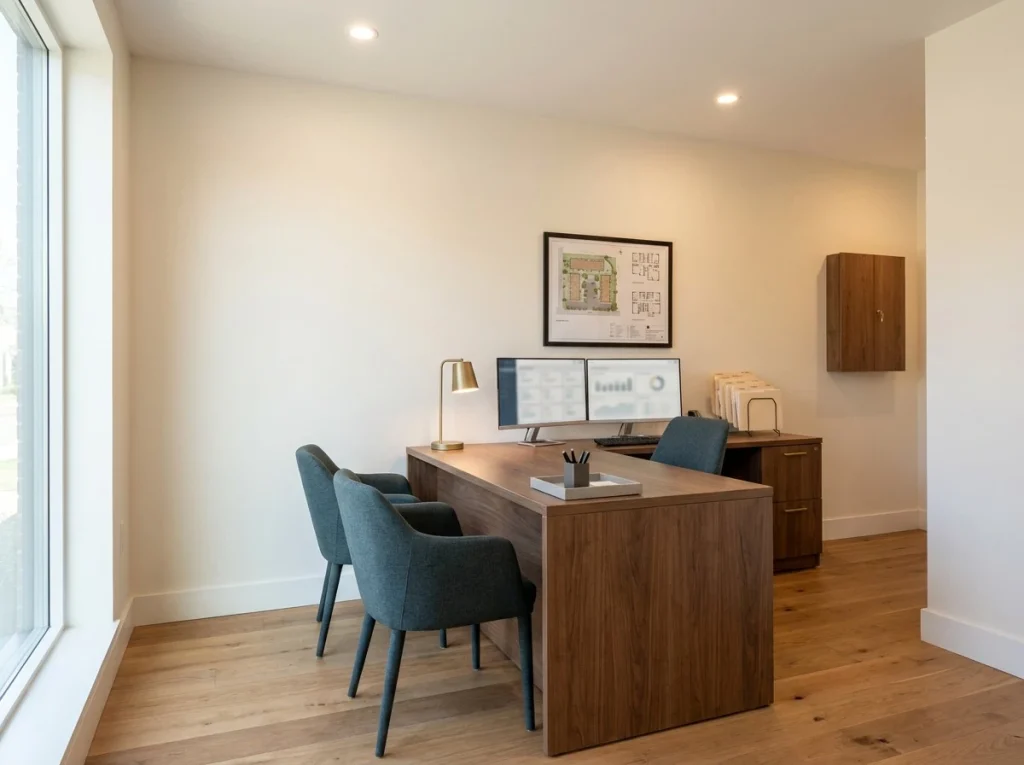
Property management software is the operational backbone and should be selected and configured before the first lease. At minimum, it needs online applications and tenant screening, lease execution, recurring rent collection, maintenance ticketing with vendor dispatch, and owner-level financial reporting. Urban Land Institute reporting on technology adoption across multifamily operations shows how much leasing and resident communication now runs through these platforms, making configuration a lease-up dependency rather than an administrative afterthought.
Configuration also takes longer than developers expect. Unit numbering, floor plan types, rent rolls, charge codes, and utility billing rules must all be loaded and tested. Decide early how the platform will connect to access control, smart home devices, and utility submetering, because wiring those integrations after residents move in is disruptive. Running a live test move-in while the building is still in finishes is exactly when you want to find the errors.
Open the operating, security deposit, and reserve accounts before leasing starts. Massachusetts law requires residential security deposits to be held in a separate interest-bearing account at a Massachusetts bank with specific documentation obligations to the tenant, so confirm the current requirements with counsel before the first deposit is accepted. Decide in advance how you collect rent, what the late fee policy is, and who can approve a payment plan. Those decisions, plus a clean lease management workflow, give you a property performance baseline you can measure against the proforma from month one.
The construction team finishes a project knowing more about the building than anyone will know again. Capturing that knowledge before demobilization is one of the highest-value handover tasks in the development, and it is where a real estate investment either starts with a working maintenance program or starts with a filing cabinet nobody opens.
The property manager should receive as-built drawings, equipment cut sheets and serial numbers, warranty documents with expiration dates, a keyed access schedule, water and gas shutoff locations, and the subcontractor contact list. A design build construction team that carried the project from drawings through completion assembles this efficiently, because the people who specified the equipment also installed it. That continuity is a practical argument for design-build services on a rental asset you intend to hold.
Most equipment warranties run one to two years, which means they expire right when a new building starts generating its first real repair calls. Load every expiration into the management system as a task, not a filed PDF. Settle vendor management before opening as well: snow removal, landscaping, elevator service, fire alarm testing, and HVAC service all need signed agreements and after-hours contact numbers on day one.
Build the preventive calendar from the equipment list, not from a template. Filter changes, alarm testing, backflow certification, roof and gutter inspection, and unit-level property inspections belong on a recurring schedule loaded into the software before the building opens. A program that starts in month one preserves property value in a way no retrofit ever fully recovers, and it keeps a new asset from developing the deferred backlog common in older buildings brought back through residential remodeling.
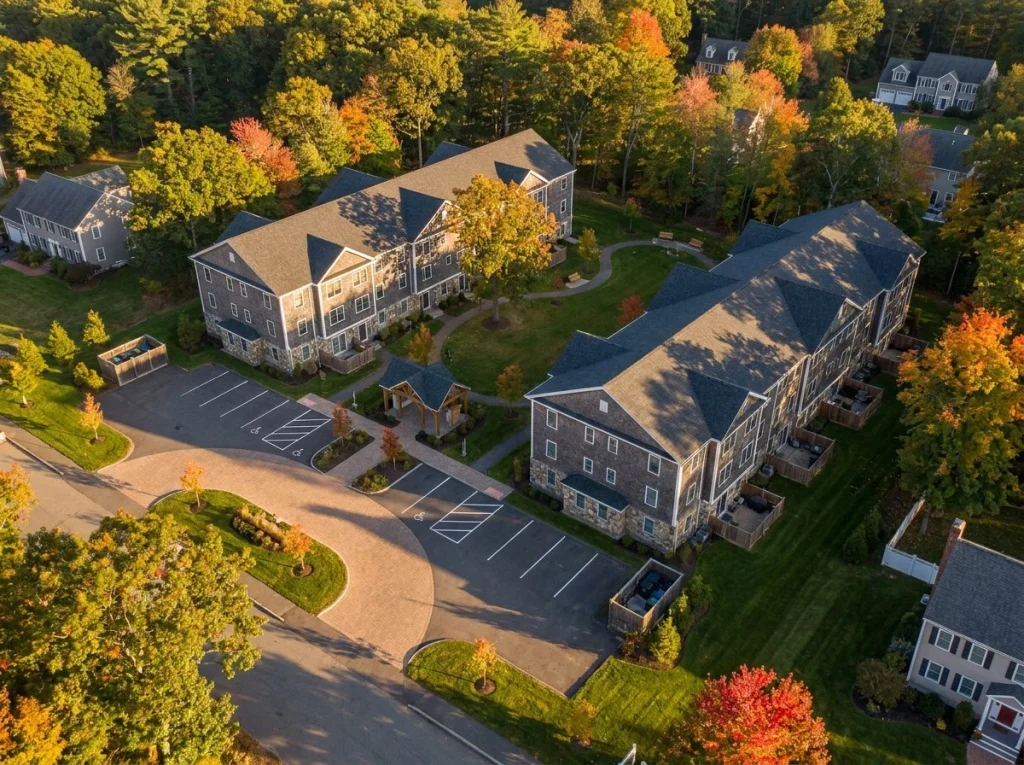
Commission a market rent study while the building is still framed, then refresh it 60 days before opening. Rental demand shifts over a two-year build, and multifamily real estate underwriting that was accurate at closing rarely survives contact with the market at delivery. Rates carried forward from a proforma written when the site and market fundamentals were evaluated at acquisition are almost always wrong by the time a building opens, and a mispriced first lease sets the comparison point for every unit after it. Feature-level pricing matters too, since the unit design decisions that reduce vacancy are the same features that justify a rent premium.
Pre-leasing should start when the exterior envelope closes. That requires renderings, a floor plan set, a working inquiry form, and someone assigned to answer inquiries within a business day. Finish one model unit early and give the leasing team somewhere to sit, even if it is a completed ground-floor unit rather than a permanent office. Buildings that can show a real unit lease measurably faster than buildings selling from renderings.
Write the move-in process before you need it: unit inspection checklist, key and fob issuance, utility transfer instructions, parking assignment, and a welcome packet explaining the maintenance request process. Tenant satisfaction in a new building is set early, and the most common month-one complaint is not a construction defect but the absence of a clear answer about who to call.
New multifamily buildings in Massachusetts carry compliance obligations that begin at occupancy, not at stabilization. The State Sanitary Code sets minimum habitability standards for rental housing, local fire departments sign off on smoke and carbon monoxide alarm systems, and fair housing rules govern every step of tenant screening and selection. For projects with state financing or affordability components, MassHousing publishes policies and forms for property owners and managers covering reporting, tenant selection, and asset management oversight, and those obligations should be read before leasing opens rather than after the first compliance review.
Build a compliance calendar alongside the maintenance calendar. Annual fire alarm certification, elevator inspection, and financial reporting deadlines all recur, and a licensed general contractor delivering the project can usually identify which inspections carry the earliest renewal dates. Bringing an experienced multi-family developer partner into that handover conversation early keeps the compliance list from becoming a month-three surprise.
Begin 12 to 18 months before substantial completion. That window allows time to select a management model, contract a management company, draft lease documents with counsel, build the operating budget, and configure software. Developers who wait until the punch list stage almost always lose weeks of revenue while systems get assembled under pressure.
It depends on portfolio size and back-office capacity. A third-party management company usually makes sense for a first multifamily asset or an out-of-area owner, since licensing, staffing, and software already exist. Owners already running nearby rental properties can fold the building into an in-house team, provided that team has real lease-up experience and not only steady-state operations.
As-built drawings, equipment cut sheets and serial numbers, warranty documents with expiration dates, water and gas shutoff locations, the keyed access schedule, and the full subcontractor contact list. Every warranty expiration should be entered into the management system as a scheduled task, because most equipment coverage lapses right when a new building starts generating repair calls.
Lease-up pace depends on unit count, rental rates, season, and how early pre-leasing opened. Buildings that begin marketing when the exterior envelope closes and can show a completed model unit consistently reach stabilized occupancy faster than buildings that start leasing after the certificate of occupancy. Winter openings in Massachusetts typically absorb more slowly than spring.
Online applications and tenant screening, electronic lease execution, recurring rent collection with automated late fees, maintenance ticketing with vendor dispatch, and owner-level financial reporting. Configuration of unit numbering, charge codes, and utility billing rules takes longer than most developers expect, so the platform should be loaded and tested well before the first lease is signed.
The buildings that open smoothly are not the ones with the fewest punch list items. They are the ones where somebody spent the construction phase deciding who runs the property, what systems they run it on, and what the construction team owes them at handover. That work costs almost nothing during construction and a great deal when it is skipped. If you are developing multifamily housing on the North Shore or in Greater Boston and want a builder who plans the handover from the first design meeting, call Genesis Construction and Development at 617-515-0005.
© 2025 Genesis Construction and Development Inc. - All rights reserved | Web Design & SEO By: Authority Solutions®