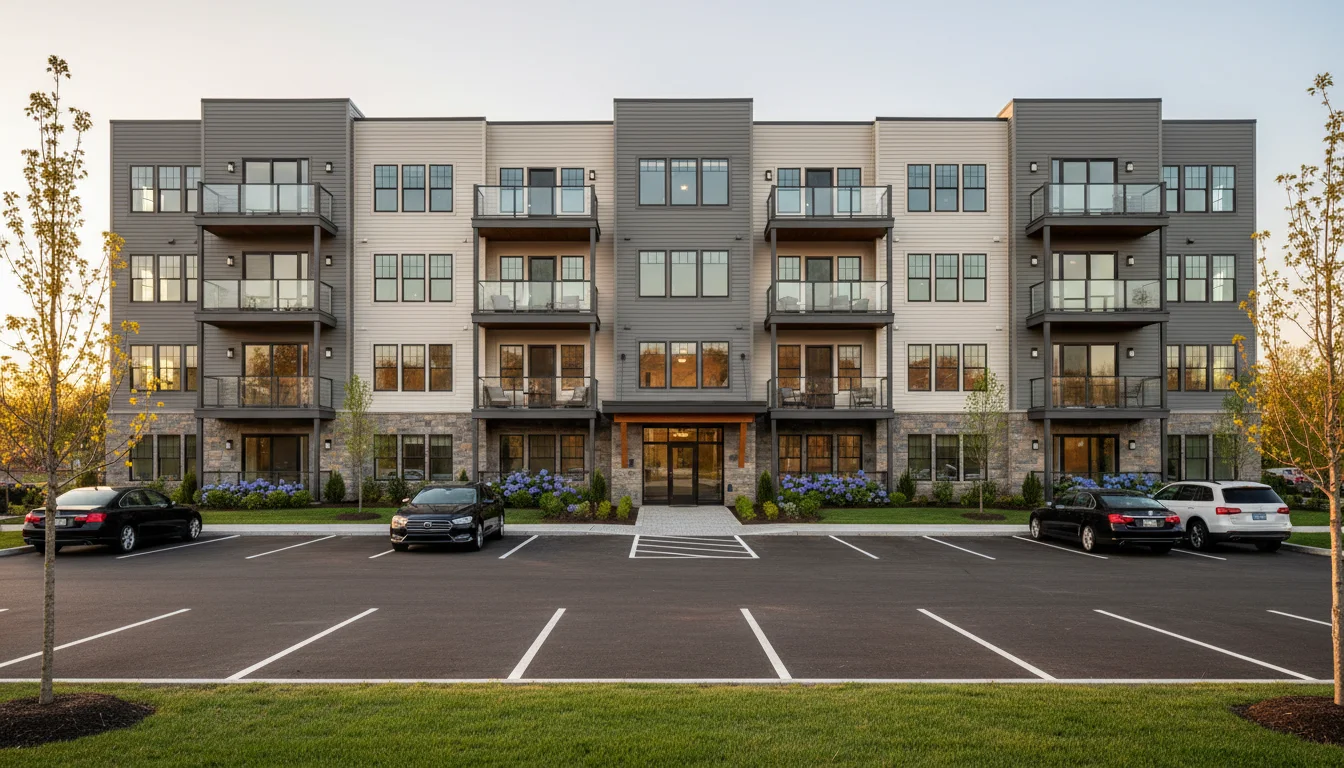
Before your first tenant moves in, you should review and verify: certificate of occupancy issuance, final building inspection sign-offs, punch list completion, all mechanical systems testing and commissioning, fire and life safety system certification, unit-by-unit finish quality, common area completion, site work and landscaping, utility activation, and all warranty documentation from your builder.
The final phase of a multifamily construction completion checklist is when your investment transitions from a construction asset to an income-producing property. It's also where overlooked details become expensive problems. A chipped countertop found during a walkthrough costs nothing to fix. The same damage reported by a tenant requires a maintenance call, scheduling, and a very different conversation. For investors building multifamily properties in Massachusetts, the completion phase deserves the same disciplined attention as the design and construction phases.
This article walks through every category you should review before tenant occupancy, explains how the construction completion process works, and identifies the items investors most commonly overlook.
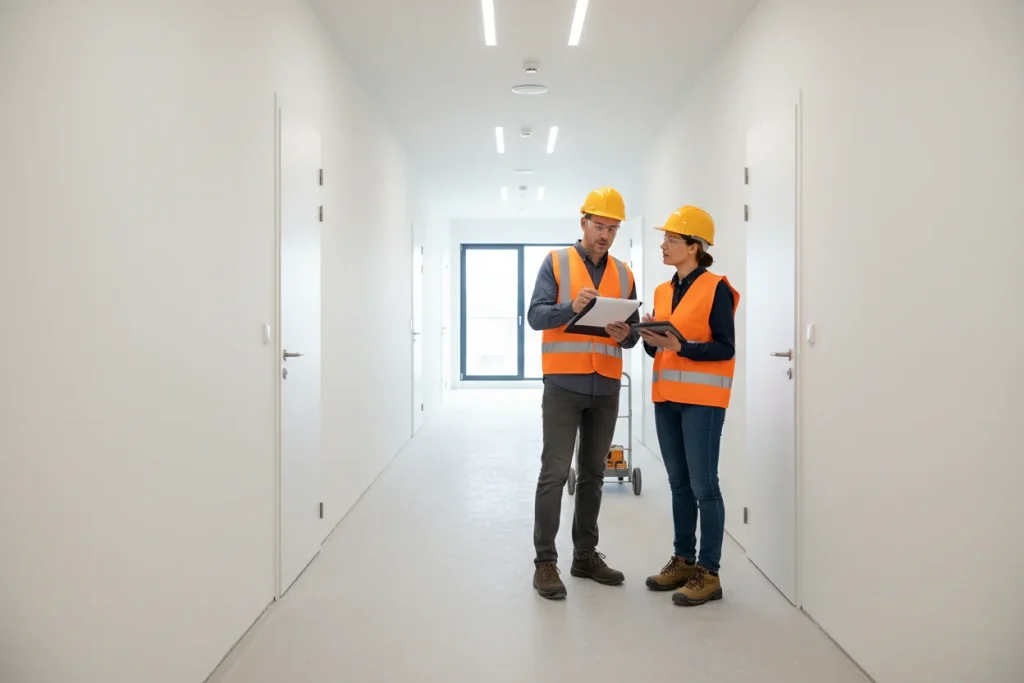
Before legal occupancy, the building must have a certificate of occupancy (CO) issued by the local building inspector, confirming that all required inspections have been passed, all code requirements are met, and the building is safe for habitation. Without a CO, tenant occupancy is illegal in Massachusetts.
The certificate of occupancy is the single most critical milestone in the completion process. It's the building inspector's formal confirmation that your building complies with the Massachusetts State Building Code, fire code, zoning regulations, and any other requirements imposed during the permitting process.
Here's what must be in place before the CO is issued:
A qualified multifamily builder manages the entire close-out process, coordinating inspections, scheduling fire department reviews, and tracking all requirements to ensure nothing is missed. The CO isn't a formality. It's the legal authorization that allows your investment to generate revenue.
| Pre-Occupancy Requirement | Responsible Party | Verification Method |
| Certificate of occupancy | Building inspector issues | All inspections passed |
| Fire department approval | Fire chief/department | System testing and inspection |
| HERS confirmation (stretch code) | Certified HERS rater | Blower door test, rating confirmation |
| Accessibility compliance | Building inspector verifies | Plan review and field inspection |
| Permit condition satisfaction | Various boards | Documentation of compliance |
| Utility activation | Builder coordinates | All services are tested and active |
Your punch list should cover every visible and functional element in every unit and common area: paint quality, flooring installation, cabinet alignment, hardware function, appliance operation, window and door operation, trim fit, plumbing fixture function, electrical outlet operation, and HVAC performance in each individual space.
The punch list is a systematic inventory of incomplete, defective, or substandard items identified during the final walkthrough. In multifamily construction, punch lists multiply in scope because you're reviewing multiple units, common areas, corridors, mechanical rooms, exterior grounds, and parking areas.
Walk every unit individually. Check that:
Common areas receive heavy use from day one. Review corridors, lobbies, stairwells, laundry rooms, mechanical rooms, and any shared spaces for the same finish quality standards you'd apply to individual units.
Parking areas should be properly striped and graded for drainage. Landscaping should be installed per the approved site plan. Exterior lighting should be operational. Building signage, unit numbering, and mailbox installation should be complete.
| Punch List Category | What to Check | Common Issues Found |
| Paint and drywall | Uniformity, touch-ups, nail pops | Missed spots, visible patches |
| Flooring | Level installation, transitions, and damage | Gaps at transitions, surface scratches |
| Cabinetry | Level, aligned doors, secure hardware | Misaligned doors, loose hinges |
| Plumbing | Fixture operation, leak check | Slow drains, loose connections |
| Electrical | Outlets, switches, fixtures | Non-functional outlets, missing covers |
| HVAC | Airflow to every room, thermostat function | Insufficient airflow in remote rooms |
| Windows/doors | Operation, seal, lock function | Sticky operation, draft around seals |
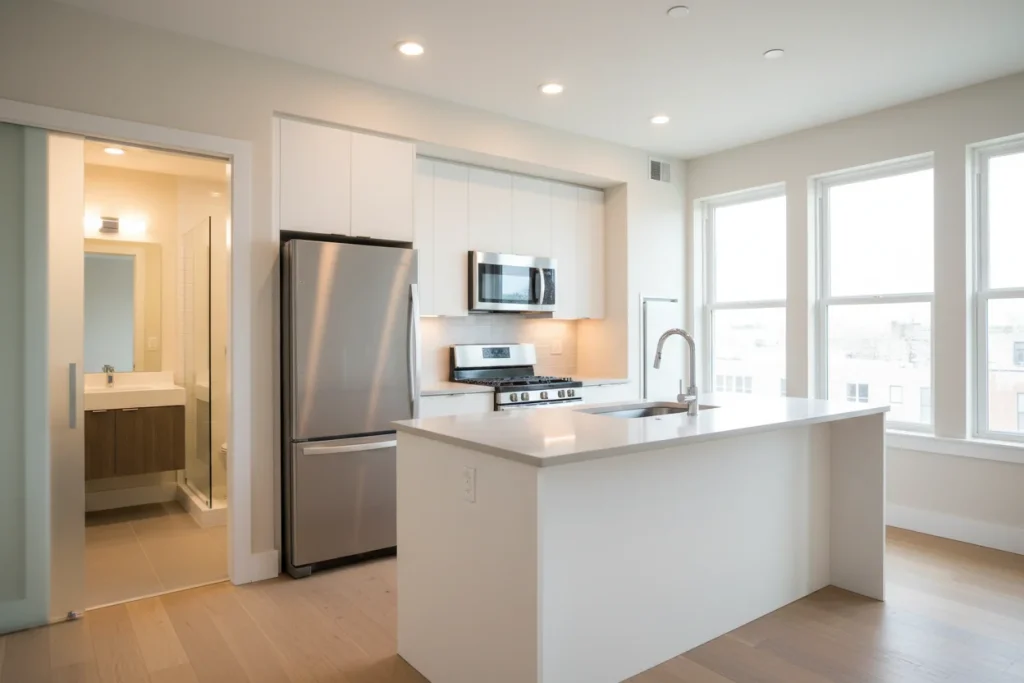
Every mechanical, electrical, plumbing, fire safety, and life safety system should be tested and commissioned before occupancy. This includes HVAC balancing, hot water delivery, electrical load testing, fire alarm and sprinkler system certification, emergency lighting, and generator testing (if applicable).
Systems testing goes beyond the punch list. It verifies that your building's infrastructure performs as designed under operating conditions. Your design-build contractor should coordinate comprehensive commissioning that includes:
Each unit's heating and cooling system should be balanced to deliver adequate conditioned air. Common area systems should be verified for proper operation. Ventilation rates should be tested to confirm code compliance. For buildings with heat pump systems, both heating and cooling modes should be verified.
Fire alarm systems must be tested by a licensed fire alarm company, and certification must be submitted to the fire department. Sprinkler systems require hydrostatic testing and fire department inspection. Emergency lighting and exit signs must operate on battery backup. Smoke and carbon monoxide detectors must be installed and tested in every unit.
Hot water delivery should be verified at every fixture. Water pressure should be consistent across all units, including upper floors. Drainage should be tested for proper flow. Any shared systems (boilers, water heaters) should be verified for adequate capacity.
Panel schedules should be verified. GFCI protection should be tested in all required locations. Common area lighting controls should be operational. EV charging infrastructure (if installed under specialized code) should be tested.
For multifamily general contractors, systematic commissioning documentation isn't just good practice. It's evidence of project quality that protects both the builder and the investor in the event of questions arising after occupancy.
At project completion, you should receive warranty documentation for all major systems, manufacturer manuals for installed equipment, as-built drawings reflecting any field changes, commissioning test reports, certificate of occupancy, all inspection sign-off records, and a maintenance schedule for building systems.
This documentation package is your building's operating manual. It's what your property management team needs to properly maintain the building, file warranty claims if equipment fails, and demonstrate compliance if questions arise during future inspections or property transactions.
Your design-build team should organize and transfer this documentation systematically, not hand you a box of loose papers on closing day. A well-run completion process includes:
For custom home builders transitioning to multifamily investment, the documentation requirements are more extensive than for single-family. Multiple units multiply the equipment inventory, and property management teams need organized records to maintain the building efficiently.
A certificate of occupancy is issued by the building inspector confirming the building complies with all codes and is safe for habitation. Without it, tenant occupancy is illegal in Massachusetts.
Final inspections, punch list resolution, and systems commissioning typically take 2 to 4 weeks after substantial construction completion, depending on building size and complexity.
Your builder coordinates all final inspections, including building, electrical, plumbing, mechanical, and fire department reviews.
A systematic inventory of incomplete, defective, or substandard items identified during final walkthroughs that must be resolved before the project is considered complete.
Yes, or designate a qualified representative. Unit-by-unit review catches issues that are inexpensive to fix before occupancy but disruptive after tenants move in.
Fire alarm systems, sprinklers, emergency lighting, exit signage, and smoke/CO detectors all require testing and certification before occupancy can begin.
Warranties for all major systems including HVAC, roofing, windows, appliances, and plumbing fixtures, organized by system with manufacturer contact information.
Very important. As-built drawings document the building as actually constructed, including field changes, and are essential for future maintenance, renovations, and property transactions.
Legally, tenants can move in once the certificate of occupancy is issued. However, completing the punch list before occupancy is strongly recommended to avoid disrupting tenants.
HVAC filter changes, exterior drainage monitoring, and common area cleaning schedules should begin immediately. Your builder should provide a recommended maintenance schedule at handover.
The period between construction completion and first tenant occupancy is where your multifamily investment either launches smoothly or starts with problems that compound. Every item on this checklist, from the certificate of occupancy through punch list completion, systems commissioning, and documentation handover, exists to protect both the investment and the tenant experience. The builder who manages this phase with the same discipline they brought to design and construction is the builder who delivers a property ready to generate returns from day one.If you're approaching completion on a multifamily project in Essex or Middlesex County, or planning one and want to understand how we handle the close-out process, contact our team. We'll show you how our design-build approach extends through every phase, including the critical transition from construction asset to income-producing property.
© 2025 Genesis Construction and Development Inc. - All rights reserved | Web Design & SEO By: Authority Solutions®