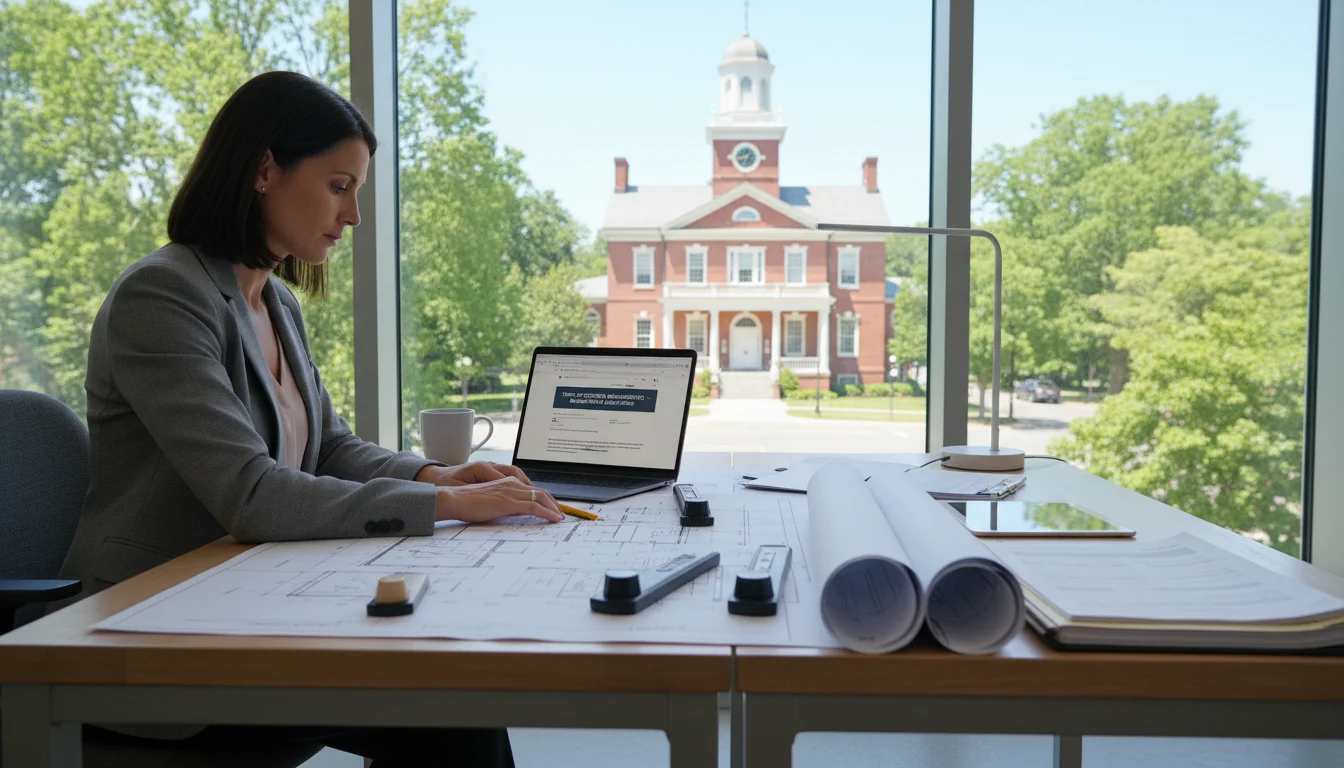
Your design-build team handles the entire permitting and zoning process: verifying zoning compliance, preparing code-compliant construction documents, submitting applications to your local building department, coordinating with municipal boards, tracking review timelines, and resolving any plan review comments so you can focus on the decisions that matter to you.
For most homeowners and investors, Massachusetts building permits and zoning requirements are among the least understood yet most time-critical aspects of any construction project. The good news? When you work with a design-build firm experienced in Massachusetts, you don't need to become an expert. Your team manages the regulatory process from start to finish. But understanding what's involved helps you appreciate why this expertise matters and how it protects your project.
This article explains what the permitting and zoning process looks like in Massachusetts, what your design-build team handles at each stage, and why local expertise is one of the most valuable things a builder brings to your project.
The building permit process requires submitting construction documents that demonstrate compliance with the Massachusetts State Building Code (780 CMR), local zoning bylaws, energy codes, and any applicable environmental regulations. Your local building inspector reviews these documents and either issues the permit, requests revisions, or denies the application.
Massachusetts operates under a statewide building code administered by the Board of Building Regulations and Standards, but enforcement happens at the municipal level through local building inspectors and commissioners. Each of the 351 cities and towns has its own building department, and while the code is consistent statewide, the interpretation, review speed, and documentation expectations vary from one municipality to the next.
Here's what a typical permit application requires for a residential project:
Your design-build contractor manages every one of these components. They prepare the documents, verify compliance before submission, and coordinate the review process with your local building department.
| Permit Component | What's Required | Who Handles It |
| Construction documents | Plans, structural calcs, MEP specs | Design-build team (architect + builder) |
| Energy code compliance | HERS projections, insulation details | Builder coordinates with HERS rater |
| Zoning verification | Setbacks, coverage, height compliance | Builder verifies during design |
| Environmental approvals | Wetlands, septic, stormwater | Builder initiates and coordinates |
| Fire department review | Life safety, access, sprinkler requirements | Builder submits for review |
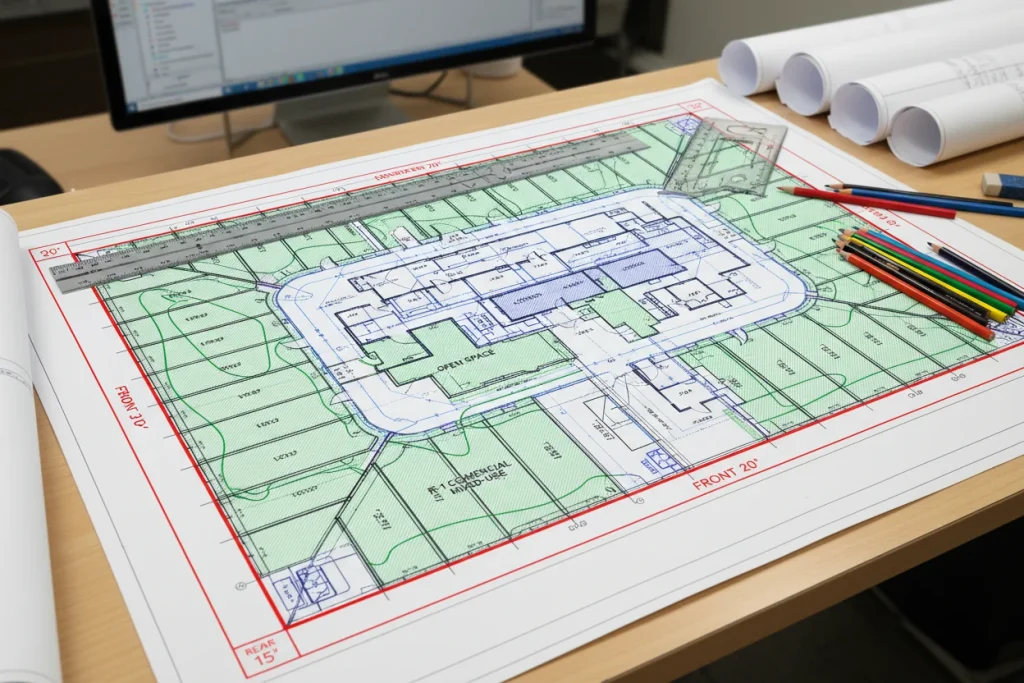
Zoning bylaws control what can be built on a specific lot, including building size, height, setbacks from property lines, lot coverage percentages, and permitted uses. If your project doesn't conform to these rules, you'll need a variance or special permit from the Zoning Board of Appeals before construction can begin.
Every Massachusetts municipality maintains its own set of zoning bylaws. These bylaws divide the town into districts (residential, commercial, mixed-use) and establish rules specific to each district. For residential projects, the most common zoning constraints that affect design include:
What makes zoning tricky in Massachusetts is the variability. A 10,000-square-foot lot in one town might allow a 3,500-square-foot home, while the same-sized lot in a neighboring community might be limited to 2,800 square feet based on different coverage and setback rules. Your design-build firm checks these constraints before the first floor plan is drawn, ensuring the design fits the site's regulatory envelope from the start.
For investors evaluating multifamily opportunities, zoning is even more consequential. MBTA Communities Act compliance, 40B pathways, and overlay districts create additional layers that affect density, parking requirements, and the approval path. A builder who understands these regulatory layers can tell you what's feasible on a specific site before you invest in design.
| Zoning Constraint | What It Controls | Typical Impact |
| Front setback | Distance from street to building | Affects building footprint placement |
| Side setbacks | Distance from side property lines | Limits building width |
| Rear setback | Distance from rear property line | Affects backyard space and additions |
| Lot coverage | Max percentage of lot covered | Limits total building footprint |
| Height limit | Maximum roof height | Affects stories and roof design |
| Use restriction | Permitted building types | Determines if project is by-right |
Your design-build team handles pre-design zoning analysis, code-compliant document preparation, permit application submission, plan review response, inspection scheduling during construction, and certificate of occupancy coordination at project completion.
The value of a design-and-build approach to permitting is that the same team designing your project is also responsible for getting it approved and building it. There's no gap between what's designed and what's permitted because the builder has been verifying compliance throughout the design process.
Your builder evaluates the lot's zoning constraints, identifies any environmental reviews required, and confirms which edition of the building and energy codes your municipality enforces. This pre-design regulatory analysis prevents the expensive surprise of discovering a zoning conflict or code issue after plans are substantially complete.
The team prepares and submits a complete permit package, including all construction documents, energy compliance documentation, and supporting materials. For design-build construction projects, the builder coordinates with the architect and engineers to ensure that every detail the building inspector needs is included in the first submission, reducing the risk of plan-review rejections that add weeks to the timeline.
Once the permit is issued, your builder schedules required inspections at each milestone: foundation, framing, rough-in electrical, rough-in plumbing, insulation, and final inspection. These inspections are mandatory checkpoints that verify the work matches the approved plans. At project completion, the builder coordinates the certificate of occupancy process, confirming all inspections have been passed and the building is approved for habitation.
For custom home builders working in Essex and Middlesex Counties, this end-to-end permitting management means the homeowner never has to visit a town hall, argue about code interpretation, or wonder whether an inspection has been scheduled. The builder owns the regulatory process the same way they own the construction schedule.
| Permitting Phase | What Your Team Does |
| Pre-design | Zoning analysis, code edition verification, and environmental assessment |
| Design | Integrate compliance into plans, prepare HERS documentation |
| Submission | Complete permit package, coordinate with the building department |
| Review response | Address any plan review comments, resubmit if needed |
| Construction inspections | Schedule and pass all required milestone inspections |
| Completion | Coordinate certificate of occupancy, final sign-offs |
Local expertise matters because Massachusetts has 351 municipalities, each with its own building department, zoning bylaws, review timelines, and inspector expectations. A builder who has worked in your town knows the specific documentation standards, common review sticking points, and established relationships that expedite the process.
Here's the reality most homeowners don't see: the difference between a 4-week permit turnaround and an 8-week one often isn't the complexity of the project. It's whether the builder submitted plans that match the local inspector's expectations on the first pass. Building departments have finite staff and growing workloads. Clean, complete, well-organized submissions move faster. Submissions that require clarification, additional documentation, or revisions go to the back of the queue.
At Genesis, we've built projects across 33 municipalities in Essex and Middlesex Counties. That institutional knowledge, knowing which towns require specific documentation formats, which inspectors want additional structural detail, and which departments are running behind on reviews, directly translates into faster approvals and more predictable project schedules. It's one of the clearest examples of how the design-build services model delivers value that goes beyond construction quality. The same team that designs and builds your project also navigates the regulatory process with the local expertise to do it efficiently.
Most construction work requires a building permit, including new construction, additions, renovations, and structural alterations. Some minor repairs classified as "ordinary repairs" under the building code are exempt.
Timelines vary by municipality, typically ranging from 3 to 12 weeks depending on project complexity, submission completeness, and the building department's current workload.
You'll need to apply for a variance or special permit from the Zoning Board of Appeals, which requires public hearings and can add 2 to 4 months or more to your timeline.
Yes. A qualified design-build team verifies zoning compliance during design, identifies any conflicts early, and manages the process of obtaining zoning relief if needed.
The stretch energy code is an enhanced energy code adopted by most Massachusetts municipalities that requires new residential construction to meet specific HERS rating thresholds, verified by a certified HERS rater.
Typical residential projects require inspections at the foundation, framing, rough-in mechanical and electrical, insulation, and final completion stages. Additional inspections may apply depending on project scope.
A certificate of occupancy is issued by the building inspector after all inspections are passed, confirming the building is safe for habitation and complies with all applicable codes.
Yes. Permit delays are one of the most common causes of construction schedule disruption. Working with a builder who submits complete applications on the first pass minimizes this risk.
Absolutely. Zoning controls building size, height, setbacks, and permitted uses. Your design must conform to your lot's zoning district rules or obtain ZBA approval for any deviations.
Each municipality operates its own building department with its own staffing levels, review processes, and workload. Towns with higher construction activity often have longer review queues.
Building permits and zoning are the regulatory foundation of every construction project in Massachusetts. They're also the phase where projects most commonly lose time, not because the regulations are unreasonable but because the team managing the process didn't do the pre-work needed to submit clean, compliant applications from the start. When your design-build team integrates permitting into their process from day one, zoning is verified before design begins, code compliance is built into the plans, and submissions are complete on the first pass.If you're planning a project in Essex or Middlesex County and want to understand the permitting landscape for your specific lot, start a conversation with our team. We'll evaluate your site's regulatory requirements and show you how our process handles permits and zoning so you don't have to.
© 2025 Genesis Construction and Development - All rights reserved | Web Design & SEO By: Authority Solutions®