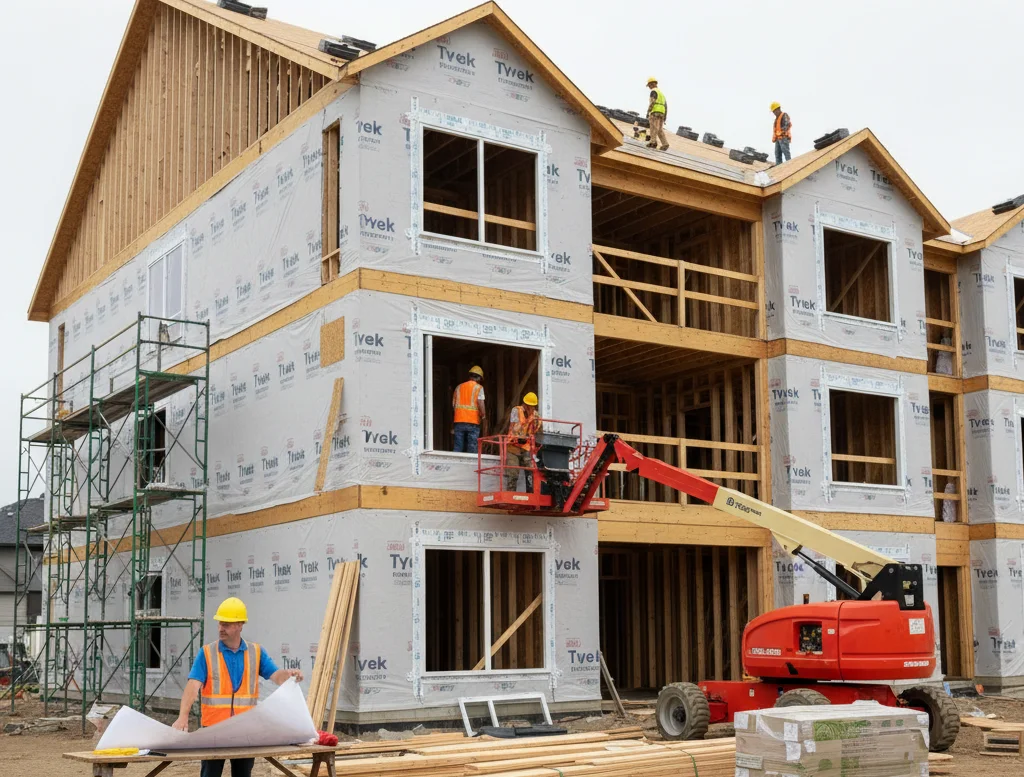
Multi-family builds differ from single-family projects in scale, density, building systems complexity, regulatory requirements, and financing structures, which is why experienced multifamily builders prioritize these differences to deliver higher land-use efficiency while ensuring stricter fire safety, accessibility compliance, and sophisticated construction management.
Multi-family builds differ from single-family projects in scale, complexity, and economics. Multi-family developments place more homes on less land, use shared building systems, and require stricter compliance with fire, safety, and accessibility standards. They involve more complex financing, higher construction costs per square foot, and greater regulatory review, yet often deliver greater income potential and more efficient land use. Single-family projects are simpler, but offer less density and diversification.
Although both single-family and multifamily projects provide much-needed housing, they do so at very different scales and levels of land use efficiency. Single-family subdivisions typically cover larger acreages for fewer homes, averaging 3 units per acre, while multifamily sites can reach 18 units per acre or more. This compact form supports stronger community integration, as more households live within walking distance of shared services and public spaces.
Higher density also encourages socioeconomic diversification, as a broader range of unit sizes and price points can be accommodated on the same land. This pattern reduces land consumption, preserves open space, and lowers per-household infrastructure expenditures for roads and utility lines.
Key density advantages of multifamily development:
Design complexity becomes much more visible when comparing how building systems are organized in single-family and multifamily projects. In a single-family home, systems are largely autonomous, with one set of plumbing, HVAC, and electrical serving a single household, and no shared interior walls or floors to coordinate.
Multifamily buildings must manage utility systems integration across stacked or side-by-side units, each with separate meters and entrances, yet often sharing core plumbing lines, furnaces, and water tanks. Designers must route these systems so each unit functions independently while still tying into central equipment. Standard space maintenance adds another layer, since corridors, lobbies, and shared roofs depend on coordinated access and shared services.
| System Type | Single-Family Approach | Multifamily Approach |
| Plumbing | Independent system per home | Shared risers, separate meters per unit |
| HVAC | Dedicated unit per residence | Central equipment serving multiple units |
| Electrical | Single service connection | Main service with individual unit metering |
| Common Areas | Not applicable | Corridors, lobbies, shared amenities requiring coordination |
When comparing multi-family and single-family projects, the key question is how total expenditures translate into per-unit economics and long-term returns. Higher construction requirements per square foot in multifamily are often balanced by lower land allocation per unit and shared expenses, changing how investors judge profitability and risk.
Per-unit economics differ sharply between single-family and multi-family projects, shaping everything from construction budgets to long-term financing strategies. In single-family work, material sourcing, skilled labor availability, and rising code requirements drive construction requirements, while finished lots represent a smaller percentage of total development expenditure.
Multi-family projects see construction requirements elevated compared to previous years, with affordable units maintaining higher levels, yet density helps spread land and overhead expenses. Energy code compliance alone can add significant requirements per apartment unit.
Expense per unit tells only part of the story; how a project is funded, structured, and exposed to risk often has a greater impact on long-term performance. Multifamily projects usually require substantial equity and larger down payments, so they rely on complex capital stacks with institutional lenders, private equity, and syndicated investors. This scale creates strong institutional attractiveness because large capital pools can be placed in a single, professionally managed asset.
Single-family deals, in contrast, use simpler residential mortgages and smaller commitments, allowing gradual scaling but with less efficient structures and concentrated vacancy risk. Multifamily spreads fixed expenses and rental income across many units, offering meaningful diversification benefits and more stable cash flow, though tied to one local market.
Regulatory rules shape multi-family and single-family projects in very different ways, starting with how land is zoned and what each zone allows. Developers must understand zoning maps, entitlement paths, and approval processes, since multi-family proposals often face more layers of review, conditions, and public input than a typical single-family home.
Navigating zoning and entitlements is often where the fundamental differences between multi-family and single-family projects come into focus, shaping what can be built, how dense it can be, and how long approvals will take. Zoning district designations guide early site selection, while community input can influence approvals for height, parking, and density.
Key zoning differences:
Among the most consequential differences between multi-family and single-family projects are the code and life-safety requirements that govern how people are protected in a building. In multi-family work, occupant protection drives nearly every major decision. Fire-rated walls, floors, and ceilings between units, often with two-hour ratings, form a compartmentation design that slows the spread of fire and smoke, buying time for safe egress.
Sprinkler systems, centralized fire alarms, and interconnected smoke detection are commonly required, along with protected stair and elevator shafts and clearly sized, rated exit corridors. Emergency lighting, exit signs, and sometimes standby power support evacuation when normal power fails. Regular inspection and testing are enforced by code, unlike in single-family homes, where simpler systems and owner-managed maintenance are typical.
While both multifamily and single-family projects follow the same basic steps of planning, building, and delivery, the way construction is managed and scheduled differs sharply between the two. Multifamily work relies on strict project phasing logistics and careful, skilled labor procurement, because many trades must move through large buildings in a coordinated sequence. In contrast, a single-family home usually follows a simpler, linear schedule focused on a single structure and a single future household.
Key construction management differences:
Construction planning sets the project in motion, but long-term success is ultimately shaped by how the property is run day to day, who manages it, and who lives there. Single-family operations center on one household, with direct communication, individualized attention, and simpler record-keeping.
Multi-family operations, in contrast, rely on unified systems, clear procedures, and detailed reporting to keep many units and shared spaces running smoothly. Property management also shifts significantly, with single-family homes often self-managed and multi-family buildings typically managed by professional firms charging per unit.
| Operational Aspect | Single-Family | Multifamily |
| Management Approach | Often owner-managed, direct tenant relationship | Professional property management firms, scalable systems |
| Maintenance Complexity | One unit, straightforward scheduling | Shared systems, common areas, coordinated vendors |
| Tenant Turnover | Lower frequency, higher impact per vacancy | Higher frequency, distributed across multiple units |
| Income Stability | 100% loss when vacant | Diversified across multiple rental streams |
How do multi-family and single-family projects really stack up once they leave the drawing board and enter the marketplace? Observers see multifamily rent growth and net operating income holding up better through recent economic cycles, while single-family returns lean more on long-term price appreciation.
Household preferences, financing, and policy shape different risk and community profiles. Multifamily spreads risk across many units, but is more exposed to interest-rate swings and rent regulations, while single-family rentals face total income loss when vacant yet use simpler mortgage financing. Multifamily can support walkability, transit, and services, while single-family projects typically reinforce lower-density, ownership-oriented neighborhoods.
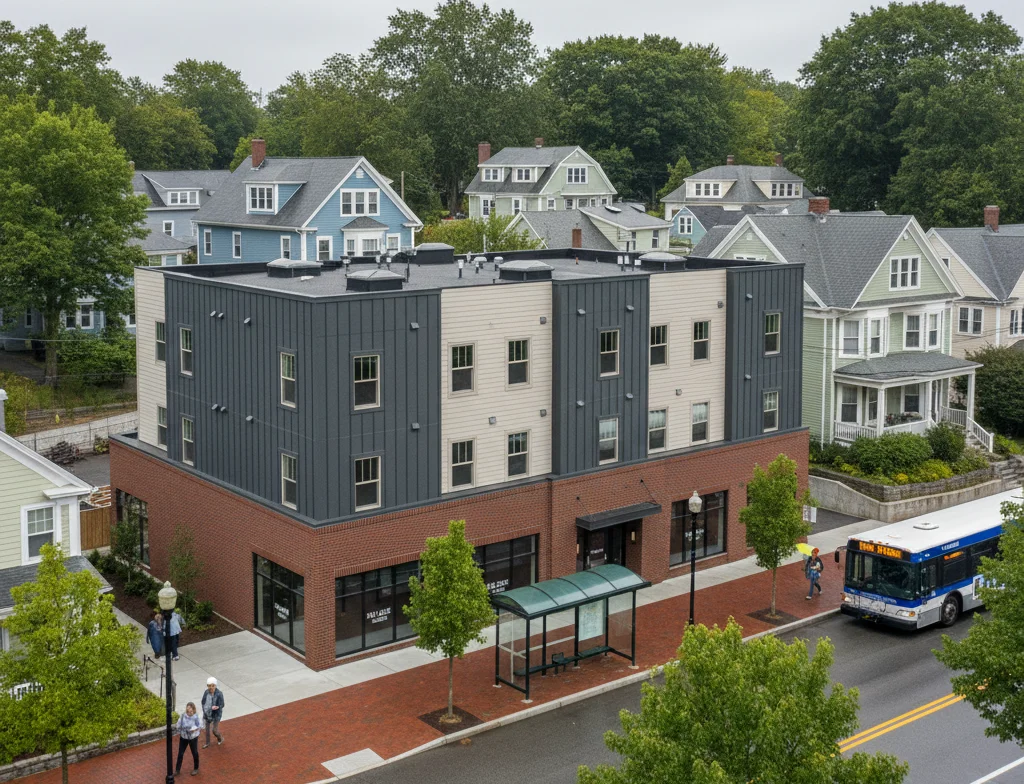
Multi-family development can reshape the look and feel of areas previously dominated by single-family properties, especially as multifamily properties introduce greater height and shared spaces. Buildings such as a duplex, townhouse, or larger apartment complexes can either complement or contrast with existing streetscapes depending on design quality. When materials and proportions reflect local patterns, projects tend to integrate more smoothly across both urban areas and suburban settings.
Sustainability priorities differ between one family homes and larger residential buildings. Certifications often focus on efficiency at scale for shared systems in multi-family housing, while single-family standards emphasize envelope performance and long-term cost savings. These distinctions help buyers and developers make more informed decisions about energy use and environmental impact.
Insurance for multi-family ownership typically involves broader commercial policies due to shared risks and common areas. Coverage structures differ significantly from those used for a condominium or single-family rental, and premiums are often higher upfront because of increased liability exposure across multiple households.
Larger developments often rely on centralized systems that manage access, utilities, and building operations across many units. These technologies are common in townhomes and mid-rise buildings, where coordination across residents improves efficiency and security beyond what is typically needed in a single dwelling.
Compared to single-family housing, multi-family developments generally add fewer students per unit, but higher density can increase demand for transportation, utilities, and emergency services. Planning for these impacts is especially important in fast-growing neighborhoods where residential patterns are shifting and service capacity must keep pace.
In the end, multi-family and single-family projects follow the same core construction principles, but they diverge sharply in scale, complexity, and strategy. Understanding differences in design, financing, regulations, and long-term operations helps owners and developers choose the right path for their goals. With clear planning, the right team, and realistic expectations, both approaches can be executed efficiently, reduce risk, and deliver strong results for residents, investors, and the surrounding community. Genesis Construction and Development specializes in builder-led design-build projects for both multifamily and single-family developments, bringing systematic planning, regulatory expertise, and transparent project management to every build, ensuring your project achieves its goals while meeting all compliance requirements and quality standards.
© 2025 Genesis Construction and Development - All rights reserved | Web Design & SEO By: Authority Solutions®