Massachusetts requires new custom homes to meet specific energy performance standards verified by HERS ratings, with most municipalities enforcing the stretch energy code, which requires HERS scores of 42 to 45, depending on fuel source. Understanding these requirements before design begins ensures your home is efficient by design, not retrofitted for compliance.
If you're planning to build an energy-efficient custom home in Massachusetts style, you need to understand the regulatory landscape before your architect draws the first line. Massachusetts leads the nation in building energy codes, and those codes directly affect your home's insulation levels, window specifications, HVAC system selection, air sealing requirements, and overall performance. The Massachusetts Department of Energy Resources oversees these standards, and your local building department enforces them at the permit level.
At Genesis Construction and Development, we design energy efficiency into every custom home project from the earliest planning stages, targeting HERS scores in the low-40s range. This article explains what HERS ratings mean, how the stretch and specialized energy codes affect your project, and why building energy performance into design from day one is both a code requirement and a smart investment.
A HERS (Home Energy Rating System) rating measures your home's energy efficiency on a scale where lower numbers mean better performance. A score of 100 represents a standard 2006 code-built home, zero represents a net-zero energy home, and the Massachusetts stretch code currently requires scores between 42 and 45 for new construction.
Think of a HERS rating as an energy efficiency scorecard for your home. It's calculated by a certified HERS rater using specialized software that models your home's building envelope, insulation, windows, HVAC systems, lighting, and air sealing. The rater evaluates the design before construction (projected rating) and tests the completed home (confirmed rating) to verify performance.
Here's why this matters practically:
A qualified custom home builder integrates HERS compliance into the design process, selecting insulation levels, window specifications, and HVAC systems that achieve the target score without over-engineering or unnecessary cost.
| HERS Score | What It Means | Approximate Energy Savings vs. 2006 Baseline |
| 100 | Standard 2006 code-built home | Baseline (0% savings) |
| 55-60 | Typical base code compliance | ~40-45% more efficient |
| 42-45 | MA stretch code requirement (2024+) | ~55-58% more efficient |
| 0 | Net-zero energy home | 100% offset by renewable generation |
The stretch energy code, adopted by over 270 Massachusetts municipalities, requires new residential construction to achieve HERS scores of 42 (fossil fuel heating) or 45 (all-electric) as of July 2024. The specialized code adds further requirements, including EV-ready wiring, and for homes over 4,000 square feet, mandates an all-electric or zero-energy pathway.
Massachusetts has three tiers of energy code, and which one applies depends on your municipality:
For custom homes, the practical impact is significant. Your design-build team must know which code applies in your municipality and design accordingly. The difference between building to base code and building to specialized code can affect HVAC system selection (heat pumps vs. fossil fuel), insulation specifications, window performance requirements, and whether on-site solar is required.
The key principle for homeowners to understand is that energy efficiency in Massachusetts isn't optional. It's code-mandated, and the requirements have tightened considerably. As of July 2024, the stretch code HERS thresholds dropped from 52/55 to 42/45, a substantial increase in performance requirements. Homes designed to earlier standards won't pass under current requirements.
| Code Tier | Applies In | HERS Requirement | Key Additional Requirements |
| Base code | All MA municipalities | Performance or prescriptive path | Minimum insulation and HVAC standards |
| Stretch code | 270+ municipalities | HERS 42 (fossil) or 45 (electric) | Third-party HERS testing, ERV/HRV required |
| Specialized code | Opt-in municipalities | HERS 42/45 + pathway requirements | Solar PV for fossil fuel, EV wiring, homes 4,000+ sf must be all-electric or net-zero |
The four biggest drivers of energy performance are building envelope quality (insulation and air sealing), window specifications, HVAC system selection, and mechanical ventilation. Getting these right during design means your home meets code without costly retrofits or over-engineered solutions.
Energy efficiency isn't one decision. It's a series of interconnected choices that your design and build team coordinates during the design phase. Here's what matters most:
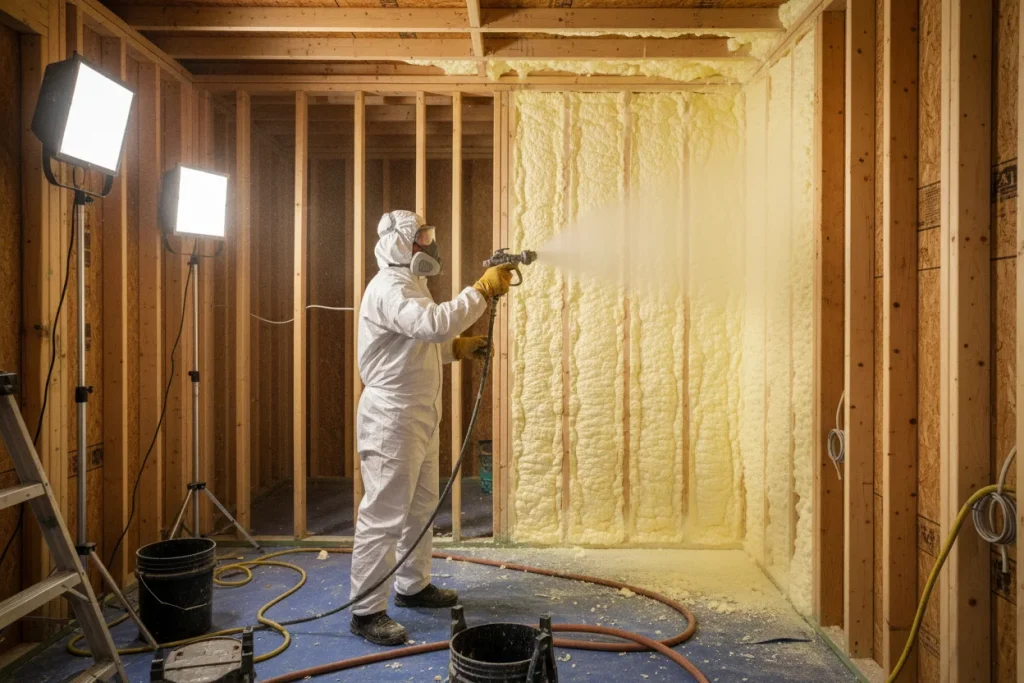
The envelope (walls, roof, foundation) is where most energy is gained or lost. In Massachusetts' climate zone 5A, effective insulation and continuous air barriers are essential. Spray foam, dense-pack cellulose, and exterior rigid insulation are common strategies. Air sealing is tested during the HERS verification process with a blower door test, and the results must meet code-required thresholds.
Windows are typically the weakest point in the envelope. High-performance triple-pane windows with low-E coatings significantly improve both energy performance and comfort. Window selection affects not just the HERS score but also heating and cooling loads, which in turn affect HVAC sizing.
Heat pumps have become the default choice for new custom home construction in Massachusetts, particularly under the stretch and specialized codes. They provide both heating and cooling from a single system, and all-electric homes receive a more favorable HERS threshold (45 vs. 42). For homes using fossil fuels, the specialized code requires solar PV to offset the less favorable HERS target.
The current Massachusetts code requires an ERV (energy recovery ventilator) or an HRV (heat recovery ventilator) for whole-house ventilation. Bath exhaust fans alone no longer meet the requirement. These systems exchange stale indoor air with fresh outdoor air while recovering heat energy, maintaining air quality without sacrificing efficiency.
For multifamily builders, these same principles apply at a larger scale, with additional complexities related to shared mechanical systems, multi-zone HVAC design, and common-area ventilation requirements.
| Design Decision | Impact on HERS Score | Practical Consideration |
| Wall insulation strategy | High (5-10 points) | Spray foam vs. cellulose affects both cost and performance |
| Window performance | Medium-High (3-7 points) | Triple-pane recommended for MA climate |
| HVAC system type | High (5-10 points) | Heat pumps provide both heating and cooling |
| Air sealing quality | High (5-8 points) | Verified through blower door test |
| ERV/HRV installation | Medium (2-4 points) | Now required under stretch code |
| Solar PV (if applicable) | Variable | Required under specialized code for fossil fuel homes |
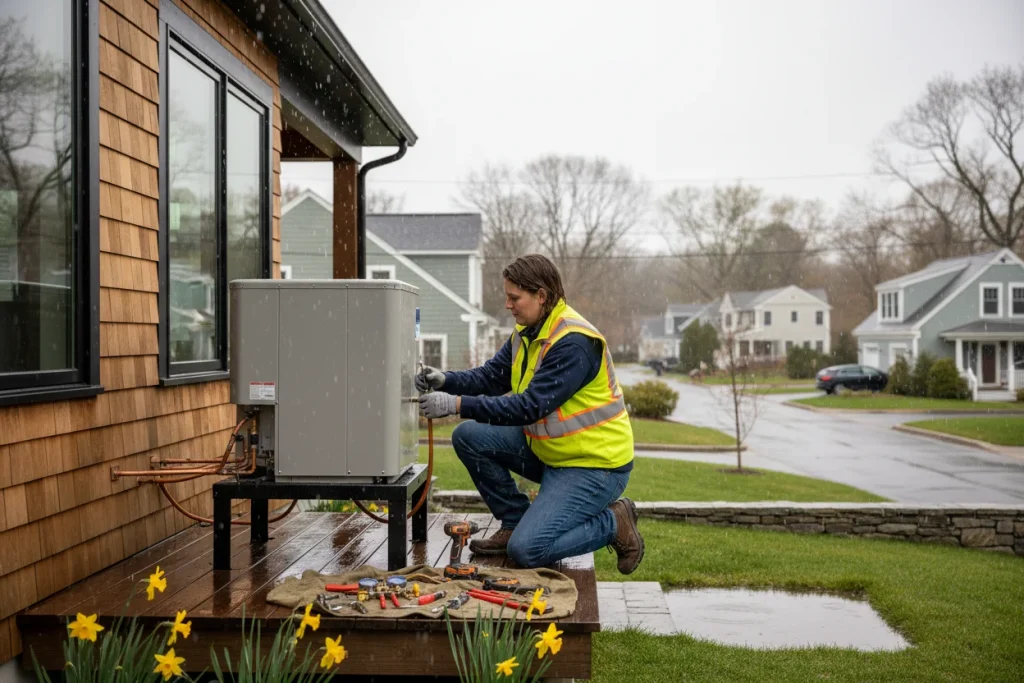
Builder-led design-build helps because the construction team evaluates energy performance implications of every design decision in real time during design sessions, ensuring the home achieves its HERS target without over-engineering, unnecessary cost, or late-stage compliance scrambles.
In a traditional approach, the architect designs the home, then an energy consultant reviews it and identifies what needs to change to meet code requirements. Those changes often require redesigns that affect floor plans, window placements, and mechanical room layouts. By the time everyone agrees on the changes, weeks have passed, and the permit submission is delayed.
In a design-build construction model, the builder is already thinking about energy performance while the architect is developing the floor plan. Ductwork routing is planned to avoid thermal bridges. Window sizes and orientations are evaluated for solar heat gain. Insulation strategies are selected to work with the structural design rather than fighting it. The HERS rater is engaged early to model projected scores, and adjustments are made during design, not after.
For custom home design build projects in Massachusetts, this integration isn't a nice-to-have. It's how you meet increasingly stringent energy codes without sacrificing design intent, blowing up your budget, or delaying your permit application.
Under the stretch code (effective July 2024), new homes must achieve a HERS score of 42 (fossil fuel heating) or 45 (all-electric). Your specific municipality may have additional requirements under the specialized code.
The stretch code is an enhanced energy code adopted by over 270 municipalities that requires performance-based compliance through HERS ratings, verified by certified third-party raters.
Yes. In stretch code municipalities, a certified HERS rater must provide a projected rating for your permit application and a confirmed rating before your certificate of occupancy is issued.
Heat pumps aren't universally required, but they're strongly incentivized. All-electric homes receive a more favorable HERS threshold (45 vs. 42), and the specialized code requires solar PV for fossil-fuel-heated homes.
Studies commissioned by the Massachusetts Department of Energy Resources indicate that all-electric homes built to stretch code standards often cost less to build and operate than fossil-fuel-heated homes when heat pump systems replace separate heating and cooling equipment.
A blower door test measures your home's air leakage by pressurizing the building and measuring airflow. It's required as part of the HERS verification process and must meet code-required thresholds.
The stretch code applies to additions and renovations to the extent of the work. Major additions over 1,000 square feet or over 50% of the original structure may require a full HERS rating.
An ERV (energy recovery ventilator) or HRV (heat recovery ventilator) provides whole-house mechanical ventilation while recovering heat energy. They're now required under the stretch code because bath exhaust fans alone no longer meet ventilation requirements.
Yes. The specialized code provides a net-zero pathway, and many builders in Massachusetts can design homes that produce as much energy as they consume through a combination of extreme efficiency and on-site solar generation.
Your builder engages the HERS rater during design to model projected scores, selects materials and systems to achieve the target, and ensures construction quality (especially air sealing) meets the standards verified during testing.
Energy efficiency in Massachusetts custom homes isn't a feature you add at the end. It's a code-mandated performance requirement that shapes every major design decision, from the building envelope to the HVAC system to the windows. Understanding the stretch code, HERS ratings, and the design decisions that drive performance gives you the foundation to make informed choices with your builder. The homes that perform best, both in code compliance and long-term comfort, are the ones where energy was designed in from the very first conversation.If you're planning a custom home in Essex or Middlesex County, talk to our team about how we approach energy efficiency as a design principle rather than a compliance afterthought. We'll show you what HERS performance looks like in practice and how it translates into a home that's comfortable, efficient, and built to last.
© 2025 Genesis Construction and Development - All rights reserved | Web Design & SEO By: Authority Solutions®