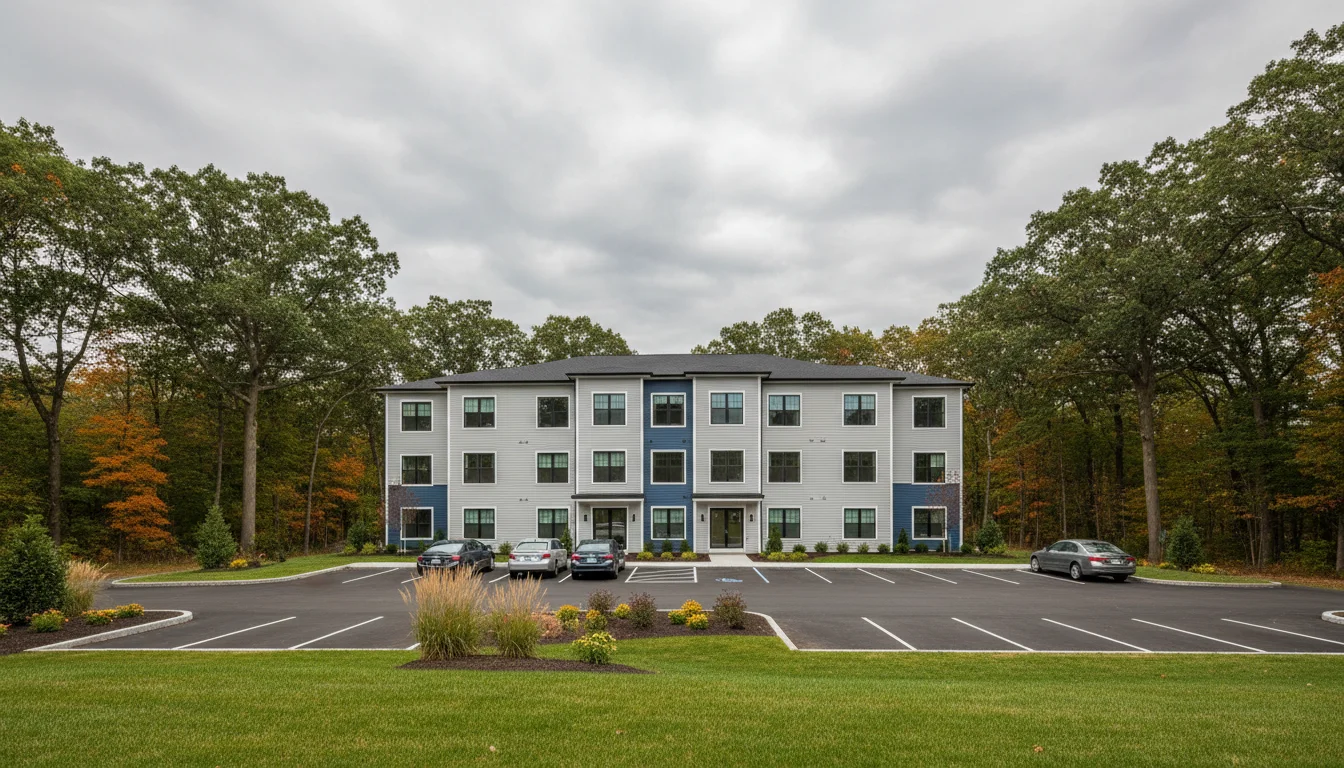
Chapter 40B is a Massachusetts law that allows developers to bypass certain local zoning restrictions when building housing with at least 20 to 25 percent of units designated as affordable. For investors and developers, it creates a streamlined permitting path, but it also introduces risks around community opposition, profit limitations, and regulatory compliance that require experienced builder navigation.
If you're evaluating a Chapter 40B Massachusetts development opportunity, you're looking at one of the most powerful but misunderstood tools in Massachusetts housing law. The comprehensive permit process can accelerate approvals and unlock density that standard zoning wouldn't allow, making otherwise marginal projects economically viable. But it isn't a shortcut. The regulatory framework, community dynamics, and builder requirements are complex enough that the difference between a successful project and a stalled one often comes down to who's managing the process.
At Genesis Construction and Development, we work with investors and developers on multifamily projects across Essex and Middlesex Counties, including projects navigating 40B and related affordable housing pathways. This article explains what 40B actually requires, where the risks and rewards sit, and what to look for in a builder when pursuing this type of development.
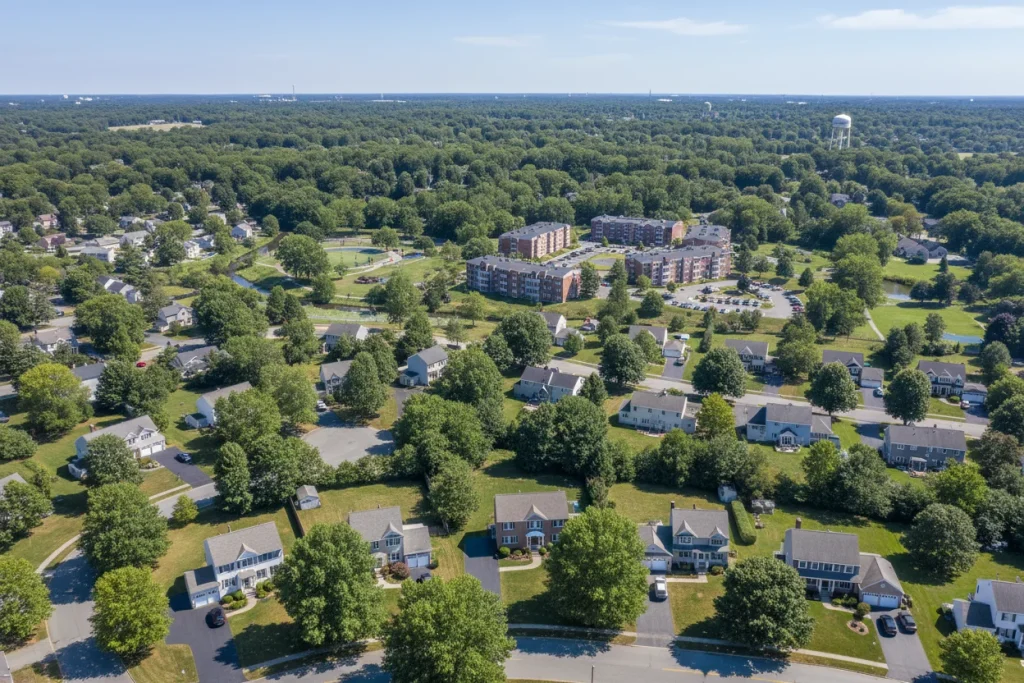
Chapter 40B, enacted in 1969, enables developers to apply for a single comprehensive permit through the local Zoning Board of Appeals, thereby consolidating all local approvals into a single review process. The law applies in municipalities where less than 10 percent of the housing stock qualifies as affordable under state definitions.
The law was created to address a persistent problem: Massachusetts communities using local zoning to effectively block the construction of housing affordable to moderate-income households. Under Chapter 40B of the Massachusetts General Laws, a developer who includes at least 20 to 25 percent affordable units in a proposed project can apply for a comprehensive permit that overrides local zoning restrictions like density limits, setback requirements, and parking minimums.
Here's how the process works in practice:
The bottom line for investors: in communities that haven't met the 10 percent affordable housing threshold, 40B gives developers significant leverage. But the process still involves public hearings, community engagement, and regulatory review. Having a multifamily contractor who understands both the permitting mechanics and the construction implications of 40B conditions is essential.
| 40B Process Step | What Happens | Typical Timeline |
| Project Eligibility Letter | State agency reviews proposal, issues eligibility | 2 to 4 months |
| Comprehensive permit application | Filed with local ZBA | 1 to 2 weeks to file |
| Public hearings | ZBA conducts hearings, seeks board input | 3 to 9 months |
| ZBA decision | Approve, conditionally approve, or deny | Issued after hearings close |
| HAC appeal (if needed) | Developer appeals denial or restrictive conditions | 6 to 18 months |
The primary risks include community opposition that extends hearing timelines, ZBA conditions that alter project economics, profit-limitation regulations that cap developer returns, and construction cost uncertainty during extended approval periods, when material and labor markets can shift significantly.
Chapter 40B does not guarantee approval. The process can be contentious, and experienced investors build contingency into their timelines and budgets to account for the realities of local opposition and regulatory negotiation.
40B projects frequently face organized opposition from residents and local officials who view comprehensive permits as overriding local control. Public hearings can stretch for months, and conditions imposed by the ZBA, such as reduced density, additional setbacks, or design modifications, may be intended to make the project economically unworkable. A developer without experienced counsel and a builder who understands the cost implications of each condition can find themselves agreeing to terms that destroy the project's financial viability.
Massachusetts regulates the profit developers can earn on 40B projects. The state's Department of Housing and Community Development oversees compliance, and projects are subject to financial auditing. The Massachusetts Office of the Inspector General has historically scrutinized 40B profit reporting, and developers who don't maintain clean financial documentation face enforcement risk. Your builder's ability to provide transparent cost tracking and accurate accounting directly affects your compliance posture.
Extended approval timelines create real financial risk. Material pricing, labor availability, and subcontractor commitments can all change during a 12-to-18-month hearing and appeal process. A project penciled at one set of construction costs may not work at prices quoted a year later. Working with a multifamily builder who can provide updated cost estimates as the approval process evolves helps investors make go/no-go decisions based on current realities rather than stale numbers.
| Risk Category | Description | Mitigation |
| Community opposition | Extended hearings, organized resistance | Engage early, present a responsive design |
| ZBA conditions | Density reductions, design mandates | Model the financial impact of each condition before agreeing |
| Profit limitations | State-regulated caps on developer returns | Maintain transparent cost documentation |
| Cost escalation during delays | Material and labor price changes | Get updated builder estimates during the approval process |
| HAC appeal uncertainty | Outcome not guaranteed, timeline unpredictable | Budget for an extended timeline, secure patient capital |
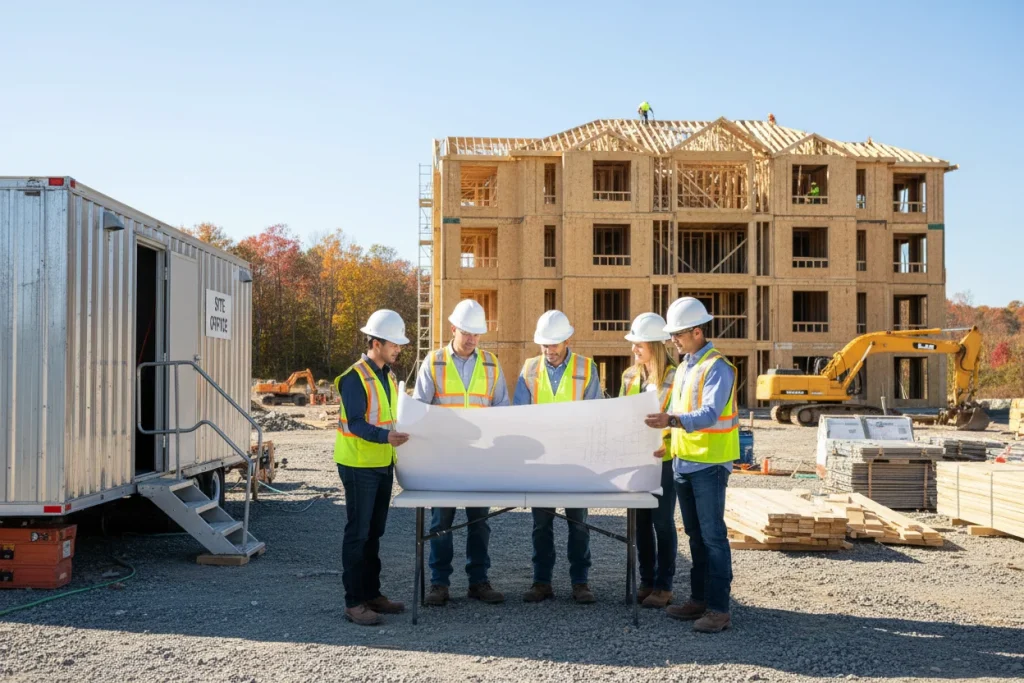
Investors should look for a builder with direct experience navigating Massachusetts affordable housing regulations, the ability to provide accurate cost estimates that reflect 40B-specific requirements, and a track record of coordinating design and construction to meet both affordability restrictions and market-rate quality expectations.
Not every multifamily construction company is equipped to handle 40B work. The regulatory, financial, and community engagement dimensions make it fundamentally different from standard multifamily development. Here's what separates a qualified builder from one who's learning on your project.
Your builder needs to understand how 40B conditions translate into construction decisions. If the ZBA requires specific setbacks, parking configurations, or affordable unit placement, the builder must be able to evaluate whether those conditions are constructible within the project budget. A firm experienced in multifamily design and construction can model the cost impact of each condition in real time during hearings, giving your legal team the data to negotiate effectively.
40B profit limitations mean there's no room for sloppy budgeting. Your builder should provide detailed, line-item estimates, not ballpark numbers. They should track costs with the documentation quality required for state auditing. At Genesis Construction and Development, we approach every project with comprehensive blueprints that align design, construction, and cost before construction begins, so investors know exactly what they're building and what it will cost.
The most efficient way to manage a 40B project is through a design-build approach, in which the builder is involved from the earliest stages of project conception. When the construction team participates in design, they can optimize unit layouts to meet affordability requirements and market-rate appeal, coordinate MEP systems to reduce operating costs, and ensure the project meets Massachusetts energy codes from the start rather than retrofitting for compliance after design is complete. This integration is especially valuable for custom home developers transitioning into multifamily investment, where the complexity of affordable housing compliance adds layers that single-family projects don't involve.
Genesis Construction and Development brings builder-led design-build methodology to multifamily development, integrating regulatory expertise, cost discipline, and construction planning from project inception through completion. Our approach aligns zoning compliance, design efficiency, and construction feasibility before ground is broken.
For investors evaluating 40B or related affordable housing opportunities in Essex and Middlesex Counties, the question isn't just "can this project get approved?" It's "can it be built profitably, on schedule, and to a standard that satisfies both affordable and market-rate tenants?" That second question is where construction expertise becomes the differentiator.
Our team brings institutional knowledge of Massachusetts regulatory requirements, including compliance with the MBTA Communities Act, 40B zoning strategies, and current building codes. We coordinate MEP systems early to minimize field conflicts and operating costs. We design for durable, efficient buildings that perform economically over the long term, not just structures that satisfy minimum code requirements at the lowest possible construction cost.
For multifamily general contractors competing on 40B work, the firms that win and retain investor relationships are the ones that treat regulatory compliance as a design input rather than a construction afterthought. That's the approach we take on every project, whether it's a comprehensive permit development or a by-right multi-family construction project.
Chapter 40B is a state law that allows developers to apply for a comprehensive permit to build housing with 20 to 25 percent affordable units, overriding certain local zoning restrictions in communities that haven't met the 10 percent affordability threshold.
Any developer who obtains a Project Eligibility Letter from a state-approved subsidizing agency can apply for a comprehensive permit. The project must include the required percentage of affordable units with long-term deed restrictions.
The full process, from Project Eligibility Letter through ZBA hearings and potential HAC appeal, can take anywhere from 6 months to over 2 years, depending on community dynamics and the complexity of negotiations.
Affordable units must be sold or rented at prices accessible to households earning less than 80 percent of the Area Median Income, with long-term deed restrictions maintaining affordability over time.
Towns below the 10 percent affordability threshold can deny a permit, but the developer can appeal to the Housing Appeals Committee, which may overturn the denial unless the town demonstrates the project poses serious health or safety concerns.
Massachusetts regulates developers' profits on 40B projects, and developments are subject to financial audits by the state. Developers must maintain transparent cost documentation throughout the project.
ZBA conditions may require changes to density, setbacks, parking, building height, or unit layouts. Having a builder who can evaluate the cost impact of each condition during hearings helps developers negotiate terms that preserve project viability.
Yes. Design-build integrates regulatory compliance, cost discipline, and construction planning into a single team, reducing coordination gaps that create risk in complex affordable housing developments.
In addition to the 40B statute itself, projects must comply with current Massachusetts building codes, energy efficiency requirements, local wetlands protection, Title V septic regulations where applicable, and any conditions imposed by the ZBA.
Genesis Construction and Development works with investors and developers on multifamily projects in Essex and Middlesex Counties, bringing regulatory expertise, cost discipline, and builder-led design-build methodology to projects navigating 40B and related affordable housing pathways.
Chapter 40B development in Massachusetts offers investors a viable path to building mixed-income housing where standard zoning would otherwise restrict density and project feasibility. But the risks are real: community opposition, regulatory complexity, profit limitations, and construction cost exposure during extended approval timelines all require experienced navigation. The builder you choose for a 40B project isn't just managing construction. They're managing risk, compliance, and financial discipline across a process that demands all three.If you're evaluating a multifamily opportunity in Essex or Middlesex County, contact our team to discuss our approach to 40B and related affordable housing projects. We'll help you understand the regulatory landscape, accurately model construction costs, and determine whether builder-led design-build is the right delivery method for your investment.
© 2025 Genesis Construction and Development Inc. - All rights reserved | Web Design & SEO By: Authority Solutions®