Smart home design during construction ensures better wiring, stronger security, seamless automation, and future-proof connectivity that cannot be easily replicated through retrofitting.
Designing a smart home from the start allows better wiring, stronger security, and smoother daily use. Homeowners who integrate technology during the custom home design build phase avoid costly retrofits and achieve cleaner installations. By planning infrastructure early, you create a foundation that supports today's systems while accommodating tomorrow's innovations.
A well-designed security, access, and monitoring infrastructure protects people, property, and privacy without compromising aesthetics. Planning starts outside, with high‑resolution cameras positioned to cover doors, windows, driveways, and blind spots, creating overlapping views instead of relying on a single device. Local recording and cloud backup work together to ensure reliable retention of surveillance footage, even if a camera is damaged or stolen.
At entry points, smart locks use multi-factor access credentials, such as phone apps, PINs, or biometrics, backed by audit logs and temporary codes for guests or contractors. Interior motion, glass-break, and perimeter sensors are grouped into zones, supporting tailored alerts, professional monitoring, and faster, more accurate responses.
Essential security design elements include:
A central automation hub acts as the "brain" of your smart home, coordinating devices from multiple manufacturers. Your custom home builder should specify hubs that support multiple wireless protocols during the design phase—including Zigbee, Z‑Wave, Wi‑Fi, Bluetooth, and Matter—so devices from brands like Philips Hue, Ecobee, and Wemo work together reliably. When selecting this central hub, designers can compare options based on whether they prefer local communication to keep automations running during internet outages or cloud‑based systems that may require cellular backup for remote access.
Well-chosen control options, such as wall-mounted touchscreens, mobile apps, and voice interfaces, give residents simple ways to manage scenes, locks, lights, and sensors. Reserve wall space and dedicated circuits during framing to accommodate these control panels without visible wiring.
| Feature Area | What It Does | Design Consideration |
| Connectivity | Keeps devices online and responsive | Plan Ethernet and Wi‑Fi coverage |
| Interfaces | Provides apps, panels, and voice control | Reserve wall space and power |
| Automation Logic | Runs schedules and sensor-based routines | Ensure hub location and backup power |
Integrated energy management systems bring intelligent load control, solar power, and home battery storage together — and a custom home construction company can wire the infrastructure for these systems during framing rather than retrofitting later, enabling households to use electricity more efficiently and predictably. These systems monitor usage in real time, analyze patterns, and automatically adjust devices to cut waste and lower costs.
Smart load management coordinates how a home uses electricity, turning scattered devices and appliances into a unified system. During design, owners can plan for programmable energy budgets and dynamic grid integration, so the home responds automatically to utility prices and grid needs. This proactive approach reduces electricity bills while contributing to a smaller carbon footprint.
When solar panels, batteries, and control software are designed as one system, a home's energy use becomes far more predictable and resilient. During design, the team can match panel type, inverter topology, and battery size so performance is optimized from day one. Monocrystalline or bifacial panels are paired with string inverters or microinverters, improving output in shade and easing future expansion.
Battery chemistry, often safer long‑life LiFePO4, is chosen to support backup needs and seasonal storage strategies. An energy management system then coordinates solar, storage, and loads, using real‑time monitoring and forecasting to keep performance and safety on track.
A smart home depends on a resilient network foundation. By combining mesh Wi‑Fi with strategic Ethernet wiring, the home can support many devices, reduce dead zones, and keep critical systems stable even when one part of the network fails. On‑premises edge computing, where key processing runs locally rather than in the cloud, further improves speed, privacy, and reliability for everyday automations.
A stable, secure network is essential to the performance of a smart home. During planning, homeowners should match each device to the right connection type, define device security profiles, and set up systems that allow seamless updates without disruption.
Network planning best practices:
Effective smart homes need a well-planned mix of mesh Wi‑Fi and strategic wiring. During design, planners estimate roughly one mesh node per 1,500–2,000 square feet, adding more for upper floors, thick walls, or detached areas. Whenever possible, they pair these nodes with wired Ethernet backhaul, which preserves wireless capacity for demanding devices.
Designers choose Wi‑Fi 6 or 6E systems that can later be upgraded to Wi‑Fi 7, then place nodes in open areas, away from metal and appliances. They also specify conduit, outlets, or PoE at likely node locations, making future expansion or replacement simple.
Instead of sending every second of data out to the cloud, a well-designed smart home pushes much of the thinking to "the edge," right inside the house. Local processors in hubs, cameras, and voice assistants handle most tasks on-site, so responses stay fast, private, and reliable, even during Internet outages.
| Edge Computing Benefit | How It Helps |
| Low-latency control | Enables instant responses for lighting, HVAC, security, and access systems |
| Reduced bandwidth use | Only summarized insights, not raw streams, go to the cloud, cutting costs |
| Enhanced privacy | Sensitive footage and sensor data remain on local networks |
| Scalable maintenance | Standardized hardware enables predictable upgrades |
| Built-in security | Secure chips and geofencing harden devices against remote attacks |
A well-designed smart home quietly shapes daily life to support comfort, health, and overall wellness. During design, owners can prioritize circadian optimization with tunable lighting that shifts from cool, energizing tones in the morning to warm, calming tones at night. In parallel, indoor air purification and smart ventilation respond to particulate matter, CO2, and humidity levels, keeping the air cleaner and breathing easier.
Key wellness design considerations:
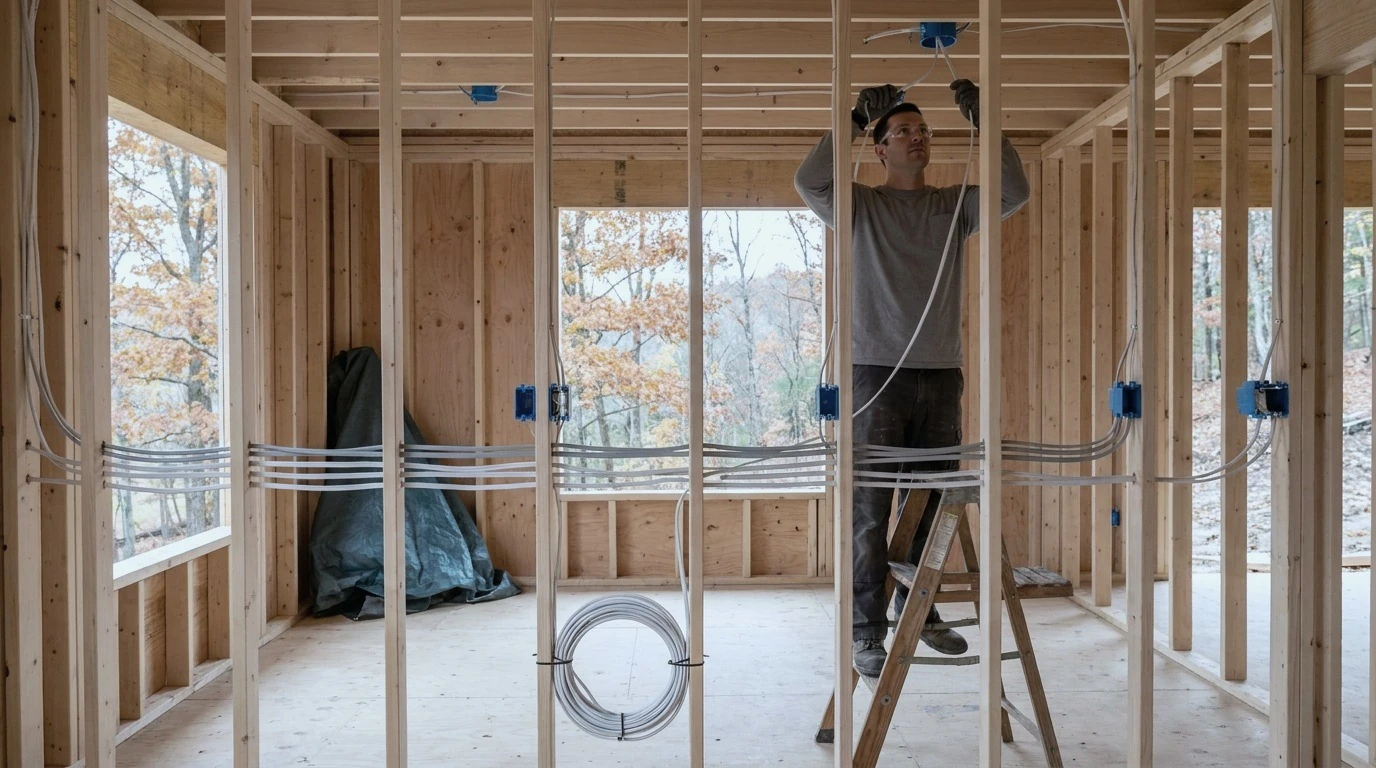
Thoughtful prewiring and conduit planning turn a smart home from a collection of gadgets into a flexible backbone that can adapt as technology changes. During design, a structured cabling backbone using Cat6A from a central rack to key rooms supports high-speed networking, power-over-ethernet devices, and later upgrades. Coax runs, kept separate from data lines, preserve clean video and satellite paths.
A disciplined conduit-and-empty-run strategy keeps walls closed while technology evolves, allowing new cables to be pulled without demolition. This approach dramatically reduces future retrofit costs while maintaining aesthetic integrity.
Future-proofing infrastructure essentials:
The most successful smart home designs allow technology to fade quietly into the background, supporting daily life without dominating it. Sleek thermostats, discreet doorbells, and flush control panels keep sight lines clean. Designers increasingly build technology into cabinetry, mirrors, and furniture, hiding chargers, speakers, and wiring.
Neutral finishes on devices, concealed cameras, and voice assistants tucked into decorative covers all protect privacy, while AI systems quietly adjust comfort and lighting in the background. This approach delivers functionality without visual clutter, ensuring that technology enhances rather than defines the living space.
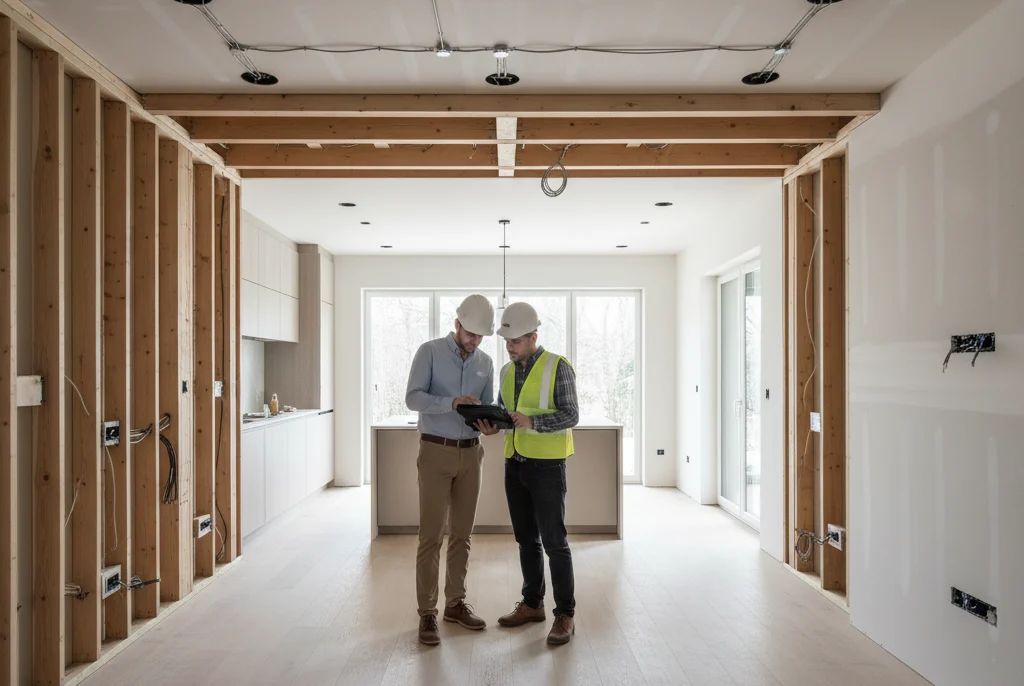
Early planning should include architects, builders, designers, and specialists familiar with smart home technology. These teams coordinate wiring, layouts, and device placement so everything—from climate to entertainment—functions as a cohesive smart home systems strategy that supports long-term flexibility and performance.
Phasing works best when incorporating smart home infrastructure from the start, even if devices are added later. Begin with high-impact upgrades like a smart light in key areas, then expand into smart appliances and smart irrigation as budget allows, ensuring your daily routine benefits immediately without costly rework.
Lighting, security, and climate controls deliver the strongest returns, especially when built around smart technology that supports multiple platforms. Buyers value energy efficiency, intuitive control, and systems that improve comfort without complexity—making lighting and climate upgrades particularly attractive.
Prewiring allows seamless installation of smart lighting systems, smart irrigation systems, and other connected features before walls are closed. This approach supports a cleaner lighting system, avoids surface-mounted hardware, and better accommodates future upgrades like motion sensors or new control interfaces.
Post-installation costs may include monitoring, cloud storage, and automation services tied to smart bulbs, security devices, and voice platforms. While these services enhance convenience and energy management, choosing systems with local control helps reduce recurring fees while still supporting modern living, whether you’re adjusting a single bulb or using automation to adjust the temperature throughout the home.
Planning innovative features during the design phase gives homeowners a strong, flexible foundation instead of a patchwork of gadgets added later. By addressing security, automation, energy, connectivity, comfort, and privacy from the start, you create a home that is easier to manage, more efficient, and ready for future technology. With the proper preparation behind the walls and a clear strategy, your smart home becomes simpler to use, upgrade, and truly rely on. Genesis Construction and Development specializes in builder-led design-build projects that integrate smart home infrastructure from the ground up, ensuring precision, transparency, and peace of mind throughout the process.
© 2025 Genesis Construction and Development Inc. - All rights reserved | Web Design & SEO By: Authority Solutions®