Multifamily permitting in Massachusetts involves multiple review boards, state compliance requirements, and municipal processes that vary significantly from town to town. The projects that move through approvals efficiently share one trait: their teams anticipated the regulatory requirements early and submitted complete, compliant applications from the start.
For developers and investors, multifamily permitting in Massachusetts can feel like navigating a maze where the rules change depending on the municipality where you're building. Between local zoning boards, conservation commissions, planning boards, fire departments, and state-level requirements such as the MBTA Communities Act and Chapter 40B, the number of concurrent approval paths for a single project can be staggering. The difference between a project that gains approvals in 4 months and one that takes 14 months usually isn't the complexity of the building itself. It's how well the team manages the regulatory process.
At Genesis Construction and Development, we work with investors on multifamily projects across Essex and Middlesex Counties, and we've seen how a proactive permitting strategy directly affects project timelines and returns. This article explains the multifamily permitting landscape in Massachusetts, identifies where delays most commonly occur, and shows how an integrated approach prevents the costly bottlenecks that derail project schedules.
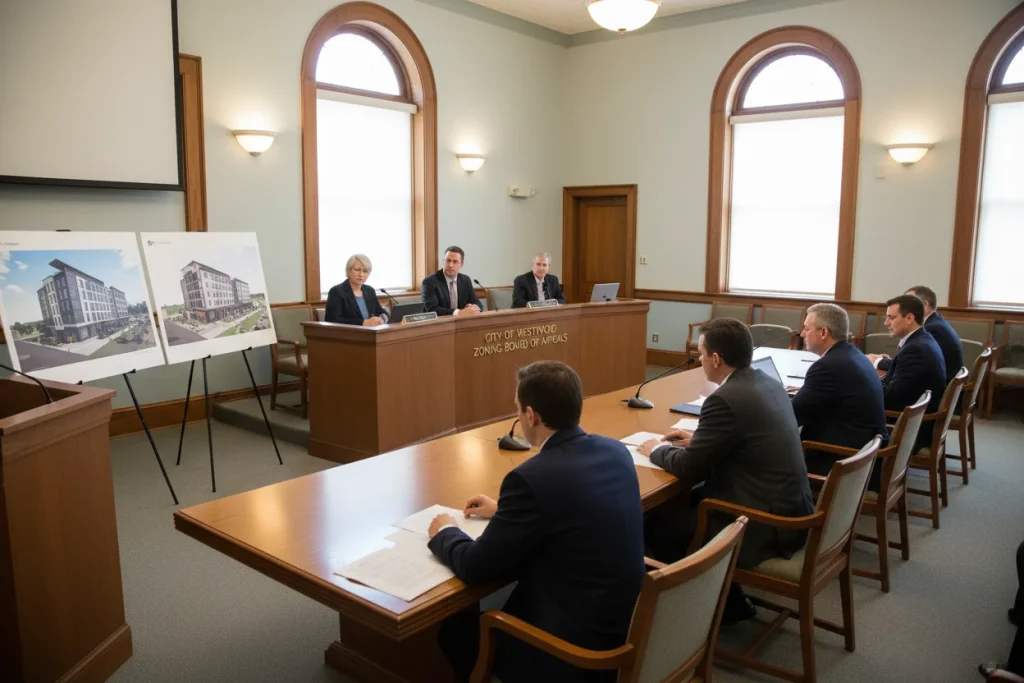
Multifamily permitting typically involves four to six concurrent or sequential approval paths: local building permit review, zoning board approval (or comprehensive permit under 40B), planning board site plan review, conservation commission review for projects near wetlands, Board of Health approval for septic or water systems, and fire department sign-off for life safety compliance.
The specific approvals required depend on your municipality, the project's zoning district, the site's environmental characteristics, and whether you're pursuing a by-right development or one requiring zoning relief. Understanding which approvals apply to your project before you begin design is the single most important step in building a realistic timeline.
Here's a typical approval sequence for a multifamily project in Essex or Middlesex County:
The challenge for developers isn't any single approval. It's coordinating all of them so they advance in parallel rather than in series. When approval paths are managed sequentially, each one becomes a bottleneck that delays the next.
| Approval Path | Reviewing Authority | Typical Timeline |
| Zoning (by-right) | Building Inspector/Zoning Officer | 2 to 4 weeks |
| Zoning (special permit/variance) | Zoning Board of Appeals | 3 to 6 months |
| Comprehensive permit (40B) | Zoning Board of Appeals | 6 to 18 months |
| Site plan review | Planning Board | 2 to 4 months |
| Building permit | Building Inspector | 3 to 8 weeks |
| Conservation Commission | Conservation Commission | 2 to 4 months |
| Board of Health (septic) | Board of Health | 4 to 12 weeks |
| Fire department | Fire Chief/Department | 2 to 4 weeks |
The most frequent delays stem from zoning conflicts identified late in design, incomplete building permit submissions, uncoordinated multi-board review schedules, confusion about MBTA Communities Act compliance, and underestimating Conservation Commission or Board of Health timelines.
This is the most expensive type of delay because it often requires redesigning portions of the project. If your architect develops plans that exceed density limits, parking requirements, or building height restrictions in the zoning district, you'll need zoning relief. Discovering this after design is substantially complete means wasted design fees, delayed permit applications, and months of ZBA hearings. A multifamily builder with local zoning expertise checks these constraints before the first floor plan is drawn.
Multifamily buildings are more complex than single-family homes, and building departments scrutinize the submissions accordingly. Missing fire-protection details, incomplete accessibility-compliance documentation, insufficient energy-code calculations, or absent structural engineering for multi-story framing all trigger plan-review rejections. Each rejection-and-resubmission cycle adds 3 to 6 weeks.
When your project requires approvals from the Planning Board, Conservation Commission, Board of Health, and Fire Department in addition to the building permit, those reviews need to advance in parallel. If your team files with each board sequentially, waiting for one approval before starting the next application, you're adding months of unnecessary delay. Experienced multifamily contractors file concurrent applications and coordinate hearing schedules to compress the overall timeline.
The MBTA Communities Act requires municipalities served by MBTA transit to zone for multifamily housing near transit stations. While this creates a development opportunity, implementation varies by community, and compliance timelines have caused confusion. Some municipalities have adopted compliant zoning, while others are still in process. Understanding where your target community stands on MBTA compliance affects both the available zoning pathway and the approval timeline.
| Common Delay | Root Cause | Prevention Strategy |
| Late zoning conflict | Design developed without checking local bylaws | Pre-design zoning analysis |
| Incomplete building permit | Missing fire, accessibility, or energy documentation | Builder-reviewed submission checklist |
| Sequential board filings | Applications are filed one at a time | Concurrent filing strategy |
| MBTA compliance confusion | Unclear municipal adoption status | Verify zoning status before site selection |
| Conservation timeline | The wetlands review was not started early enough | Begin environmental assessment during site evaluation |
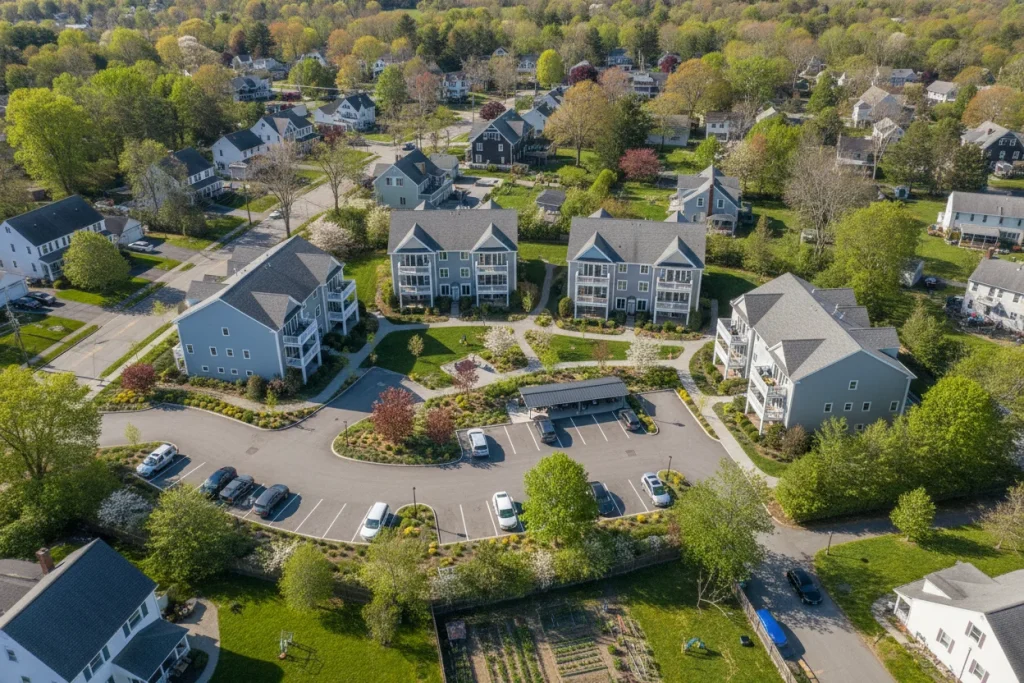
A builder-led design-build approach streamlines permitting because the construction team participates in design from the start, ensuring that zoning compliance, code conformance, fire safety requirements, and environmental considerations are integrated into the plans before any application is filed.
The fundamental problem with fragmented project delivery on multifamily projects is that the people designing the building often don't understand the permitting implications of their design choices, and the people who do understand permitting aren't involved until it's too late to change direction efficiently.
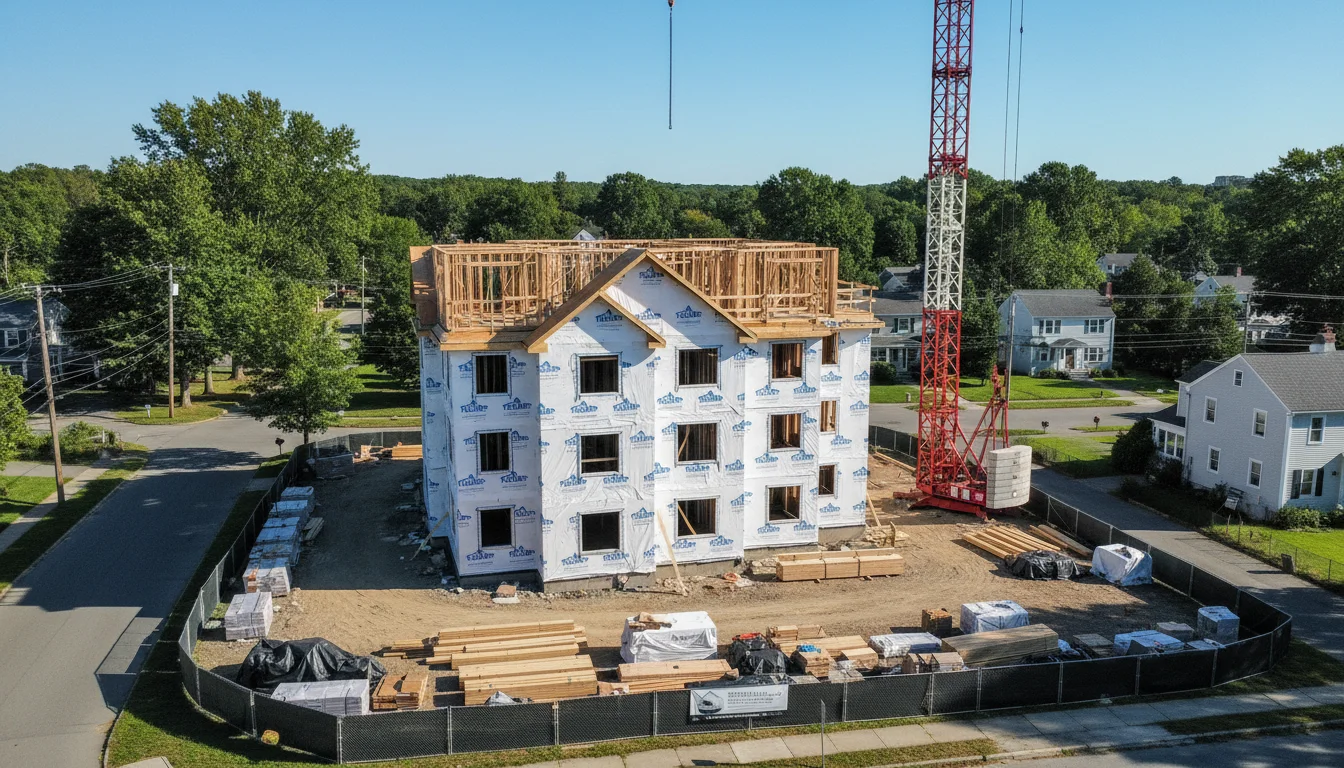
In a design-build model, the builder is at the table during schematic design, evaluating every design decision against the regulatory reality of the specific municipality. Want to add a fourth floor? The builder immediately flags the height limit in the zoning district and the structural and fire code implications for buildings above three stories. Planning an underground parking structure? The builder evaluates the cost and permitting timeline for that choice before the architect draws it.
This integration prevents the expensive redesign loops that plague multifamily projects where the architect and the permitting consultant, and the builder all operate in separate lanes. One team, one set of plans, one coordinated submission strategy. That's how multifamily design and construction projects stay on schedule.
For investors, the financial impact is direct. Every month of permitting delay carries financing costs and pushes back the date when the building starts generating revenue. A design-build contractor who can shave 2 to 4 months off the permitting timeline by submitting clean, complete, and coordinated applications from the start is protecting your investment's return on equity.
The approach matters equally for custom home builders transitioning into multifamily investment. The permitting landscape is significantly more complex than single-family, and the multi-board coordination requirements demand a level of project management that single-family experience alone doesn't provide. Working with a firm that has institutional knowledge of Massachusetts multifamily regulatory requirements is the difference between a learning-curve project and a profitable one.
Investors should ask their builder to present a permitting timeline that identifies every required approval, maps the concurrent filing strategy, and shows how design decisions were made with regulatory compliance already confirmed.
Don't accept a generic "we handle permitting" response. The right builder should be able to tell you specifically which boards will review your project, what the typical timeline is in your target municipality, which applications can be filed concurrently, and what design decisions were made specifically to avoid zoning relief or extended review processes.
Ask for examples. How has the firm navigated Planning Board review in your target community before? What's their track record with building department turnaround times? Have they filed concurrent Conservation Commission and building permit applications, and how did they coordinate them? A multifamily general contractor who answers these questions with specifics drawn from direct local experience is demonstrating the institutional knowledge that prevents delays.
At Genesis Construction and Development, our approach begins with a regulatory assessment during the earliest stages of project evaluation. Before we commit to a design direction, we verify zoning, environmental constraints, building code implications, and the municipal review timeline. This assessment becomes the foundation of a permitting strategy that's integrated into the project blueprint from day one, aligning design, construction planning, and regulatory navigation into one coordinated plan.
Most multifamily projects require four to six separate approvals, including building permit, zoning or site plan review, and potentially conservation, Board of Health, and fire department sign-offs.
Timelines range from 3 to 4 months for by-right projects with concurrent filings to 12 to 18 months or more for projects requiring zoning relief, comprehensive permits, or complex environmental review.
Zoning conflicts discovered after design is substantially complete, requiring redesign and ZBA hearings, represent the most costly and time-consuming delays.
Yes, and this is the recommended strategy. Filing concurrent applications with the Planning Board, Conservation Commission, Board of Health, and the building department significantly compresses the overall timeline.
The Act requires MBTA-served municipalities to zone for multifamily near transit, creating a development opportunity. However, implementation varies by community, and understanding local compliance status is essential before selecting a site.
Only if the project site is within a wetlands buffer zone or resource area. A wetlands delineation during site evaluation determines whether a Conservation Commission review is required.
Multifamily buildings must meet fire protection requirements, including sprinkler systems, fire-rated assemblies, emergency egress, and hydrant access, all of which require fire department review and approval.
Design-build integrates regulatory compliance into design from the start, so zoning, code, fire safety, and environmental requirements are addressed in the plans before any application is filed.
Investors should understand the permitting timeline and its financial implications, but the builder and legal team should manage the tactical process. Investors should ask for regular updates and be prepared to make decisions if board conditions affect project economics.
Look for direct experience in your target municipality, a track record of concurrent filing strategies, and the ability to present a specific permitting timeline with identified approval paths before design begins.
Multifamily permitting in Massachusetts is genuinely complex. Multiple review boards, state-level compliance requirements, environmental regulations, and municipal processes that vary from one town to the next create a regulatory landscape where experienced navigation is worth its weight in construction savings. The projects that succeed, meaning they move through approvals efficiently and start construction on schedule, are the ones where the team anticipated requirements early, coordinated submissions strategically, and integrated regulatory compliance into design rather than treating it as a post-design obstacle.If you're evaluating a multifamily project in Essex or Middlesex County, contact our team to discuss the permitting landscape for your specific site. We'll map out the approval requirements, develop a concurrent filing strategy, and show you how builder-led design-build keeps regulatory complexity from derailing your project timeline and investment returns.
© 2025 Genesis Construction and Development Inc. - All rights reserved | Web Design & SEO By: Authority Solutions®